
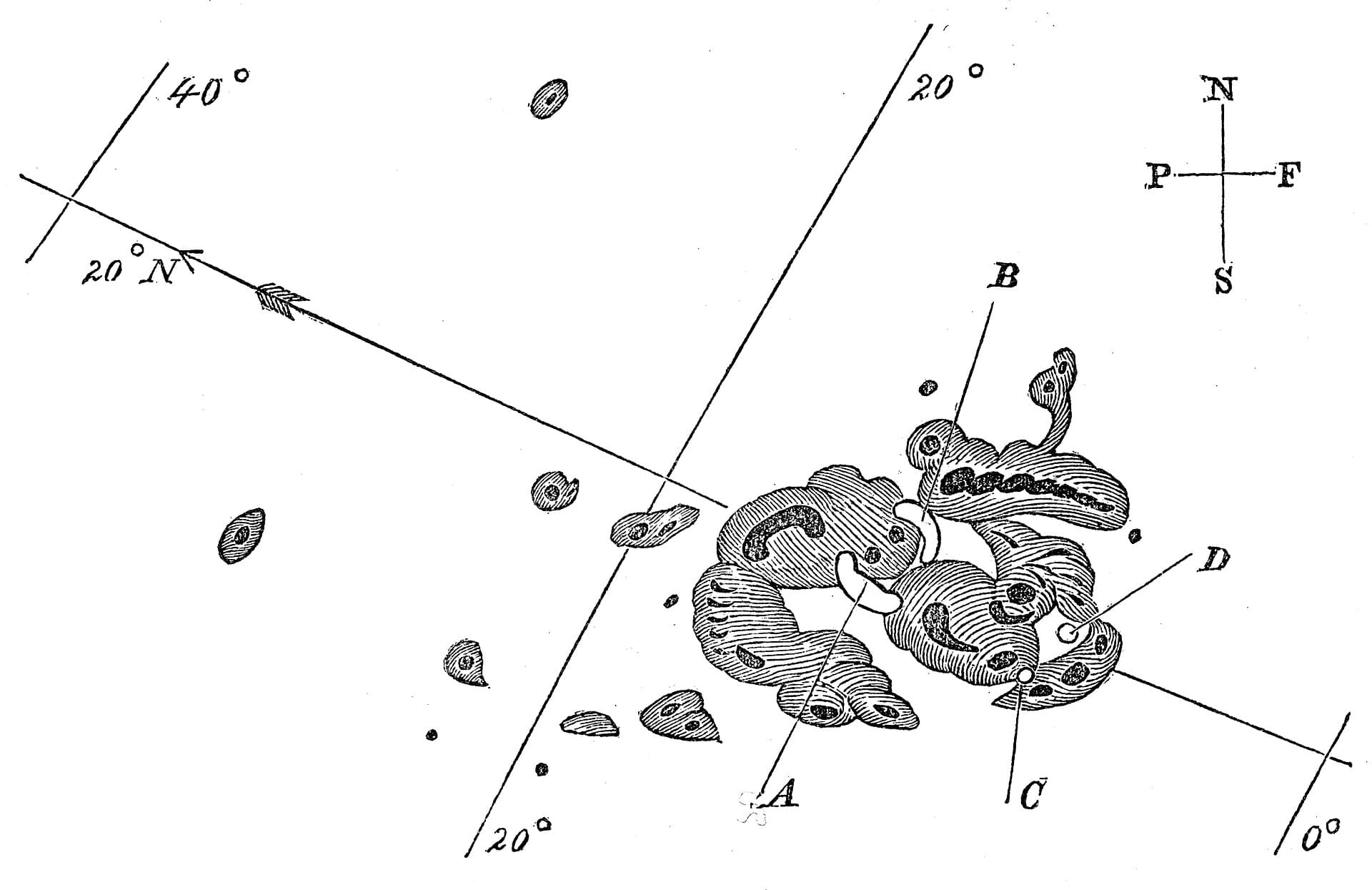
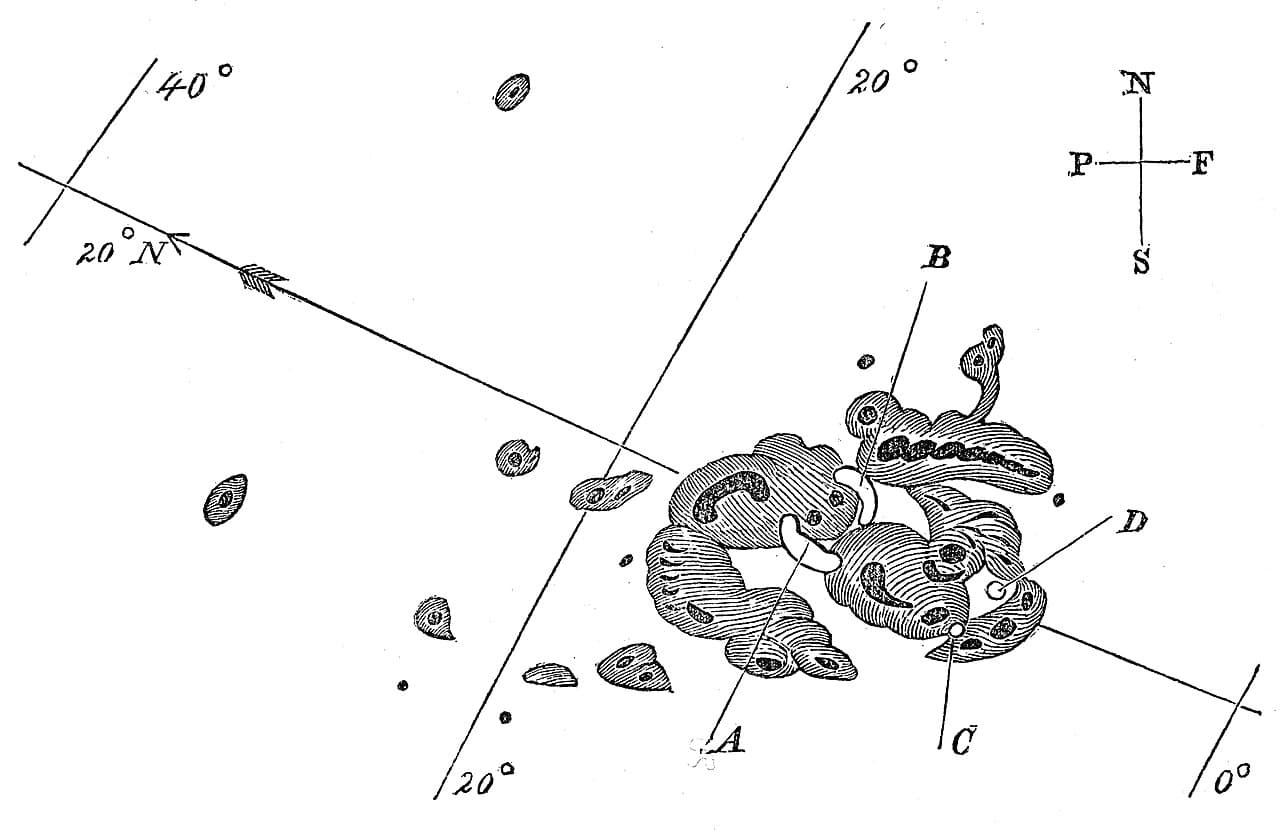
At precisely 11:18 on the morning of Thursday, 1 September 1859, Richard Carrington, an English amateur astronomer and the heir to a brewing fortune, was immersed in his daily observational work at his private observatory in Redhill, Surrey. As he projected an image of the Sun onto a screen, sketching the intricate sunspot groups visible that day, something unexpected caught his eye: two patches of intensely bright light near a substantial sunspot group. This phenomenon was so strikingly luminous—brighter even than the surrounding photosphere—that Carrington initially feared his projection screen was damaged. The brilliance of this event lasted approximately five minutes, a duration he meticulously timed. Intrigued and perhaps unsettled by the sight, Carrington swiftly called upon fellow astronomer Richard Hodgson, who, at a separate observatory, had independently witnessed the same extraordinary flash. This observation marked the first recorded human encounter with a solar flare. Eighteen hours later, a geomagnetic storm of unprecedented scale began. By about 4 a.m. Greenwich Mean Time on 2 September, auroras danced across skies at latitudes that had never seen them before. Telegraph operators across North America and Europe experienced electric shocks, telegraph paper ignited, and some offices burned down. This event, now known as the Carrington Event, serves as the benchmark for extreme space weather phenomena.
What Carrington saw
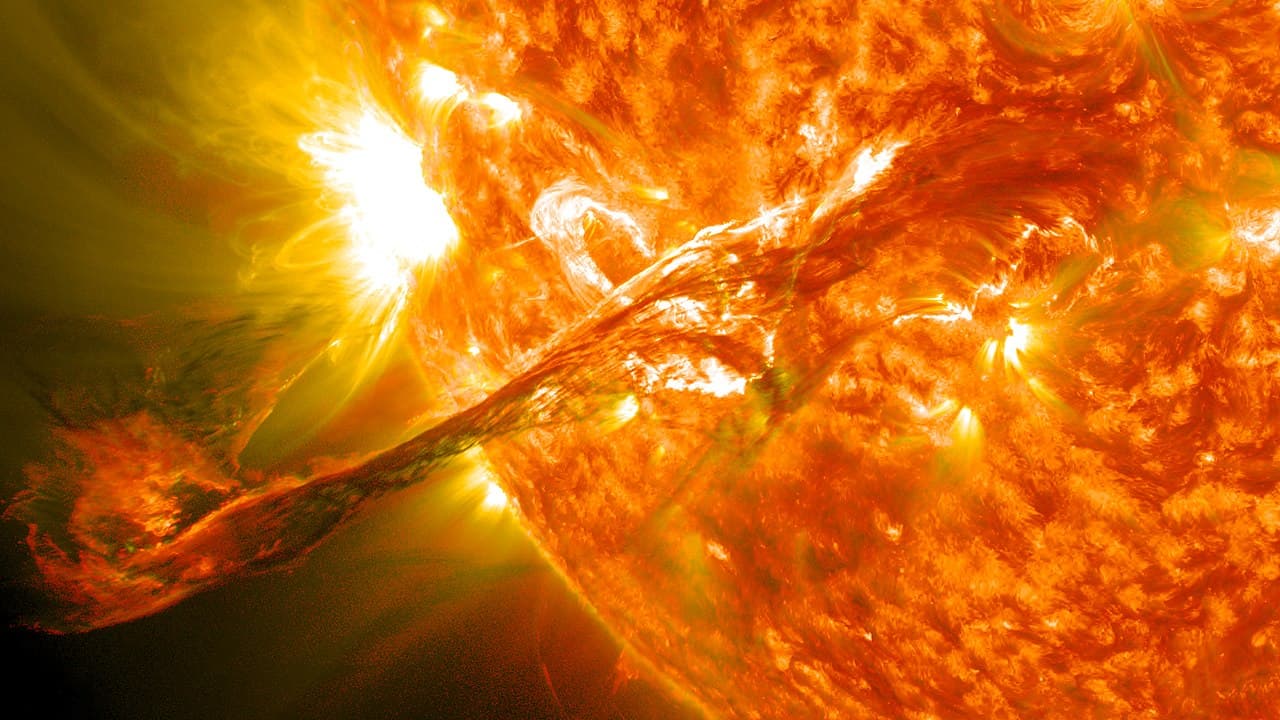
The flash that captivated Carrington on the morning of 1 September 1859 was a solar flare, an explosive release of magnetic energy originating from the solar corona above an active sunspot region. Solar flares are categorised by their light emissions, and those visible in white light, as Carrington saw, are exceptionally rare, numbering perhaps a dozen ever recorded. They represent some of the most extreme solar phenomena, releasing energy on the order of 10^25 to 10^26 joules, comparable to a billion megatons of TNT. While the radiation from such an event reaches Earth within eight minutes, the associated coronal mass ejection (CME)—a vast cloud of charged particles—takes longer. Typically, CMEs take two to four days to traverse the void between the Sun and Earth. However, the 1859 CME, moving with exceptional velocity, covered the distance in approximately 17.5 hours. This rapid transit, implying speeds near 2,400 kilometres per second, underscored the event's extremity. Such speeds approach the upper limits observed for CMEs, marking the Carrington Event as one of immense power and urgency.
What the storm did
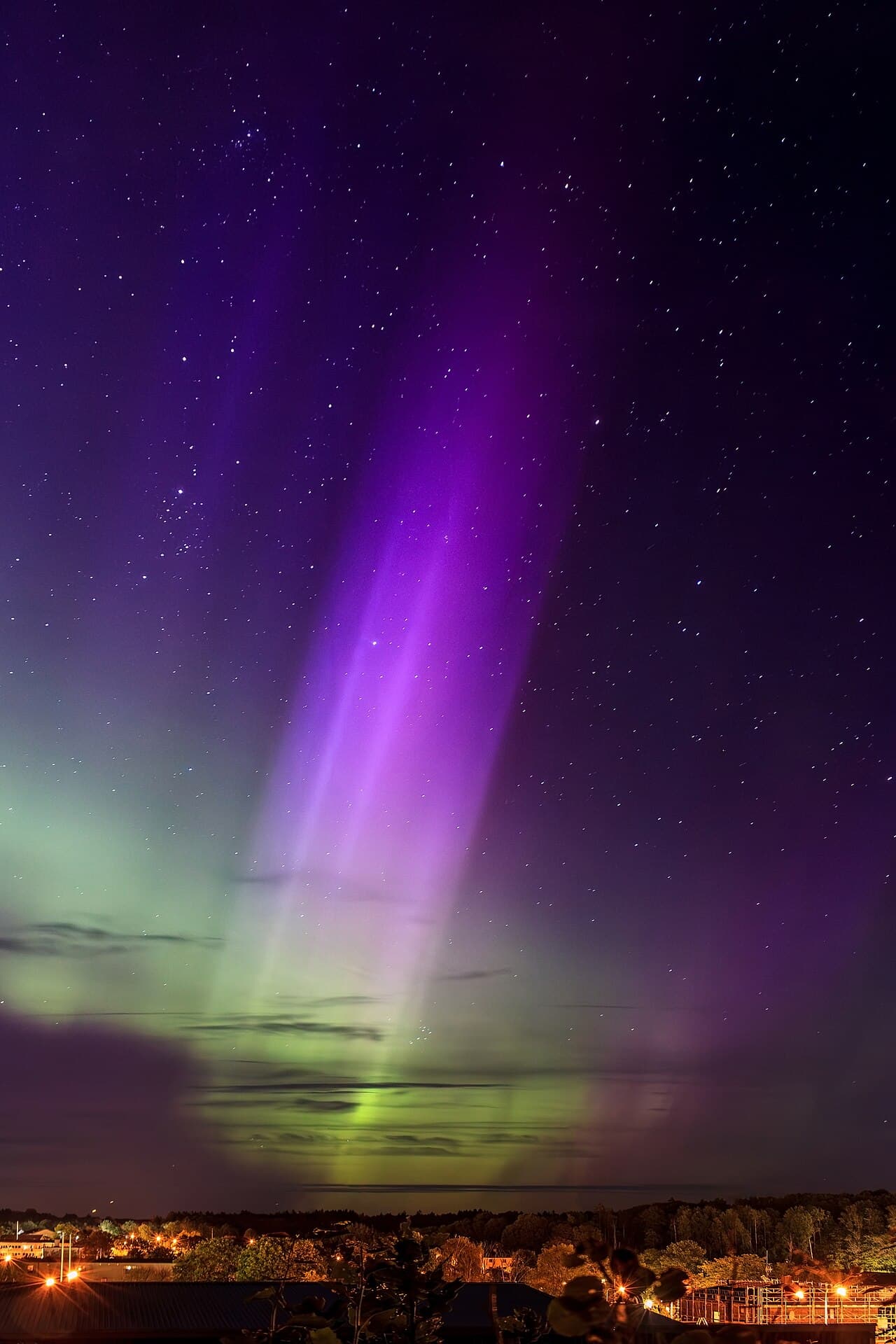
As the CME reached Earth, the effects were both immediate and dramatic. Auroras, typically confined to polar skies, were now visible in regions far from their usual haunts. Accounts from the period describe auroras seen as far south as Cuba, Hawaii, and Colombia, with their eerie glow illuminating landscapes at unprecedented latitudes. In the Rocky Mountains, miners awoke at 1 a.m., mistakenly believing dawn had arrived, and began their morning routines. In Boston, the light of the aurora was so intense that it allowed newspapers to be read outdoors at midnight. The geomagnetic storm induced massive electric currents in telegraph systems across North America and Europe. Equipment failures were widespread; telegraph papers caught fire from sparks, operators received severe electric shocks, and astonishingly, telegraph lines continued to function even after their batteries had been disconnected. The geomagnetically induced currents had taken over, running the systems with a power no one expected. Some telegraph offices were even consumed by flames, highlighting the formidable impact of these natural forces.
How we know how big it was
Quantifying the magnitude of the Carrington Event relies on meticulous historical records and modern scientific techniques. Magnetic observatories in 1859, such as those at Greenwich and Bombay (now Mumbai), provided crucial data. The magnetograms from these sites, particularly the one from Bombay, revealed deflections so extensive that they exceeded the limits of the chart paper. Through reconstruction of these records, researchers have estimated the geomagnetic disturbance of the event with the Disturbance Storm Time (Dst) index, approximating it to be around -850 nanoTeslas. This figure far surpasses the largest recorded Dst event of the satellite era, which was the March 1989 storm at -589 nT, a storm known for causing a nine-hour blackout of Quebec's power grid. Thus, the Carrington Event was at least 50 per cent more intense. Additionally, analysis of ice cores from Greenland and Antarctica provides corroborating evidence: spikes in nitrate levels—attributable to the atmospheric chemistry of intense geomagnetic storms—are precisely dated to 1859. These nitrate records extend back centuries, indicating similar events around 774 CE, 993 CE, and possibly 775 CE, suggesting that the Carrington Event is part of a broader historical pattern.
If it happened today
The infrastructure of 1859, consisting primarily of telegraph lines, was comparatively primitive, yet its interaction with the Carrington Event demonstrated the vulnerability of long-distance conductive systems to geomagnetic storms. Today's electrical infrastructure is vastly more complex and interconnected, comprising millions of kilometres of high-voltage transmission lines, satellite communications networks, and computerised control systems, all sensitive to geomagnetic disturbances. A Carrington-class event in the present day would induce currents in power lines, potentially overloading and damaging high-voltage transformers. The 2008 National Research Council report on severe space weather estimated the economic impact of such an event to be in the range of $1-2 trillion for the United States alone, with recovery times stretching from four to ten years in the worst-affected areas. While some argue that modern grid protections might mitigate these effects, the general consensus remains cautious. Satellites, integral to services like GPS, weather forecasting, and communications, would also face severe risks. A geomagnetic storm of Carrington magnitude could incapacitate many low-Earth-orbit satellites, compounding the disruption.
The 2012 near-miss
On 23 July 2012, the Sun unleashed a coronal mass ejection of magnitude comparable to the Carrington Event. Fortunately, Earth narrowly avoided this solar tempest; the CME crossed Earth's orbit nine days before our planet reached that point in its journey around the Sun. The STEREO-A spacecraft, however, was directly in the path of this ejection, providing valuable data. Analysis of the event, published in Nature Communications by Baker et al. in 2013, confirmed that had the timing been slightly different, the 2012 storm could have been as disruptive as the one in 1859. This near-miss is frequently cited in discussions of space weather preparedness, serving as a stark reminder of our planet's vulnerability. Although solar activity has been in decline over recent cycles, the probability of encountering a Carrington-scale event remains non-negligible. Estimates suggest a 1-12 per cent chance per decade, reflecting historical patterns observed in ice-core records. Whether 1859 was an outlier or part of a broader spectrum of solar activity continues to be a subject of scientific inquiry.
Richard Carrington's meticulous sketches from 1859—showing sunspot positions and the two extraordinary bright patches—are preserved in the records of the Royal Astronomical Society. These drawings are among the earliest visual records of solar phenomena, offering invaluable insight into our Sun's dynamic behaviour. Carrington himself, who passed away in 1875 at the age of 49, succumbed to a chronic illness and ceased active solar observation by the mid-1860s. Yet, his legacy endures. The Carrington Event remains the benchmark against which all other geomagnetic storms are measured. In an era where the telegraph was the pinnacle of communication technology, its destruction was limited by the scale of its reach. Today's global infrastructure, however, presents a far more intricate and vulnerable target, as yet untested by an event of similar magnitude.
References
- Carrington, R. C. (1859). Description of a Singular Appearance Seen in the Sun on September 1, 1859. Monthly Notices of the Royal Astronomical Society, 20, 13–15.
- Tsurutani, B. T., et al. (2003). The extreme magnetic storm of 1-2 September 1859. Journal of Geophysical Research, 108(A7), 1268.
- Baker, D. N., et al. (2013). A major solar eruptive event in July 2012. Space Weather, 11(10), 585–591.
- National Research Council (2008). Severe Space Weather Events: Understanding Societal and Economic Impacts. National Academies Press.


