
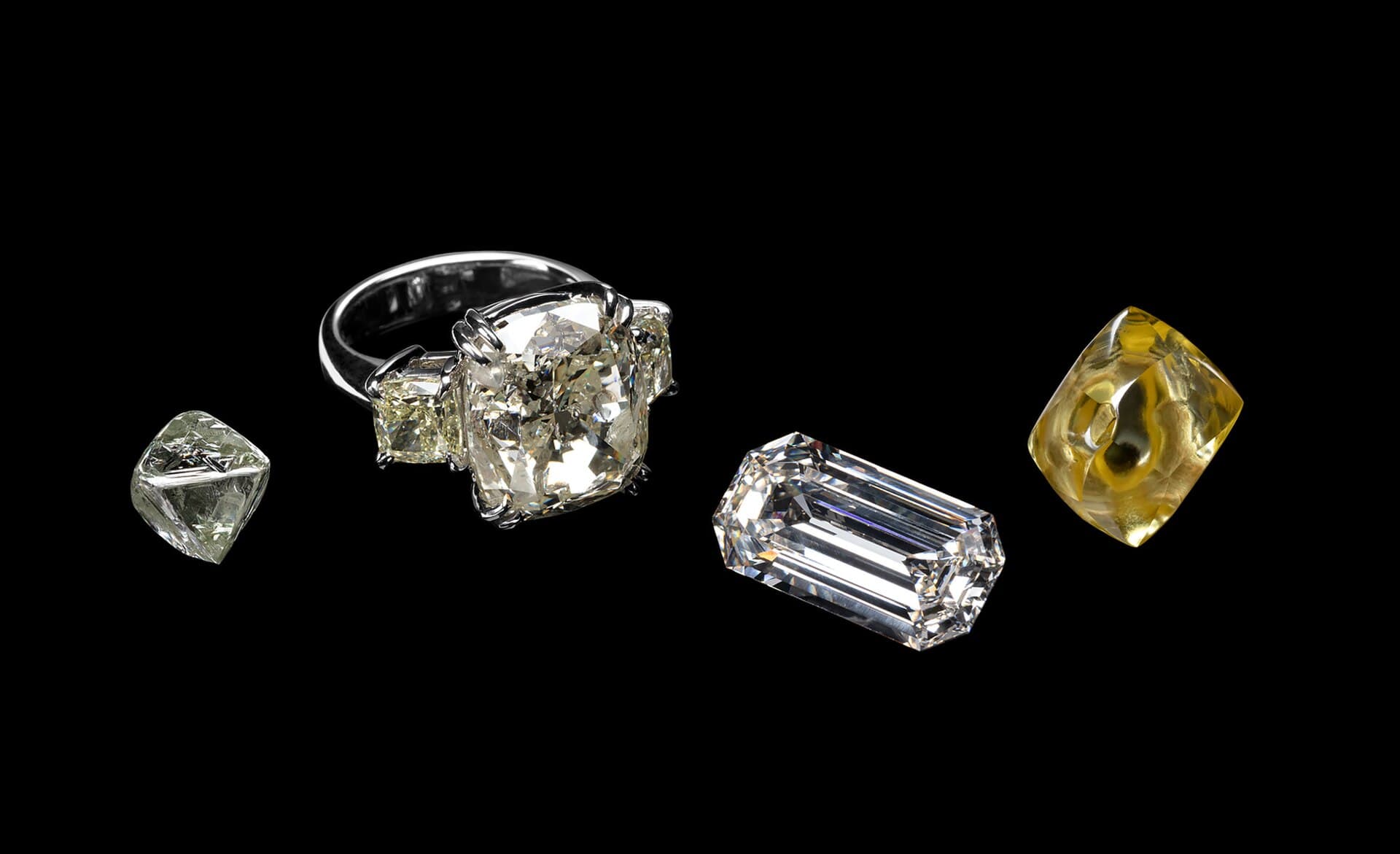
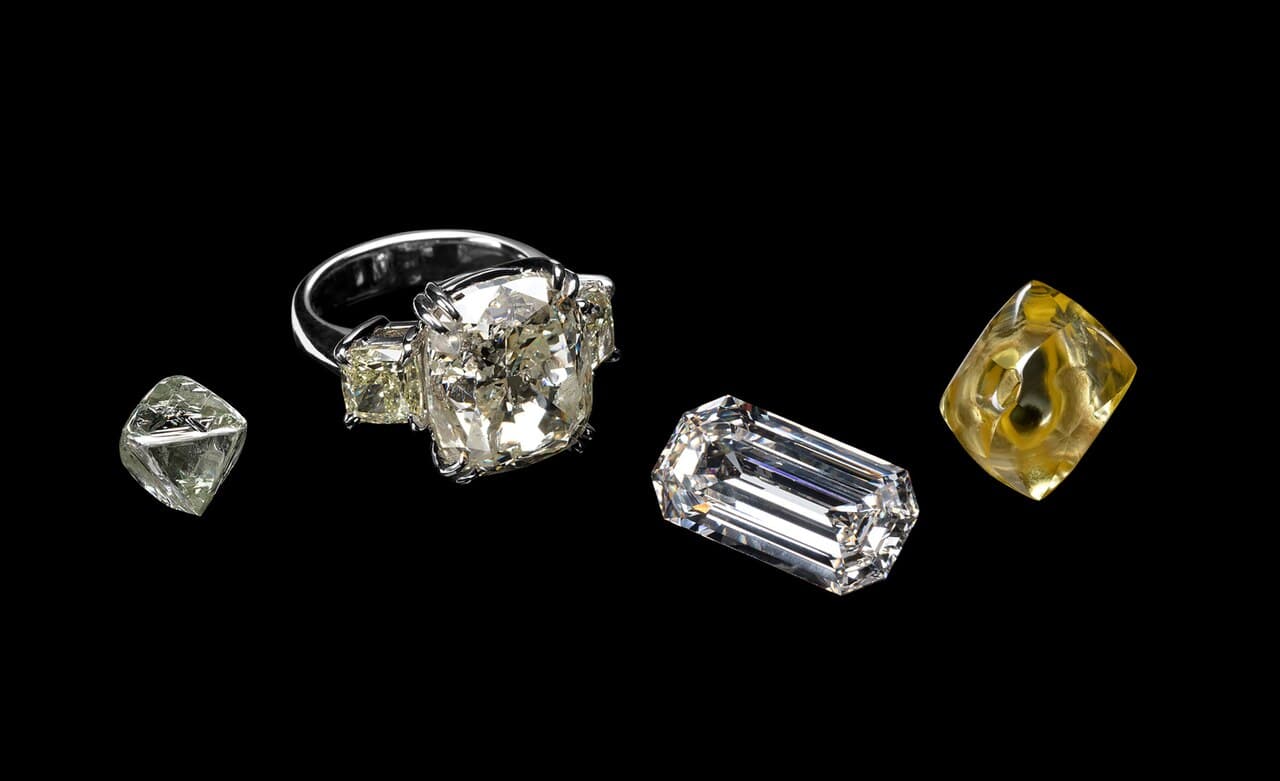
In 1947, the De Beers diamond cartel introduced a slogan that would become iconic: "A diamond is forever." This marketing phrase, while compelling, is not entirely accurate when scrutinized under the lens of thermodynamics and kinetics. At room temperature and standard atmospheric pressure, diamonds exist not in their ultimate stable form, but in a metastable state. The true equilibrium form of carbon under these conditions is graphite. The distinction lies in the timeframe considered; for all intents and purposes, in human lifetimes, a diamond remains unchanged, justifying the slogan in a practical sense. However, this qualifier is critical, as it frames our understanding of stability in a broader context.
Thermodynamic ground state vs. kinetic trap
To understand why diamonds persist despite being metastable, we must distinguish between thermodynamic and kinetic factors. Thermodynamics is concerned with the energy states of a system and dictates which configuration of atoms has the lowest free energy under given conditions. Kinetics, however, describes the rate at which a system moves toward that configuration. The two are not synonymous, a reality reflected in many materials that reside in metastable states. Such materials do not occupy the lowest-energy state possible due to prohibitive activation energy barriers. As an example, glass is metastable with respect to crystalline silica at room temperature. Despite this, glass does not spontaneously crystallize in observable timeframes, although it can do so over geological spans.
The concept of a kinetic trap provides a useful analogy. Imagine a ball perched in a shallow well, representing a metastable state. The ball cannot roll into the deeper well, the true minimum energy state, without sufficient force to overcome the barrier separating the two. Similarly, while the transition from diamond to graphite is thermodynamically favorable, the energy required to initiate this change is so substantial that it essentially traps the diamond in its current state.
Carbon's two main allotropes at one atmosphere
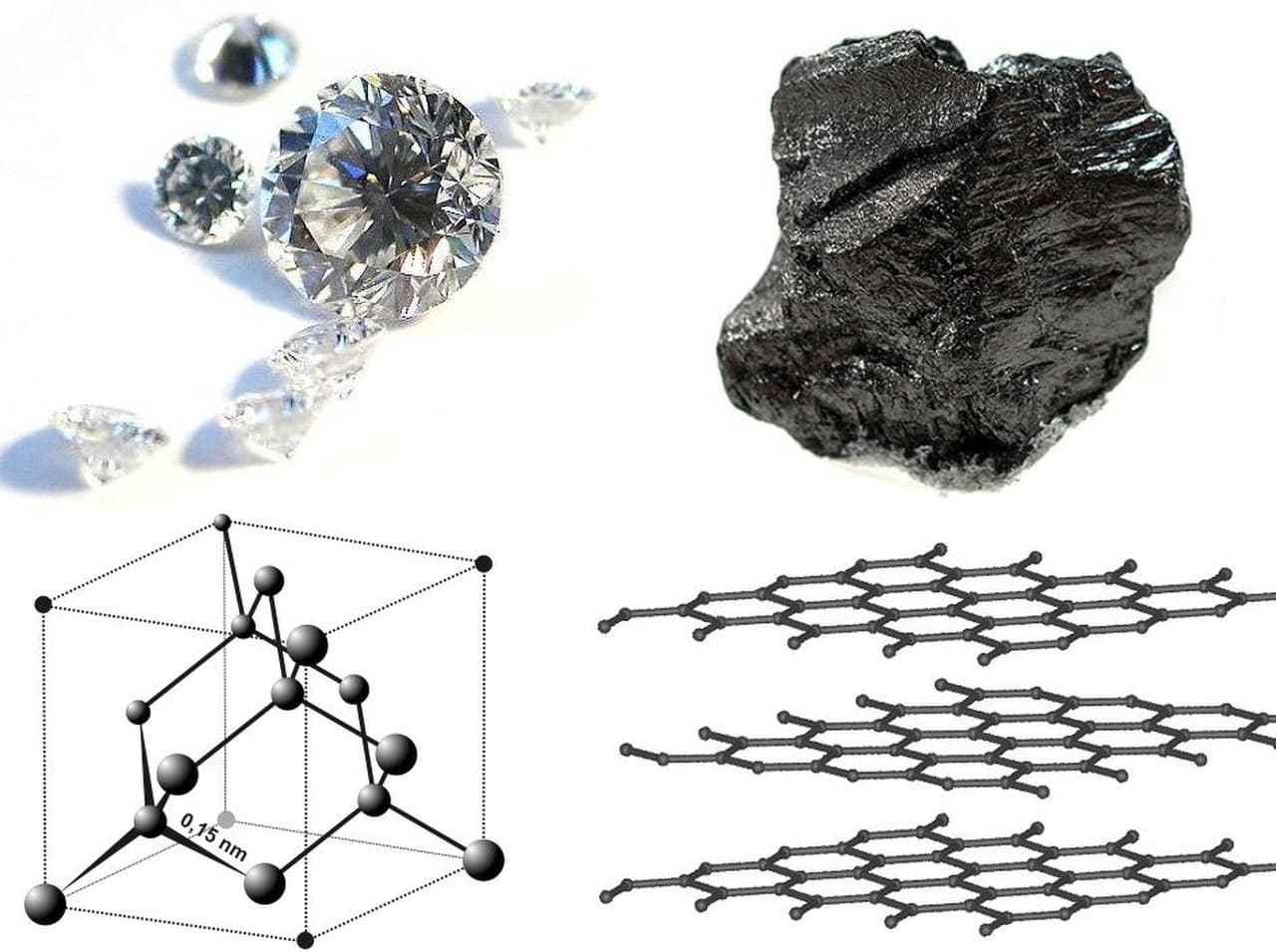
Carbon's versatility as an element is partly due to its ability to form different structural arrangements, known as allotropes. At one atmosphere, two allotropes of carbon are of particular interest: diamond and graphite. The diamond structure is characterized by each carbon atom being bonded tetrahedrally to four others, resulting in a three-dimensional network with sp³ hybridization. This arrangement is what gives diamonds their renowned hardness and brilliance. In contrast, graphite consists of carbon atoms bonded trigonally within planar sheets, each with sp² hybridization, and these sheets are held together by weaker van der Waals forces. Graphite, therefore, exhibits different physical properties, such as lubricity and electrical conductivity.

Energetically speaking, graphite is more stable than diamond at room temperature and atmospheric pressure by approximately 2.9 kJ/mol. This free-energy differential means that given infinite time and absent any kinetic barriers, carbon would eventually organize into graphite rather than diamond. However, the presence of these kinetic barriers explains why diamonds persist in their current form rather than converting spontaneously.
Why the conversion is so slow
The slow rate of conversion from diamond to graphite at ambient conditions is largely a consequence of the energy required to break and reform carbon-carbon bonds. The activation energy for this transformation is estimated to be around 700 kJ/mol per bond. Given that the thermal energy at room temperature is approximately 2.5 kJ/mol, it becomes clear why the transformation rate is negligible. The estimated timescale for a diamond to spontaneously convert into graphite is on the order of 10⁸⁰ years, vastly exceeding the current age of the universe. This timescale effectively renders the transition impossible in any practical sense, reinforcing the notion of diamonds as lasting "forever" for human purposes.
However, this theoretical stability should not be confused with the absence of possibility. Given sufficient energy, such as intense heat, the conversion process can be accelerated to a noticeable rate, demonstrating that the only true obstacle is kinetic, not thermodynamic.
What does convert diamonds
High temperatures play a pivotal role in converting diamonds into graphite. When exposed to approximately 700 °C in an oxygen-rich environment, diamonds begin to oxidize. In inert atmospheres, the diamond-graphite transformation becomes significant at around 1700 °C and progresses rapidly by 2000 °C. This transformation is of particular concern in industrial contexts, where the cutting and synthesizing of diamonds occur at elevated temperatures. Equipment must be carefully controlled to prevent unintended graphitization, a challenge continually addressed in diamond processing industries. The reverse transformation, converting graphite to diamond, necessitates both high temperatures and pressures. The high-pressure, high-temperature (HPHT) method pioneered by Bundy et al. in the 1950s remains a foundational technique, now complemented by chemical vapour deposition (CVD) processes, which offer additional pathways for synthetic diamond production.
This duality of transformations underscores the intricate interplay between kinetic barriers and thermodynamic potential, illustrating the conditions under which carbon transitions between its crystalline forms.
Other carbon allotropes worth knowing
While diamond and graphite are the most well-known carbon allotropes, several others have gained scientific interest and technological importance. Buckminsterfullerene, or C60, represents one such form, consisting of sixty carbon atoms arranged in a soccer-ball-shaped cage. Discovered in 1985 by Harry Kroto, Richard Smalley, and Robert Curl, this molecule opened up new frontiers in materials science, earning them the Nobel Prize in Chemistry in 1996. Buckminsterfullerene is notable not just for its structure but also for its potential applications in nanotechnology and electronics.
Similarly, carbon nanotubes, which are essentially rolled sheets of graphite, and graphene, single layers of graphite, have also revolutionized material sciences. Graphene's isolation and characterisation by Andre Geim and Konstantin Novoselov in 2004, for which they were awarded the Nobel Prize in Physics in 2010, marked a milestone in the study of two-dimensional materials. These allotropes, while less culturally prominent than diamond, are technologically vital, demonstrating the breadth of carbon's capabilities in various applications.
The exploration of these diverse allotropes continues to reshape our understanding of material properties and unlock new possibilities in scientific and industrial fields.
The distinction between thermodynamic stability and kinetic persistence is a fundamental lesson in chemistry. It underscores the complexity and elegance of material science: stability is not a singular concept but a duality of thermodynamic favourability and kinetic feasibility. Slogans like "A diamond is forever" play upon our notions of permanence, yet every diamond is on a slow march towards graphite, held back only by the vastness of its kinetic barrier. The language we use shapes our understanding and appreciation of the materials that define our world, reminding us that true permanence is a rare phenomenon, especially in the realm of chemistry.
References
- Bundy, F. P., et al. (1955). Man-made diamonds. Nature, 176, 51–55.
- Kroto, H. W., Heath, J. R., O'Brien, S. C., Curl, R. F., & Smalley, R. E. (1985). C60: Buckminsterfullerene. Nature, 318, 162–163.
- Novoselov, K. S., et al. (2004). Electric field effect in atomically thin carbon films. Science, 306(5696), 666–669.
- Bundy, F. P., et al. (1996). The pressure-temperature phase and transformation diagram for carbon. Carbon, 34(2), 141–153.


