
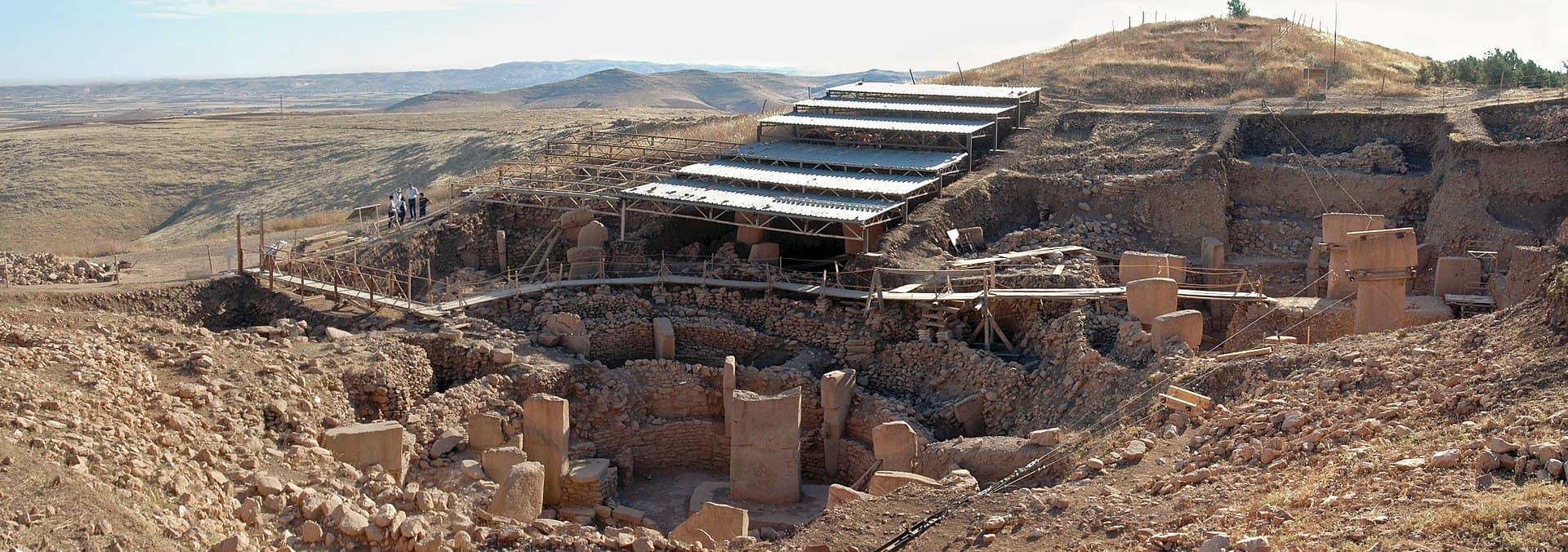
Göbekli Tepe, an archaeological site perched on a low hill in southeastern Anatolia, Turkey, astonishes with its age. Radiocarbon dating of its lowest occupation layers places it between 9600 and 9000 BCE, and its monumental enclosures, composed of intricately carved T-shaped pillars, date from approximately 9500 to 8500 BCE. To understand the site's significance, consider this: Stonehenge's construction began around 3000 BCE, the Great Pyramid of Giza around 2560 BCE, and the earliest agriculture-based settlements at Jericho date to approximately 9000 BCE. Göbekli Tepe predates these landmarks, yet it was crafted by hunter-gatherers, long before the advent of pottery, agriculture, or the wheel. This context profoundly challenges our understanding of prehistoric human society.
How it was found
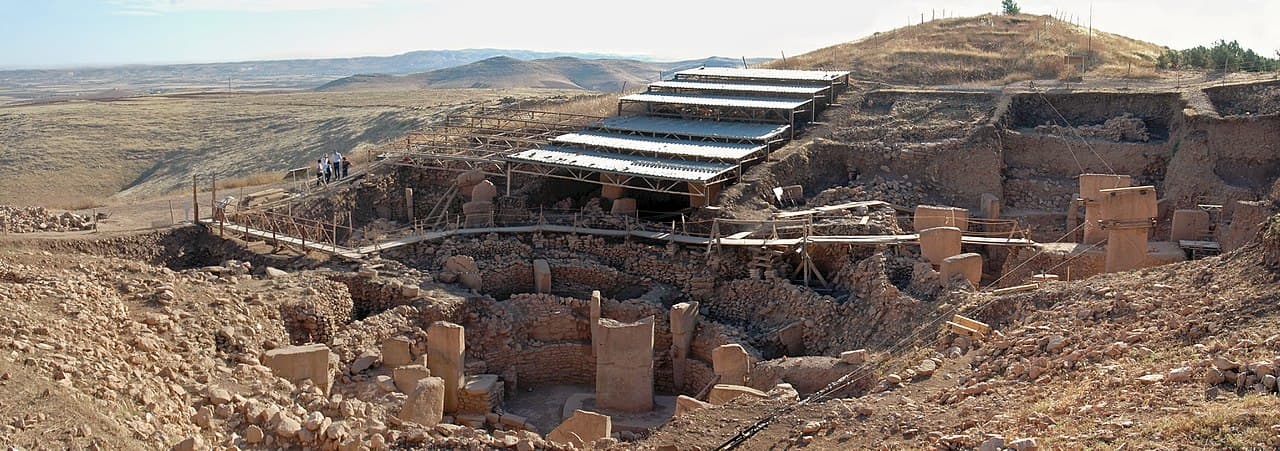
The first record of Göbekli Tepe emerged from a 1963 survey conducted by a joint team from the University of Chicago and Istanbul University, which mistakenly classified it as a medieval cemetery. This error stemmed from the flat slabs scattered across the surface, which resembled grave markers. The significance of the site remained obscured until 1994, when German archaeologist Klaus Schmidt visited the area. Schmidt recognised that these slabs were merely the tops of far larger structures buried below. Understanding the potential of these findings, the Deutsches Archäologisches Institut initiated comprehensive excavations in 1996, under Schmidt's direction until his passing in 2014, after which a Turkish-led team took over in 2017.
As of 2024, only a fraction of Göbekli Tepe has been unearthed—less than 5% of the site. Preliminary surveys and ground-penetrating radar indicate at least twenty more enclosures remain hidden beneath the surface. The ongoing excavation efforts, driven by the sheer scale and historical importance of the site, suggest a wealth of additional discoveries await. The implications of these findings have the potential to significantly enhance our understanding of prehistoric human activity and social organisation.
The architecture
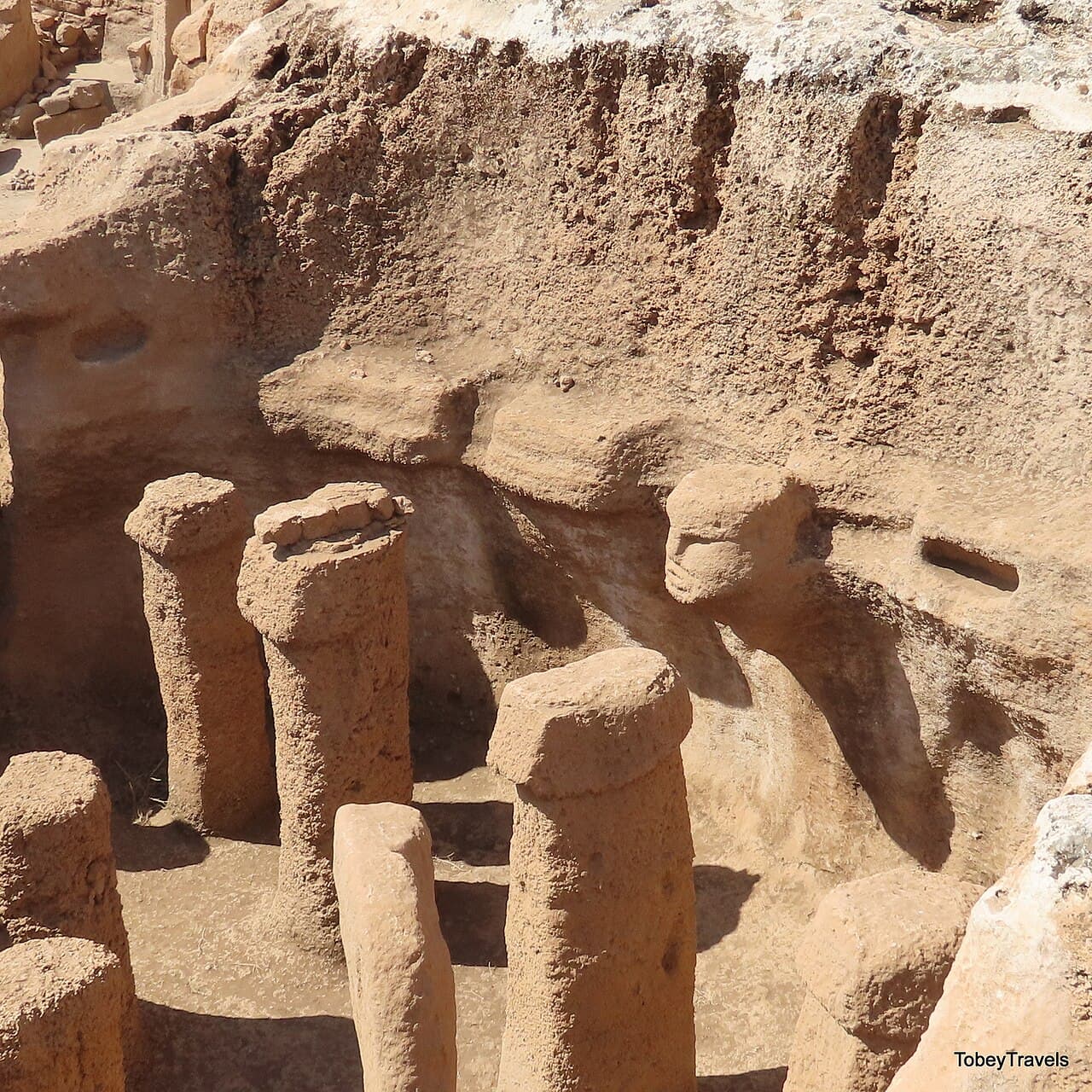
Göbekli Tepe's layout revolves around a series of circular or oval stone enclosures, each containing imposing T-shaped limestone pillars, some standing up to 5.5 metres tall and weighing as much as 16 tonnes. The enclosures that have been excavated, labelled A through H, measure between 10 to 30 metres in diameter. Each pillar is carefully set into pre-cut sockets in the bedrock, held in place by smaller stones, a testament to the precision of prehistoric craftsmanship.
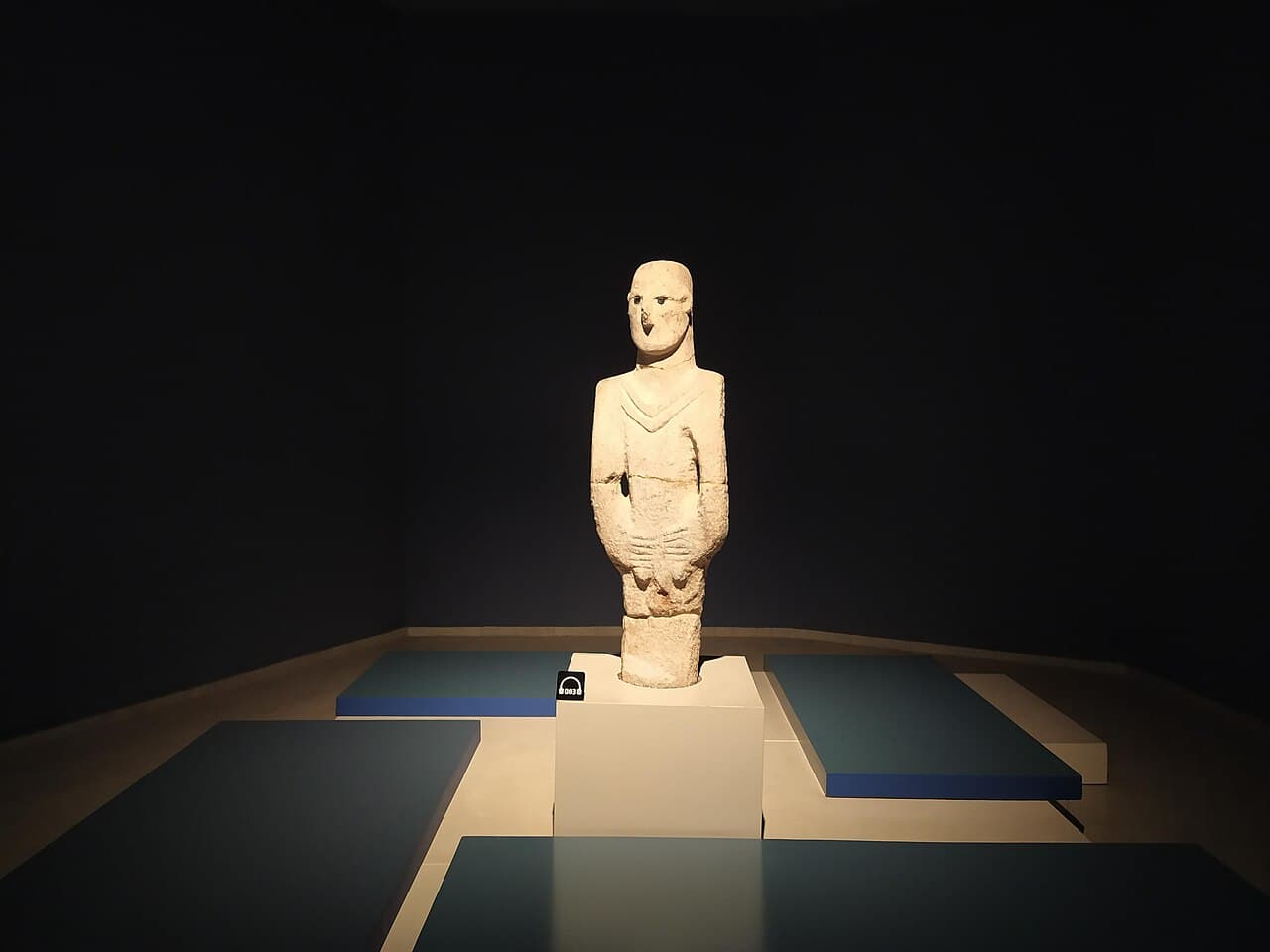
These pillars are anthropomorphic, adorned with carved arms that run down their sides and stylised belts at their waists. The surfaces of the pillars are further embellished with low-relief carvings of animals such as foxes, snakes, scorpions, wild boars, vultures, lions, and gazelles. These carvings hint at a symbolic or religious significance, yet their exact meanings remain elusive. The architectural sophistication of Göbekli Tepe speaks to a level of social organisation and artistic expression previously unassociated with hunter-gatherer groups of this era.
Who built it
The creators of Göbekli Tepe were Pre-Pottery Neolithic A and B hunter-gatherers, as indicated by the absence of domesticated grains or animals in the site's contemporaneous strata. Instead, faunal remains suggest they hunted a variety of wildlife, including gazelle, wild boar, aurochs, and red deer, while gathering wild almonds, pistachios, and grass seeds. The scale of the site's construction is staggering: moving and erecting the 16-tonne limestone pillars required a considerable workforce.
Estimates suggest hundreds of individuals were needed to construct each enclosure, a remarkable feat for populations without a permanent agricultural surplus to sustain such an endeavour. This scenario poses a central anthropological puzzle: how did these hunter-gatherers organise themselves for such a labour-intensive project? Feeding and coordinating such a workforce implies a sophisticated social structure, one capable of mobilising resources and manpower in ways not traditionally associated with pre-agricultural societies. The labour dynamics of Göbekli Tepe challenge our assumptions about the capabilities of early human communities.
What it might have been
Klaus Schmidt proposed a compelling hypothesis in his 2008 book "Sie bauten die ersten Tempel" ("They Built the First Temples"). He argued that the enclosures at Göbekli Tepe served as temples or ritual gathering places, rather than residential or defensive structures. This interpretation marked a radical departure from the prevailing theories of civilisation development, which posited that agriculture was a necessary precursor to monumental religious architecture. Schmidt's thesis suggested that the drive to construct sites like Göbekli Tepe might have been a catalyst for the agricultural transition, rather than a consequence of it.
This idea, that social or religious motivations could have spurred the move towards settled farming life, has been both influential and contentious. Recent excavations have uncovered evidence of some residential structures at the site, which complicates a pure 'temple' interpretation. The exact function of Göbekli Tepe remains a subject of debate, yet the possibility that religious or social imperatives might have driven significant cultural shifts opens new avenues for understanding the emergence of complex societies.
Why it was buried
Between 8000 and 7500 BCE, the monumental enclosures of Göbekli Tepe were deliberately buried. This burial was not a result of natural sedimentation but a systematic filling with earth, stones, rubble, animal bones, and broken tools transported from elsewhere. This deliberate act of covering the site is unique and perplexing within the prehistoric record. The pillars were left standing, indicating a conscious decision to preserve the structures beneath a protective layer of debris.
The reasons behind this burial are unknown, though it seems to have been a gradual process, possibly carried out over generations. The site continued to see some use in a diminished capacity for several centuries, but was eventually abandoned. The deliberate burial raises questions about the societal or cultural changes that prompted such an act. What prompted the builders to cover their monumental achievements, and what cultural or social shifts accompanied this decision? The answers remain speculative, yet the act itself suggests a profound change in the purpose or value of the site.
Göbekli Tepe compels us to rethink the narrative of civilisation's development. Traditionally, the story has been one of agriculture as the precondition for settled life, which then leads to surplus, specialisation, and the capacity for monumental architecture and writing. Göbekli Tepe, however, demonstrates that monumental architecture could emerge independently of agriculture, crafted by hunter-gatherers lacking pottery or writing. While the standard story may hold true elsewhere, it does not apply here. Whatever drove the people of Göbekli Tepe to organise and achieve such feats—be it myth, ancestor worship, or an exchange network—proves that human societies could mobilise large-scale labour long before the conventional markers of civilisation appeared.
References
- Schmidt, K. (2010). Göbekli Tepe – the Stone Age Sanctuaries: New results of ongoing excavations with a special focus on sculptures and high reliefs. Documenta Praehistorica, 37, 239–256.
- Dietrich, O., et al. (2012). The role of cult and feasting in the emergence of Neolithic communities: New evidence from Göbekli Tepe. Antiquity, 86(333), 674–695.
- Banning, E. B. (2011). So fair a house: Göbekli Tepe and the identification of temples in the Pre-Pottery Neolithic of the Near East. Current Anthropology, 52(5), 619–660.
- Şahin, F. (Director). Göbekli Tepe excavation site, official Ministry of Culture page.


