
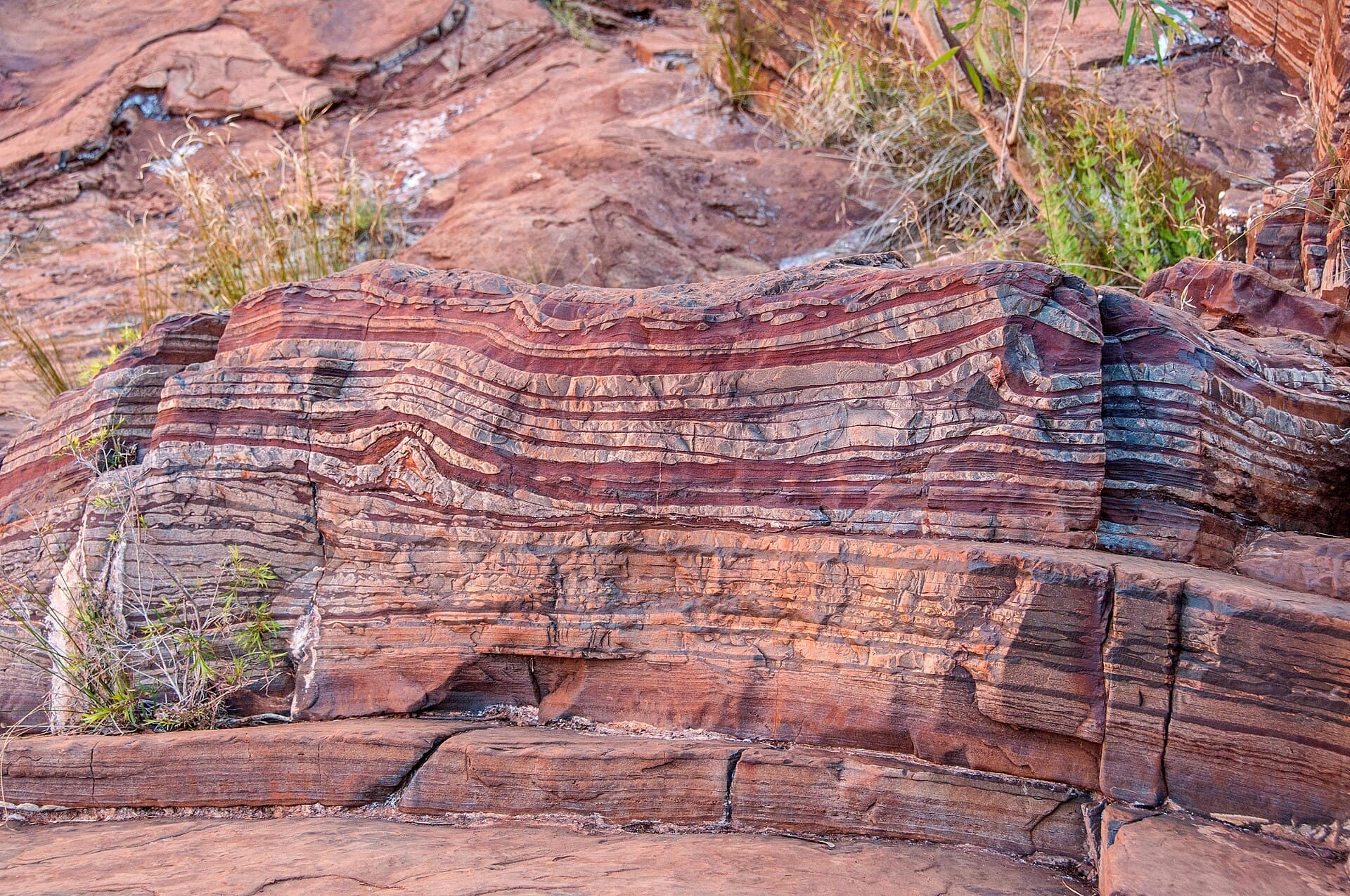
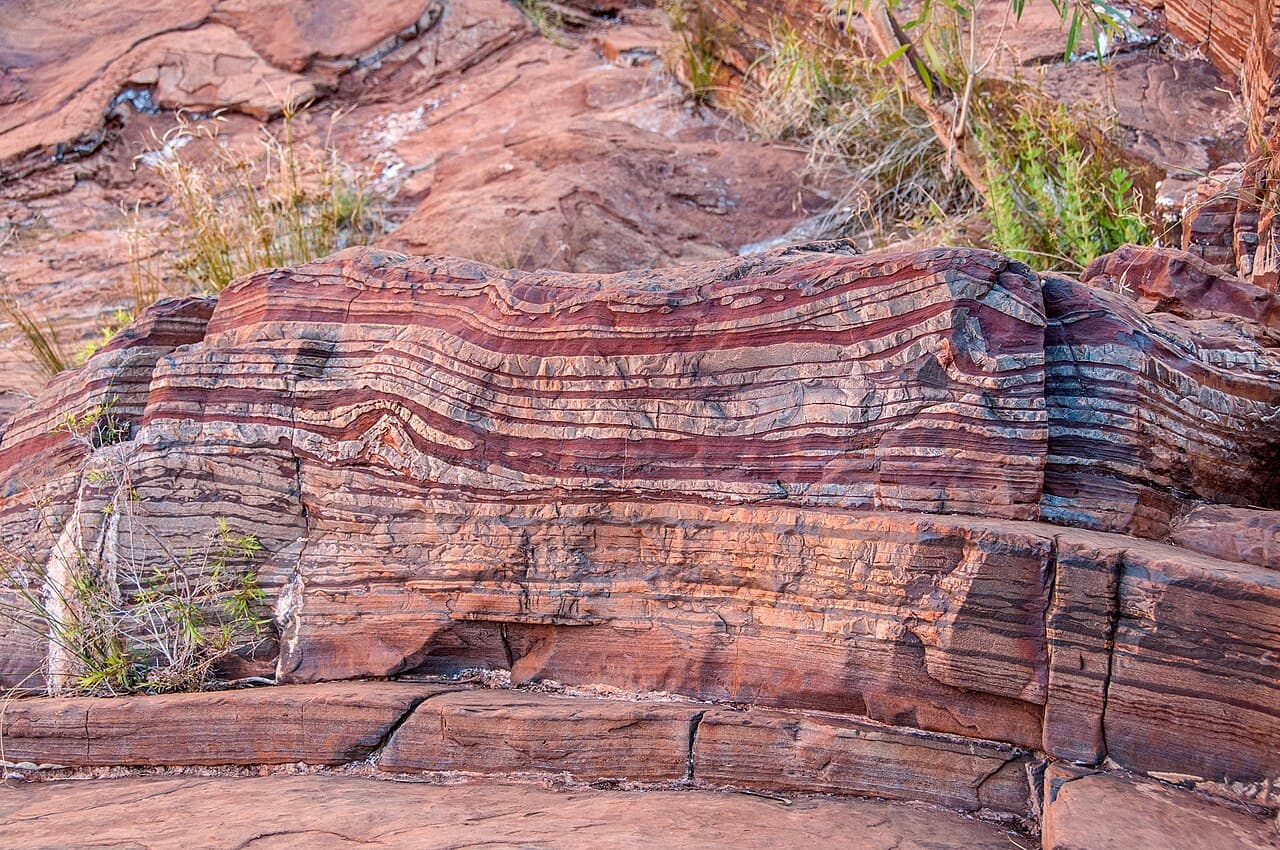
Banded iron formations (BIFs) tell the story of a profound planetary transformation. These geological formations, which consist of alternating layers of red iron oxides and dark cherts, began to appear in the rock record around 2.4 billion years ago. They dominated the sedimentary record for half a billion years and then vanished as abruptly as they had come. The simplest interpretation of these formations signals the largest geochemical event in Earth's history: the Great Oxidation Event. This cataclysmic transformation altered the very composition of the atmosphere, marking the planet's transition from an anoxic world to one rich in oxygen. It was a metamorphosis that laid the groundwork for the evolution of complex life, yet it also marked one of the first mass extinctions in Earth's history.
Before oxygen
For nearly the first two billion years of Earth's history, the atmosphere contained essentially no free oxygen. This was a time when life had already made its mark on the planet — albeit in forms vastly different from anything we recognise today. The biosphere was dominated by anaerobic organisms, primarily bacteria and archaea, which thrived in the absence of oxygen. These early life forms utilised a variety of chemical pathways to extract energy, relying on reactions involving hydrogen, sulfur, methane, and iron, rather than oxygen. The energy yields of these reactions were modest, resulting in a small and relatively slow-growing biosphere.
In the context of early Earth, 'anaerobic' referred to life forms that could not survive in the presence of oxygen. Instead, they exploited the chemical energy available from the reduced elements in their environment. These organisms inhabited a world bound by the limits of anaerobic chemistry, where energy acquisition was constrained by the low efficiency of their metabolic processes. As a result, the planet's early biosphere was limited in scope and complexity, a stark contrast to the diversity and abundance of life that would eventually arise.
The invention
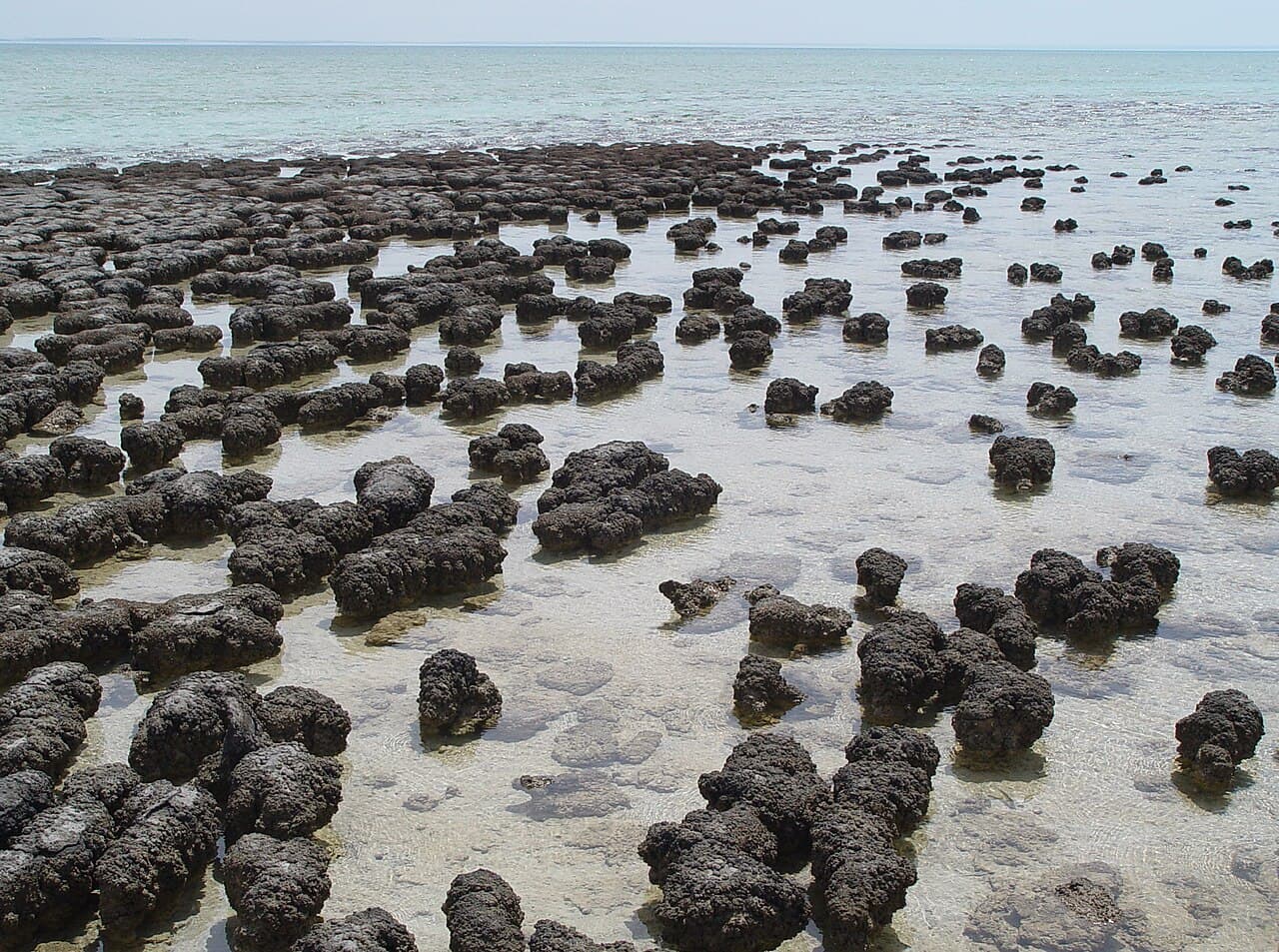
Within this primordial landscape, an extraordinary evolutionary innovation occurred. A group of bacteria, now known as the ancestors of modern cyanobacteria, discovered how to harness sunlight to split water molecules, releasing oxygen as a byproduct. This development of oxygenic photosynthesis was not a trivial achievement. It represents perhaps the most complex chemical apparatus ever evolved by a single-celled organism, necessitating a suite of sophisticated molecular machinery.
Oxygenic photosynthesis relies on two coupled photosystems, known as PSII and PSI. These photosystems work in tandem to capture light energy and convert it into chemical energy, enabling the organism to split water molecules and produce oxygen. At the heart of this process lies a manganese-calcium cluster, a molecular machine capable of cracking the resilient O-H bonds of water. This biochemical feat was so successful that it was eventually co-opted through horizontal gene transfer into eukaryotic cells, giving rise to the chloroplasts found in modern plants. The cyanobacterial invention of oxygenic photosynthesis thus became a cornerstone of life as we know it.
The poisoning
Oxygen, while essential for most life today, was a highly reactive and toxic gas to the anaerobic organisms that dominated early Earth. It generates reactive oxygen species that can damage proteins, nucleic acids, and cellular membranes, posing a significant threat to the biochemistry of life forms that had evolved in its absence. As cyanobacteria proliferated across the planet's oceans, oxygen began to accumulate in the environment, initially reacting with dissolved iron in the oceans.
This reaction between oxygen and iron led to the formation of banded iron formations as iron oxides precipitated out of the water, effectively trapping the oxygen. For approximately 500 million years, the reduced iron in the oceans acted as a buffer, absorbing the oxygen and preventing it from accumulating in the atmosphere. Eventually, however, the iron buffer was depleted, and oxygen began to escape into the atmosphere, culminating in the Great Oxidation Event around 2.4 billion years ago. The transition was not just a change in atmospheric chemistry; it was a biological revolution.
The first mass extinction
The influx of oxygen into the atmosphere marked a period known as the Oxygen Catastrophe — a turning point in Earth's biological history that led to the planet's first mass extinction. The vast majority of life forms at that time were obligate anaerobes for whom oxygen was lethal. These organisms, which had thrived in the absence of oxygen, were unable to cope with the oxidative stress it introduced, resulting in a sharp decline in microbial diversity as recorded in the Proterozoic fossil record.
Surviving anaerobes retreated to refuges where oxygen was scarce, such as deep marine sediments, sulfidic ocean basins, and even within the guts of animals, where many of their descendants continue to reside. The dominant biosphere of the planet underwent a profound shift, with cyanobacteria and other oxygen-tolerant life forms rising to ecological prominence. This extinction event dramatically reshaped the composition of life on Earth, paving the way for the eventual diversification of aerobic organisms.
The gift
The presence of oxygen, however, also unlocked a new realm of chemical possibilities that anaerobic life could not exploit. Oxygen allowed for the evolution of aerobic respiration, a process that extracts approximately fifteen times more energy from a molecule of glucose than anaerobic fermentation. This significant energy advantage provided the biological fuel necessary for the development of larger, more complex organisms.
The increased energy availability enabled the rise of multicellular life, complex tissues, and the sophisticated cellular machinery found in mitochondria, which themselves are derived from a symbiotic relationship with an aerobic bacterium. The advent of aerobic respiration set the stage for the Ediacaran biota, the Cambrian explosion, and the eventual emergence of vertebrates, mammals, and ultimately, Homo sapiens. The reader of this sentence is a direct beneficiary of the metabolic waste produced by ancient cyanobacteria, a testament to the far-reaching impact of this evolutionary innovation.
The most consequential single event in the history of life on Earth was not the impact event that ended the reign of the dinosaurs, nor the gradual emergence of terrestrial flora. It was a chemical trick, worked out by a colony of obscure microbes, that transformed the planet in ways few could have anticipated. This reframing offers a humbling perspective on the history of life, which is predominantly a microbial saga, with vertebrates arriving only in the final chapters. While human history captures our imagination, it is but a brief epilogue in the grand narrative of Earth's biosphere.
References
- Lyons, T. W., Reinhard, C. T., & Planavsky, N. J. (2014). The rise of oxygen in Earth's early ocean and atmosphere. Nature, 506, 307–315.
- Holland, H. D. (2006). The oxygenation of the atmosphere and oceans. Phil. Trans. R. Soc. B, 361, 903–915.
- Sessions, A. L., et al. (2009). The continuing puzzle of the Great Oxidation Event. Current Biology, 19(14).
- Knoll, A. H. (2003). Life on a Young Planet: The First Three Billion Years of Evolution on Earth. Princeton University Press.


