
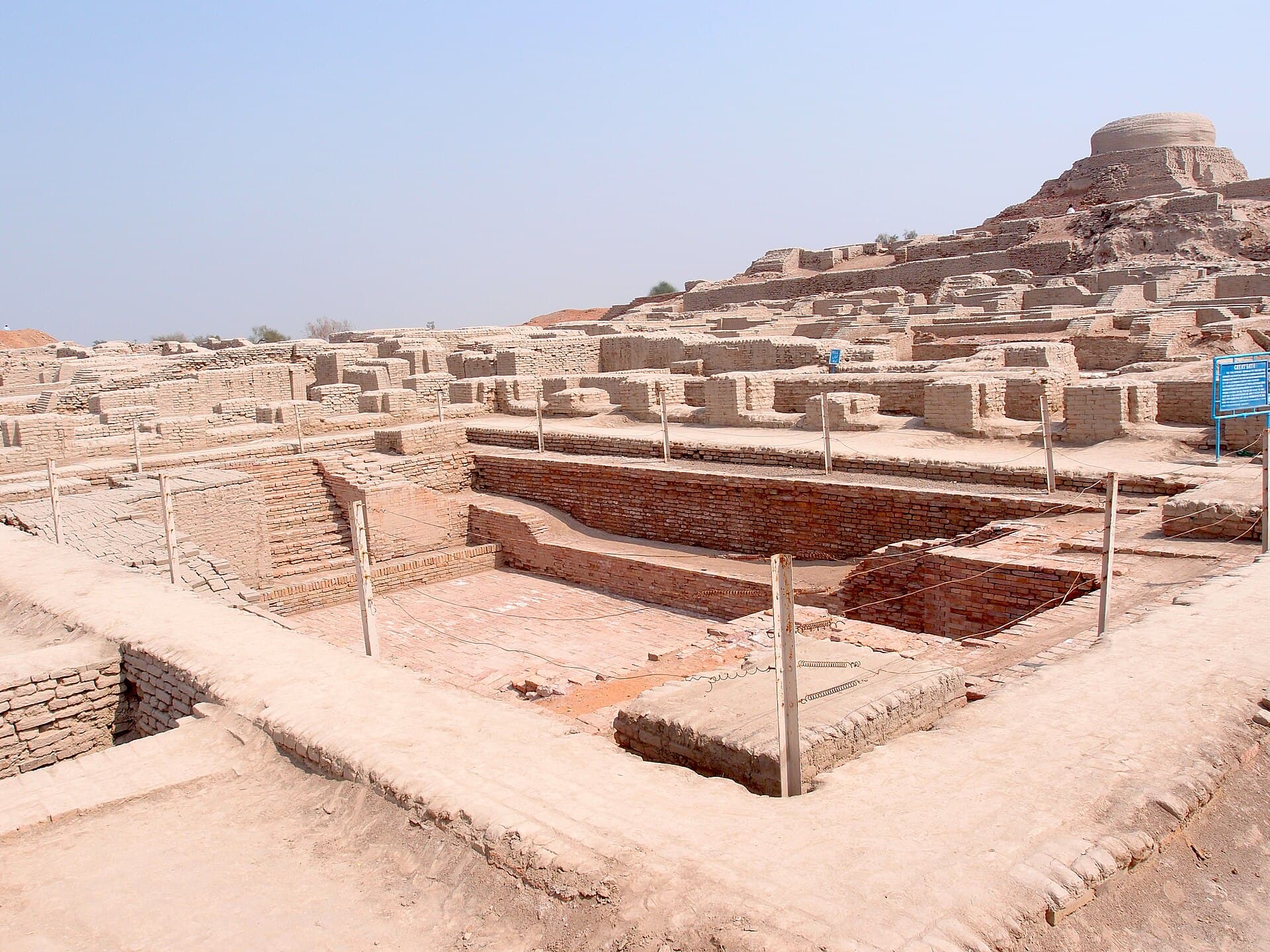
In 1922, Rakhaldas Banerjee, an Indian archaeologist, was working at a Buddhist stupa site at Mohenjo-daro in Sindh, now part of Pakistan. His excavation below the stupa's layers led to a surprising discovery: the remains of a meticulously planned city more than 2,000 years older than the stupa itself. Around the same time, 700 kilometres to the northeast, Daya Ram Sahni was unearthing similar finds at Harappa. These sites revealed a civilisation previously unknown to history, which was later formalised in 1924 by John Marshall as the Indus Valley Civilisation — a Bronze Age urban society contemporary with the likes of Sumer and Old Kingdom Egypt. The realisation that this civilisation was at least as urban as its ancient neighbours challenged prevailing historical narratives and opened up a new chapter in the understanding of early complex societies.
Scale
The Indus Valley Civilisation, also known as the Harappan Civilisation, flourished between approximately 2600 and 1900 BCE. At its zenith, this civilisation stretched over a vast area of roughly 1.25 million square kilometres, encompassing regions of modern-day Pakistan, northwestern India, and parts of Afghanistan. This spatial expanse was greater than the combined territories of ancient Egypt and Mesopotamia, highlighting the significance of the Indus civilisation in the ancient world.
To date, more than 1,500 sites have been identified, with the largest urban centres — including Mohenjo-daro, Harappa, Dholavira, Rakhigarhi, and Ganweriwala — hosting populations estimated to be between 30,000 and 60,000. This level of urbanisation suggests a highly organised society capable of supporting large populations through complex trade networks. Evidence of trade extends as far as the Persian Gulf and Mesopotamia; Indus seals have been found in locations such as Bahrain, Oman, and the ancient city of Ur. These findings underscore the Indus Valley's role as a key player in early long-distance trade.
What is striking about it
The Indus Valley Civilisation is remarkable for several reasons, not least of which is its urban planning. Cities like Mohenjo-daro and Harappa were laid out in a grid pattern, with streets oriented to the cardinal directions. This suggests a level of urban design sophistication that was unprecedented at the time. The bricks used in construction were of standardised sizes, following a consistent 1:2:4 length ratio, which persisted across the civilisation for approximately 700 years — indicative of a centrally coordinated effort to maintain uniformity.
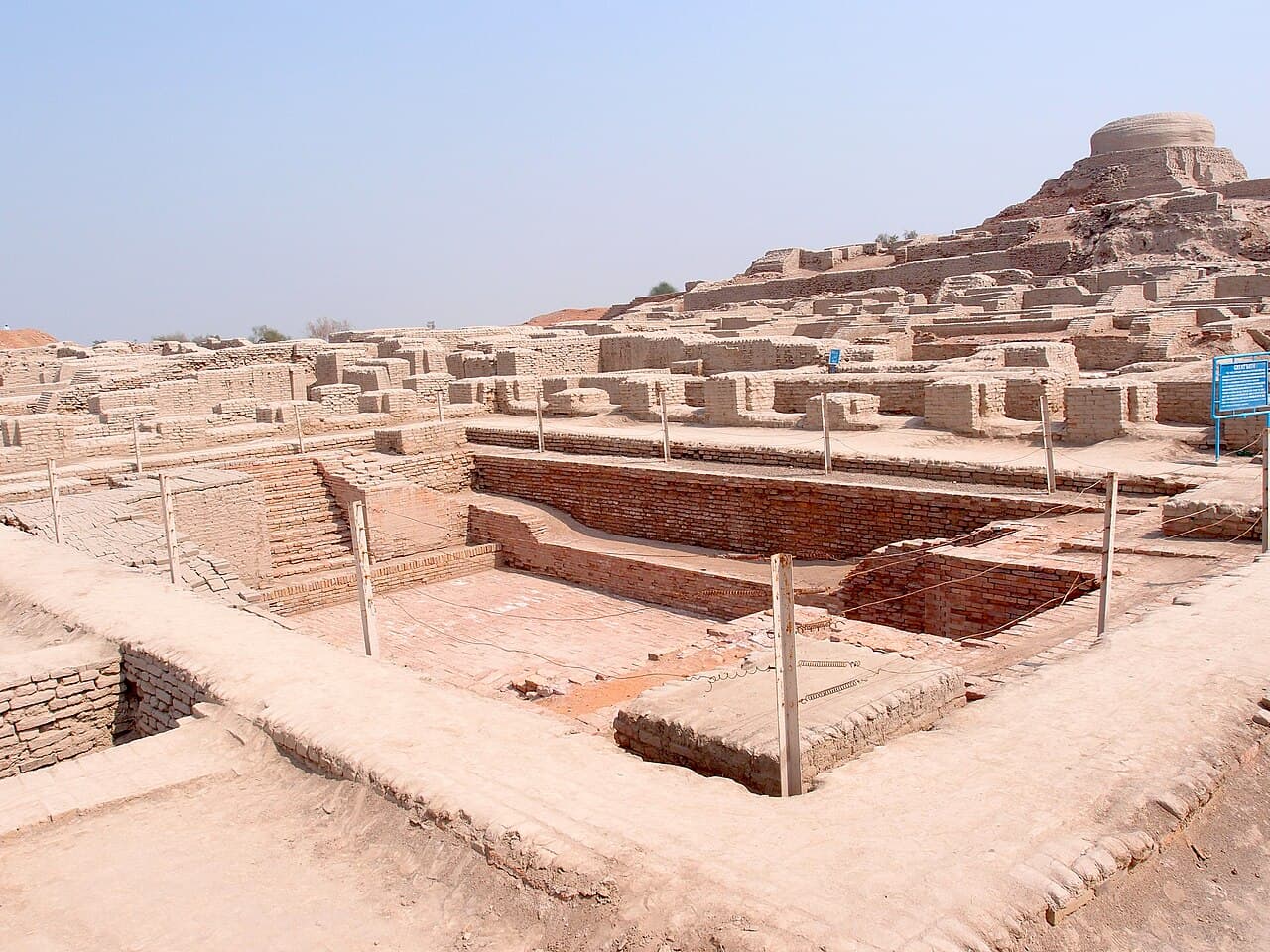
Perhaps most impressive was their approach to sanitation. Nearly every house at Mohenjo-daro was equipped with a bathroom and a toilet connected to a covered municipal drainage system, complete with manholes for maintenance — a feature unrivalled by contemporary civilisations such as Sumer and Egypt. The absence of grand palaces, temples, or kings' tombs is equally striking. This archaeological flatness — the lack of obvious hierarchies or monumental displays of power — leaves much about their political structure to speculation. The largest structure discovered, the Great Bath, measures roughly 12 by 7 metres and may have served a communal or ritual function. Yet, what the political organisation or spiritual life of the Indus people looked like remains largely unknown.
The script
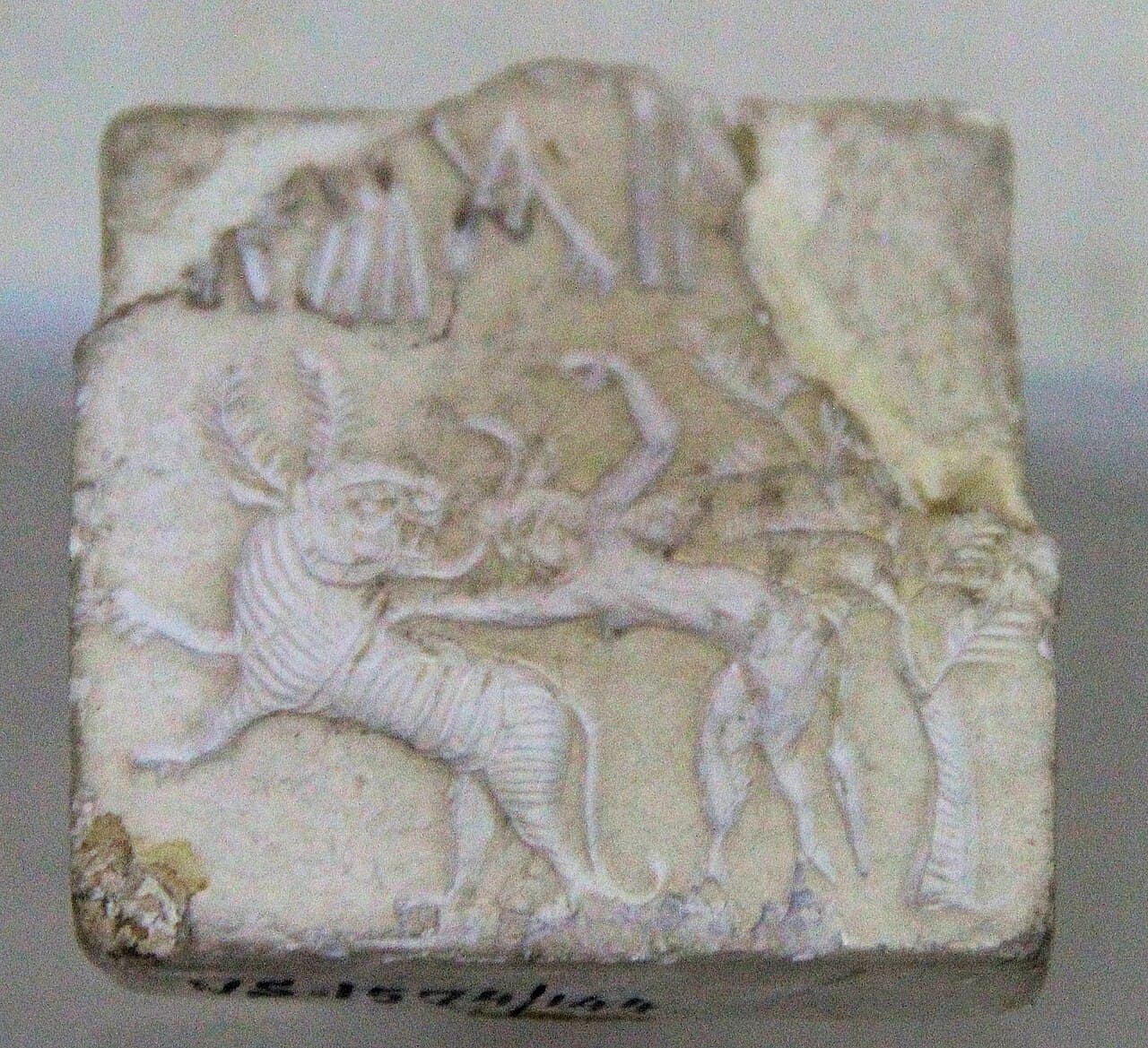
The Indus script is one of the most enigmatic aspects of this civilisation. Thousands of seals have been uncovered, typically crafted from carved soapstone, featuring an animal motif above a series of glyphs. These inscriptions are usually brief, with the longest known example containing just 26 signs. The script comprises around 400 distinct signs, yet it has resisted decipherment for nearly a century. The brevity of the inscriptions, coupled with the unknown language underlying the script, poses significant challenges to researchers.
In 2004, a controversial paper by Farmer, Sproat, and Witzel argued that the symbols might not constitute a true writing system at all, but rather a collection of non-linguistic emblems. This hypothesis has sparked vigorous debate within the scholarly community, with most specialists maintaining that the script is indeed a form of writing, albeit one we have yet to crack. The absence of a Rosetta Stone equivalent or bilingual texts complicates efforts to understand this script, leaving its mysteries unsolved.
The end
By around 1900 BCE, the great cities of the Indus Valley were largely abandoned, marking the decline of this once-thriving civilisation. The reasons for this decline have been hotly debated. Earlier theories posited an 'Aryan invasion,' popularised by Mortimer Wheeler in the 1940s, based on the presence of unburied skeletons at Mohenjo-daro, which were mistakenly attributed to a violent conquest. However, these skeletons are now understood to belong to later squatters, not victims of a mass slaughter.
Current leading hypotheses suggest environmental changes played a crucial role. The 4.2-kiloyear event, a period of widespread aridification, is evident in geological records from Oman to India. Additionally, the failure of the Sarasvati / Ghaggar-Hakra river system, which supported the eastern part of the civilisation, likely compounded the stresses on these urban centres. It is now believed that these cities did not collapse overnight but rather experienced a gradual decline over several centuries, as climatic and hydrological changes rendered the region less hospitable.
What survived
Despite the disappearance of the Indus Valley Civilisation, some elements may have persisted into later South Asian cultures. The 'Pashupati seal' from Mohenjo-daro, depicting a horned figure surrounded by animals, has been interpreted by some scholars as an early representation of the Hindu god Shiva, though this identification remains contentious. Brick-laying practices in modern Sindh and Punjab still echo the dimensions used by the Harappans, suggesting a continuity of architectural tradition.
The tradition of black-on-red painted ware continued in the region for centuries after the decline of the Harappan cities, indicating a cultural persistence beyond the civilisation's peak. However, the script and much of the civilisation's cultural and religious practices vanished. Without decipherable written records, the reconstruction of their social and religious life relies heavily on archaeological interpretation, leaving many questions unresolved.
The Indus Valley Civilisation poses numerous open questions, highlighting the gaps in our understanding. We do not know what they called themselves or the language they spoke. Their system of governance remains elusive, as does the nature of their religious practices and the deities they may have worshipped. Compared to other Bronze Age civilisations, such as those in Sumer or Egypt, the Indus Valley remains shrouded in mystery despite extensive excavations. The primary impediment to a fuller understanding is the undeciphered script. Should we one day unlock the meanings behind the seals, it is likely that much of what is currently unknown would become clear. Until then, the Indus Valley Civilisation continues to intrigue and confound scholars, standing as a testament to the complexity and diversity of early human societies.
References
- Possehl, G. L. (2002). The Indus Civilization: A Contemporary Perspective. AltaMira Press.
- Kenoyer, J. M. (1998). Ancient Cities of the Indus Valley Civilization. Oxford University Press / American Institute of Pakistan Studies.
- Farmer, S., Sproat, R., & Witzel, M. (2004). The collapse of the Indus-script thesis: the myth of a literate Harappan civilization. Electronic Journal of Vedic Studies, 11(2).
- Giosan, L., et al. (2012). Fluvial landscapes of the Harappan civilization. PNAS, 109(26), E1688–E1694.


