
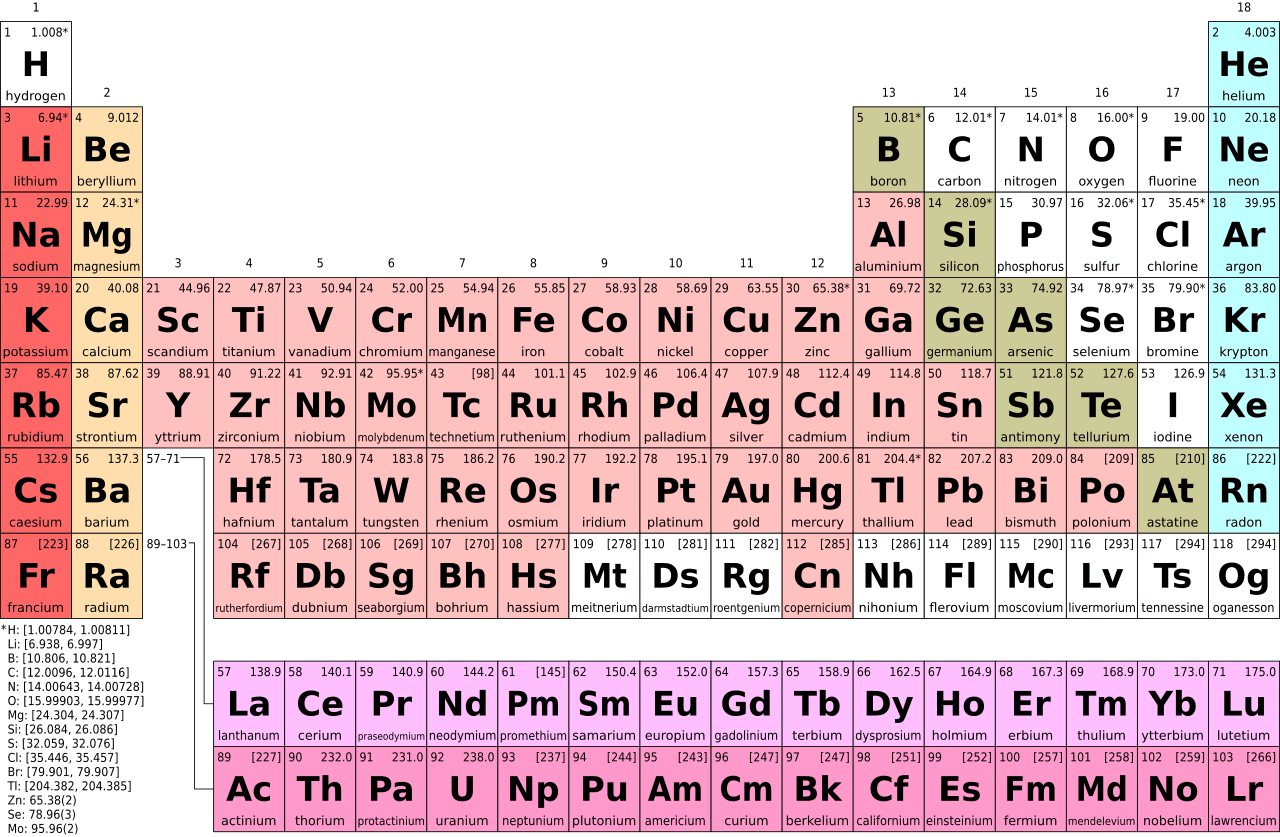
The human body is a complex tapestry of elements, a veritable inventory of stardust woven into flesh and bone. An average adult human carries approximately 4 grams of iron, predominantly found in haemoglobin and myoglobin, essential for oxygen transport and muscle function, respectively. In addition, the body holds about 25 grams of magnesium, integral to numerous biochemical reactions, 700 grams of phosphorus, a key component of DNA and cellular energy cycles, and a staggering kilogram of calcium, the structural backbone of our skeleton. However, none of these elements existed at the moment of the Big Bang. They were forged in the nuclear furnaces of stars, each atom synthesized through processes spanning billions of years and countless stellar lifetimes.
What the Big Bang made
In the immediate aftermath of the Big Bang, the universe was a seething cauldron of fundamental particles. Within the first three minutes, a process known as Big Bang nucleosynthesis unfolded, setting the stage for cosmic evolution. During this fleeting epoch, the universe cooled enough for protons and neutrons to combine, forming the lightest elements. The result was an elemental composition dominated by approximately 75% hydrogen and 25% helium by mass. Only trace amounts of lithium and beryllium emerged, marking the limits of this primordial alchemy. The periodic table, as we know it, was still largely unpopulated.
For the universe to be rich in carbon, oxygen, nitrogen, magnesium, silicon, iron, gold, uranium, and other heavier elements, something more was required. The early universe lacked the necessary environments for the synthesis of these heavier nuclei. It needed the extreme temperatures and pressures found in the hearts of stars, where lighter elements could fuse into their heavier counterparts. The story of elemental creation, therefore, shifted from the cosmic scale of the Big Bang to the stellar crucibles scattered across galaxies.
Stars as element factories
Stars, during their main-sequence phase, are industrious factories of fusion. In stars like our Sun, hydrogen nuclei fuse to form helium, releasing vast amounts of energy in the process. This fusion occurs at a staggering rate, with the Sun converting approximately 600 million tonnes of hydrogen into helium every second. As stars evolve, their cores contract and temperatures rise, enabling the fusion of helium into heavier elements such as carbon and oxygen. This sequence of fusion reactions, known as stellar nucleosynthesis, forms the backbone of elemental production for lighter elements.
In the life of a massive star, fusion progresses through successive stages, each defined by a new temperature threshold being crossed. As the core contracts and heats, it supports the fusion of progressively heavier elements: carbon into oxygen, oxygen into neon, neon into silicon, and finally silicon into iron-56. Each stage releases less energy and occurs over shorter timescales as the star races toward its end. The silicon-burning phase in particular, a precursor to the star's death, lasts a mere day before iron accumulates as the ultimate product in the core.
The wall at iron
Iron-56 represents a fundamental limit in stellar alchemy. It is the most tightly bound nucleus in terms of energy per nucleon, meaning fusing two iron nuclei requires rather than releases energy. Consequently, a star that has built up an iron core finds itself at an impasse. With fusion no longer viable to counteract gravitational forces, the core collapses rapidly, leading to a catastrophic implosion. This collapse is followed by an explosive rebound of the star's outer layers—a supernova.
The theoretical understanding of these processes owes much to the landmark work of Burbidge, Burbidge, Fowler, and Hoyle, documented in their 1957 paper on the synthesis of elements in stars. This paper, commonly referred to as B²FH, laid the groundwork for modern astrophysics. William Fowler, one of the authors, was awarded the Nobel Prize in Physics in 1983 for his contributions, although the recognition did not extend to his co-authors.
Beyond iron: where the rest came from
Elements heavier than iron, including copper, silver, gold, and uranium, are formed through neutron capture processes rather than fusion. The two primary neutron capture processes are known as the s-process and the r-process. The s-process, or slow neutron capture, occurs over thousands of years within the interiors of asymptotic giant branch stars. It is responsible for creating some of the lighter heavy elements like strontium and barium.
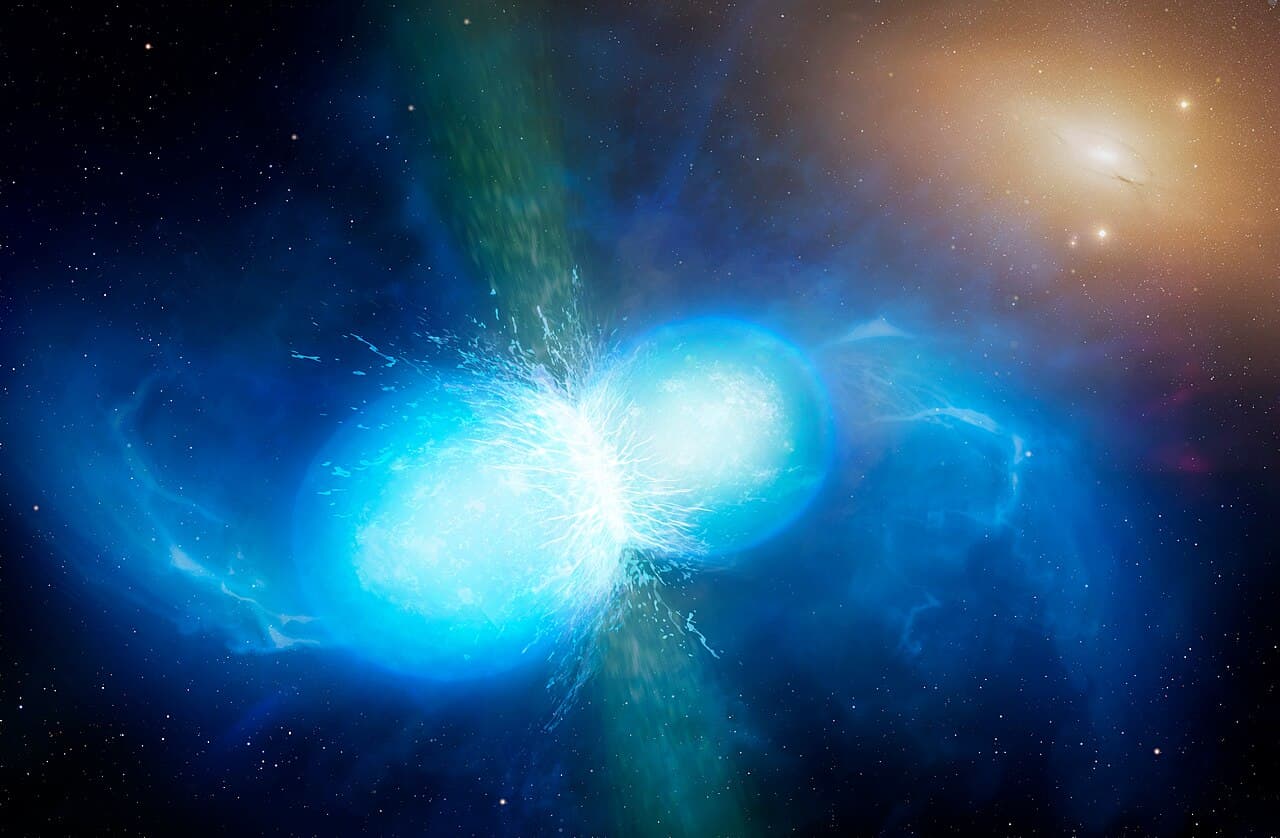
In contrast, the r-process, or rapid neutron capture, requires the cataclysmic environments of supernovae or neutron star mergers, where neutron fluxes are immensely high. The August 2017 detection of GW170817, a neutron star merger observed through gravitational waves and electromagnetic signals, provided definitive evidence of r-process nucleosynthesis. Observations captured the synthesis of heavy elements, such as gold and platinum, in the aftermath, confirming the role of such extreme events in creating the universe's heaviest constituents.
Getting to Earth
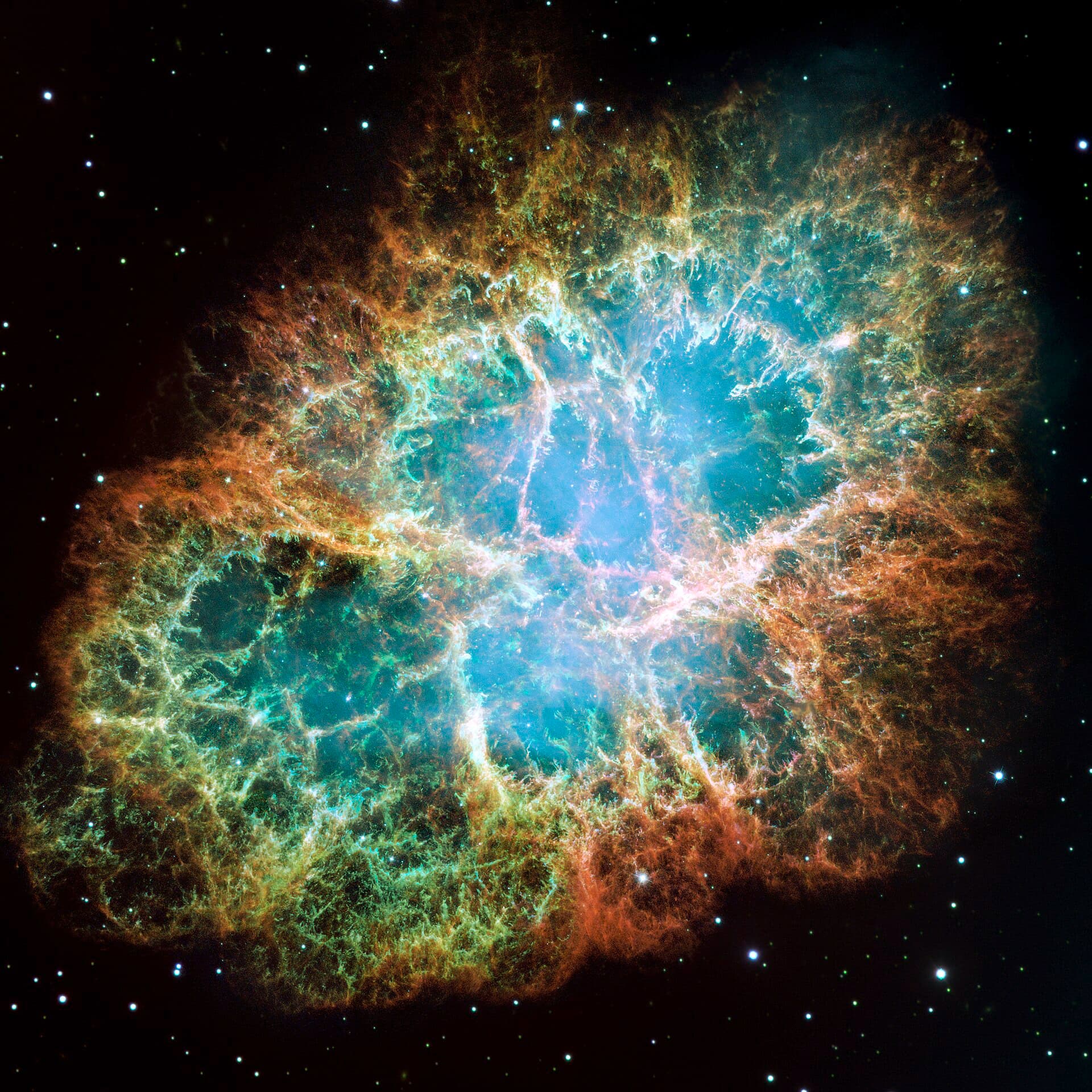
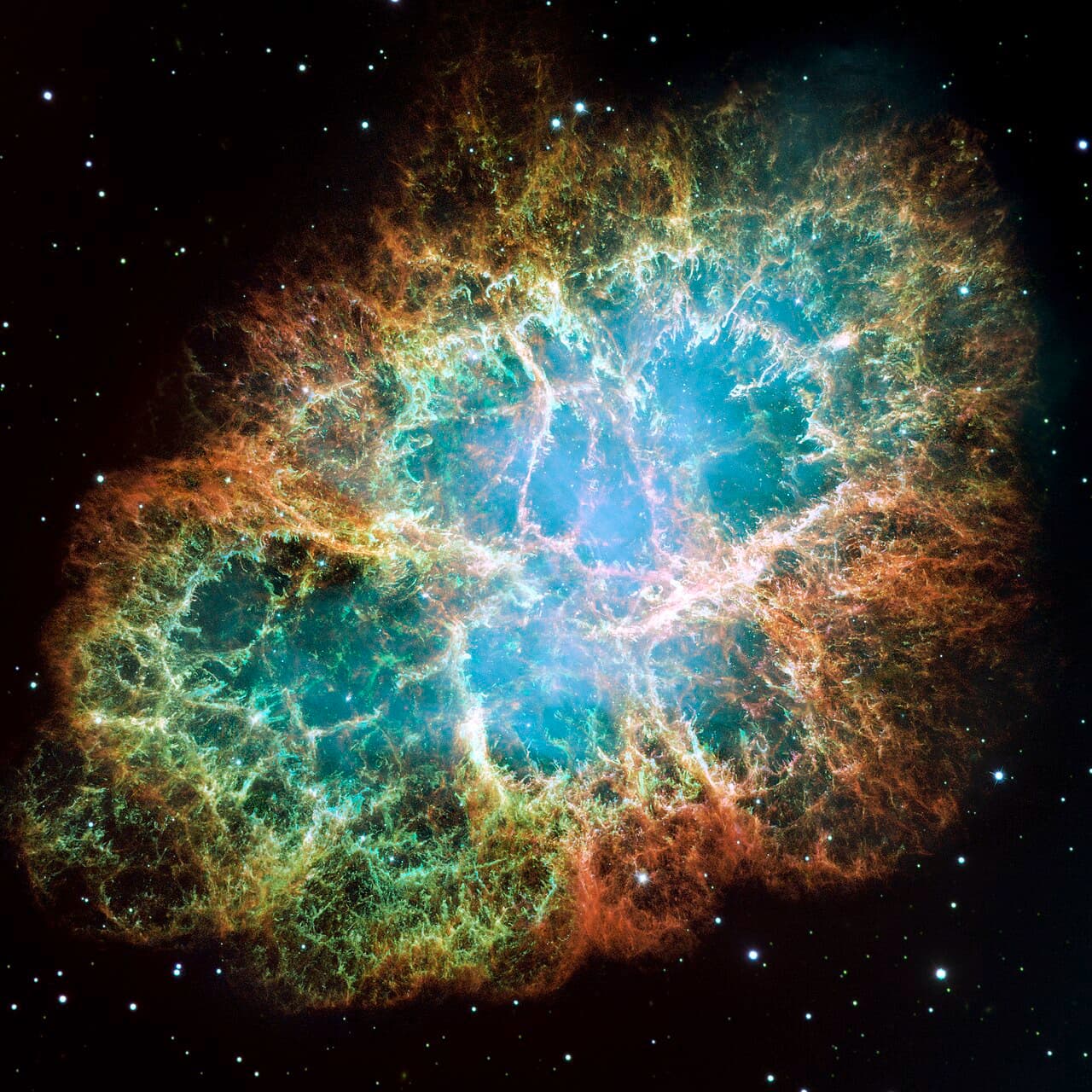
When a massive star explodes as a supernova, it scatters its enriched contents into the interstellar medium. This debris, a mixture of elements forged over a star's lifetime, drifts through space, seeding the galaxy with heavy elements. Over tens or hundreds of millions of years, some of this material becomes part of a molecular cloud, the precursor to new stellar systems. Our solar system emerged from such a cloud about 4.54 billion years ago, incorporating the remnants of previous generations of stars into its makeup.
The Sun itself is a third-generation star, born from the ashes of earlier stars that lived and died, enriching the galaxy with the fruits of their nuclear labor. The heavy elements present in our solar system have passed through at least one, if not several, cycles of stellar life and death, each cycle adding to the cosmic inventory available for planet formation.
Consider the personal arithmetic of cosmic history. The 4 grams of iron in your blood, vital for the red coloration of haemoglobin and the transport of oxygen from your lungs to your cells, has a storied lineage. This iron was assembled in the core of a star that met its fiery end somewhere in the Milky Way's disk around nine billion years ago. The supernova explosion dispersed the iron into space, where it drifted for eons before being incorporated into the molecular cloud that gave birth to our solar system. As Earth formed and differentiated, the iron became part of its geochemical and biological cycles, eventually finding its way into you. Though gaps remain in this cosmic narrative, each link in the chain is a testament to the intricate dance of matter that bridges the heavens and life on Earth.
References
- Burbidge, E. M., Burbidge, G. R., Fowler, W. A., & Hoyle, F. (1957). Synthesis of the Elements in Stars. Reviews of Modern Physics, 29(4), 547–650.
- Abbott, B. P., et al. [LIGO/Virgo + electromagnetic follow-up collaborations] (2017). Multi-messenger observations of a binary neutron star merger. ApJL, 848(2), L12.
- Pian, E., et al. (2017). Spectroscopic identification of r-process nucleosynthesis in a double neutron-star merger. Nature, 551, 67–70.
- NASA Cosmicopia overview of stellar nucleosynthesis.


