

In 415 CE, as Hypatia walked through Alexandria, she traversed a city that had long been a beacon of knowledge, yet one whose grand library had been disintegrating for centuries. Her murder was a brutal marker of the tensions between old knowledge and new power, but it was not the bookend of Alexandria’s intellectual era. By the time of her death, the physical remnants of the Great Library had been slipping away, not from a single cataclysmic event, but through a series of cumulative failures. The mythical image of the library engulfed in flames, attributed to Julius Caesar’s actions in 48 BCE, is a compelling narrative, yet it simplifies a more complex reality. The Library of Alexandria did not fall in a single stroke; it was a victim of gradual neglect and the fragility of its papyrus scrolls.

What was there at its height
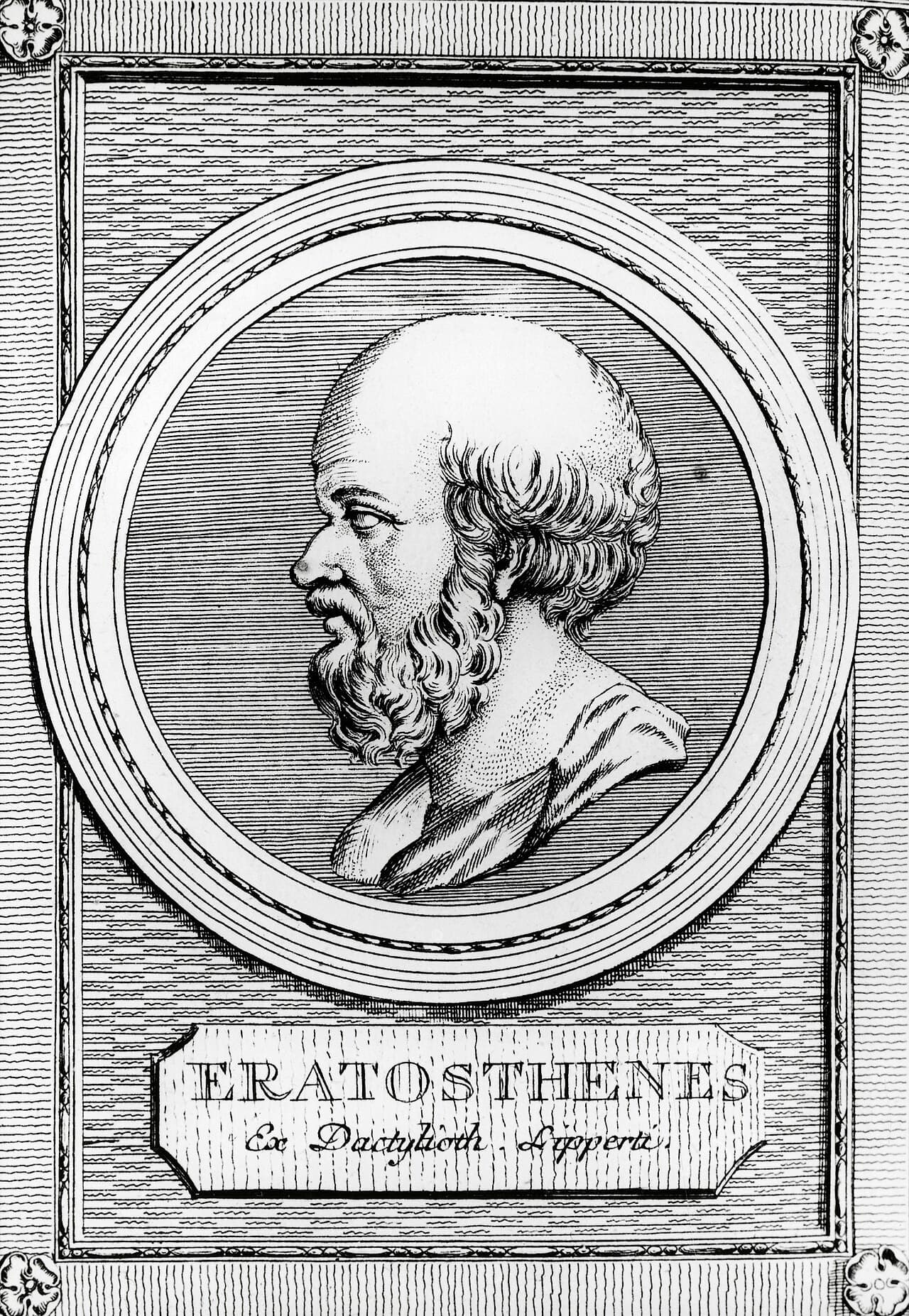
The Library of Alexandria was founded around 295 BCE under Ptolemy I Soter, who envisioned it as a centre of learning and cultural accumulation. It expanded significantly under his successor, Ptolemy II Philadelphus. At its height, the library's holdings were estimated to contain between 400,000 and 700,000 scrolls. These were not books in the modern sense but papyrus scrolls, each containing a portion of what we would recognise as a complete work. The institution commissioned translations, most famously the Septuagint, a Greek translation of Hebrew scriptures. Many renowned scholars were associated with the library. Eratosthenes, who measured the Earth's circumference with remarkable accuracy, served as a librarian there. Apollonius of Rhodes and the geometer Euclid were also linked to its golden age. The library functioned as more than a repository; it was a research institution where scholars from diverse disciplines converged to share and generate new knowledge. Its role as a centre for intellectual pursuit was unparalleled, setting the stage for the advancement of science, literature, and philosophy.
The Caesarean fire and what it actually destroyed
The story of the library’s destruction is often linked to Julius Caesar's campaign in Alexandria in 48 BCE. During the conflict, Caesar ordered the burning of ships in the harbour to thwart the Egyptian fleet, and this fire spread to the docks. Roman authors such as Plutarch, Aulus Gellius, and Cassius Dio describe the destruction of books, yet their accounts vary considerably in detail and reliability. These descriptions, written centuries later, suggest that a warehouse of scrolls intended for export was destroyed rather than the main library itself. It is important to acknowledge that the library continued to exist in some form after Caesar’s campaign. Later sources confirm its persistence and activity, indicating that while the fire may have caused significant loss, it was not the singular catastrophe that led to the library's demise. Instead, it was part of a series of events that eventually contributed to the diminishing of its vast collection.

What happened after Caesar
In the decades following Caesar’s intervention, the Library of Alexandria continued to operate. Strabo, visiting the city around 25 BCE, documented its ongoing function. By the time of Suetonius, around 100 CE, the library still held an important place in the intellectual landscape of the Roman Empire. However, the library’s fortunes were tied to the larger Muselayon complex, which may have been destroyed during the political unrest of Aurelian's campaign in 272 CE. A critical blow came in 391 CE, when a portion of the collection housed at the Serapeum was lost. This temple, converted to a Christian church, was demolished by a mob under the orders of Theophilus of Alexandria. The loss of the Serapeum marked a significant cultural and intellectual setback. By the time of the Arab conquest in 642 CE, the library's infrastructure had long since deteriorated. While later Islamic historians attribute its destruction to the Arabs, this claim, much like the legend of Caesar's fire, does not reflect the complexities and gradual decline the library had experienced over centuries.
What actually killed the collection
The true demise of the Library of Alexandria was not a result of spectacular destruction but of a slow and inexorable decline in institutional support. The library's collection relied on the continual process of copying and preserving texts. Papyrus, the primary material for scrolls, is vulnerable to the passage of time and environmental factors. Without active maintenance and recopying, these documents deteriorate within 100 to 300 years. As Ptolemaic Egypt waned and became part of the Roman world, the resources and attention required to sustain the library diminished. The infrastructure necessary to uphold its collection—scribes, funding, and a coherent administrative framework—eroded. By the time any attempts were made to physically destroy the library, its holdings had already significantly dwindled through neglect. By 642 CE, what little remained was largely insignificant, and the once-glorious library was a shadow of its former self.
What we lost (specifically)
The losses from the Library of Alexandria’s decline are profound. Of the estimated 1,000 plays by the major Greek tragedians, fewer than 40 survive today. Sappho’s poetry, once collected in nine volumes, now exists only in fragments. The comprehensive records of Aristotle's school, specifically its Histories, have vanished almost entirely. The astronomical works from the Hellenistic period, beyond the preserved writings of Ptolemy and a few others, are largely lost. The later works of Apollonius of Perga, an influential mathematician, have also been lost to history. These gaps in our understanding highlight the scale of the intellectual heritage that passed through Alexandria and was irretrievably lost. The Hellenistic scientific and cultural revolution, which laid many foundations for future developments, is now understood only through the summaries and references that survived the collapse of its primary sources.
The lesson offered by the story of the Library of Alexandria is not one of dramatic destruction but of the quiet tragedy of neglect. It serves as a potent reminder of the fragility of human knowledge when its preservation is not actively pursued. As digital archives expand, the cautionary tale of Alexandria becomes increasingly relevant. The infrastructure that supports knowledge preservation must be robust, lest we face a similar loss in our own era. The library has been gone for over a millennium, yet the warning it provides grows only more pertinent. In an age where information proliferates at an unprecedented rate, the capacity to maintain, archive, and transmit this knowledge is as crucial as ever. The silent, gradual death of the Library of Alexandria underscores the enduring necessity of vigilance in the stewardship of cultural and intellectual heritage.
References
- Bagnall, R. S. (2002). Alexandria: Library of Dreams. Proceedings of the American Philosophical Society, 146(4), 348–362.
- MacLeod, R. (Ed.). (2002). The Library of Alexandria: Centre of Learning in the Ancient World. I.B. Tauris.
- El-Abbadi, M. (1990). The Life and Fate of the Ancient Library of Alexandria. UNESCO.
- Strabo, Geography, Book XVII (description of Alexandria, c. 25 BCE).


