

The textbook story of money's origin is a familiar one: in the beginning, there was barter. Adam Smith, in 1776, framed the narrative that people exchanged goods directly—fish for axes, for instance. Barter, however, was inefficient because it relied on a 'coincidence of wants': if you needed an axe but your neighbour didn't want fish, trade stalled. Hence, communities supposedly invented money, a universally accepted intermediate good—like cattle or silver—enabling smoother transactions. Eventually, from this simple invention, emerged banking, credit systems, and modern finance. This neat story, taught in introductory economics classes, is compelling in its simplicity. However, a century of anthropological evidence dismantles this narrative. No documented society functioned via barter in the manner Smith described. Societies without money typically managed intricate webs of debt and reciprocity, using coins sparingly for marginal transactions or dealings with outsiders. Money, in truth, has always been a social construct. Graeber aptly called this barter origin tale 'an economist's just-so story'.

What anthropology actually shows
Anthropologist Caroline Humphrey's 1985 study articulated a pivotal insight: 'No example of a barter economy, pure and simple, has ever been described, let alone the emergence from it of money.' This statement punctures the balloon of conventional economic thinking. Instead of bartering, societies without coined money often operated on systems of credit and mutual obligation. Take the Trobriand Islanders of Melanesia, meticulously chronicled by Bronisław Malinowski during the 1910s. Their kula ring system wasn't about barter; it was an elaborate network of ceremonial exchange involving shell necklaces and armbands that strengthened inter-island relations through credit and debt. Similarly, medieval Iceland, as depicted in its Sagas, conducted transactions in terms of obligations measured in ells of cloth, using it as a unit of account rather than a commodity being physically exchanged.
The Sumerians, around 3000 BCE, provide another illustration. Their surviving accounting records reveal that while silver weights served as units of account, actual settlements were predominantly in grain and other everyday goods. This demonstrates that money as a concept of accounting predates its material embodiment by millennia. Hence, the history of money appears as a succession of social agreements, evolving far beyond the simplistic barter-to-money progression suggested by traditional economic theory.
Graeber's argument
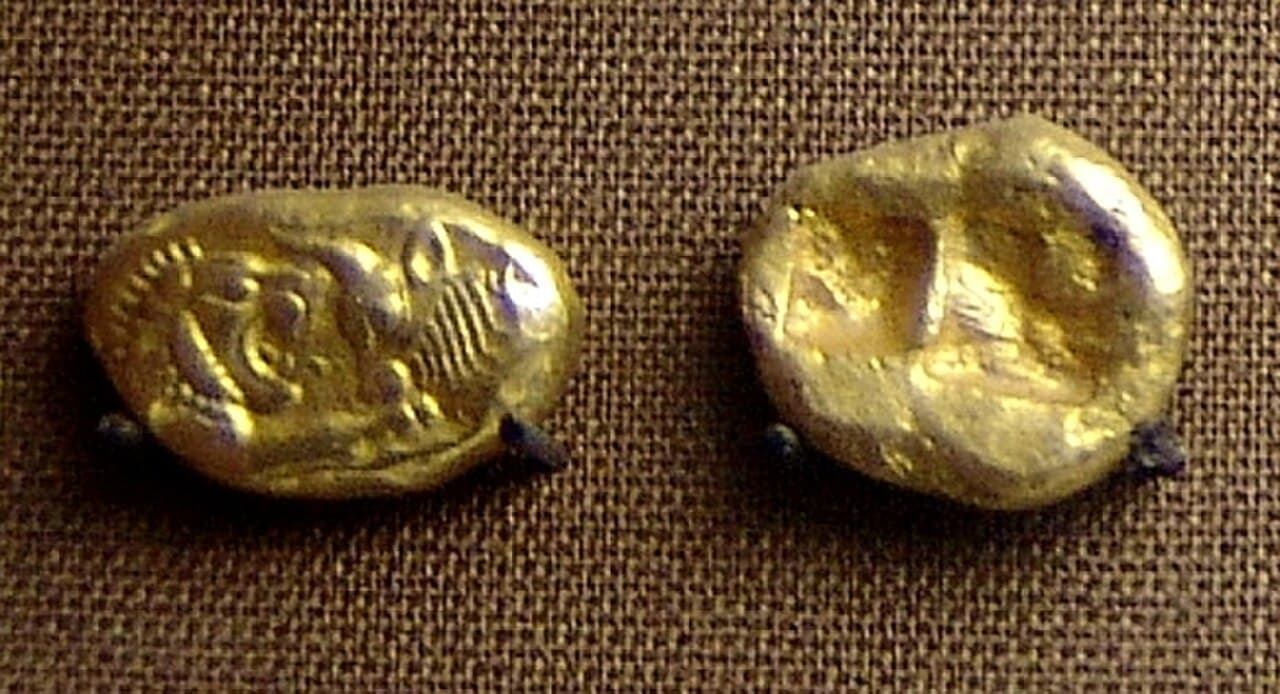
David Graeber, in his 2011 book 'Debt: The First 5,000 Years', brings anthropological and historical evidence into a cohesive argument against the traditional view. He posits that money emerged from complex networks of credit and debt, predating market economies by thousands of years. Coinage, he argues, came later, arising around 600 BCE in three separate locations: Lydia, Greece, and China, primarily for state purposes such as paying soldiers and levying taxes. This theory starkly contrasts with the Enlightenment-era belief that money emerged from barter—a projection Graeber dismisses as fantasy.
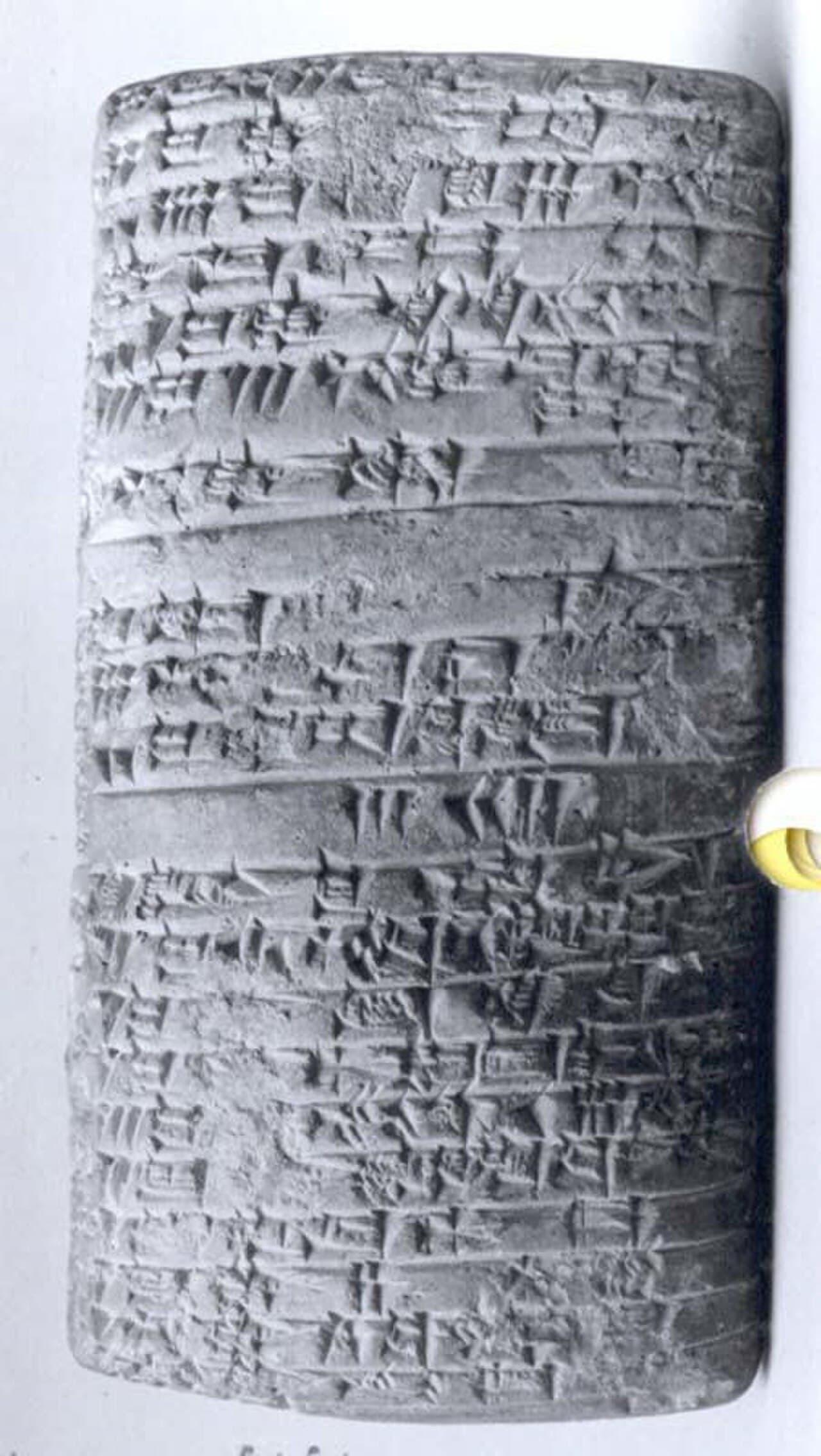
Graeber's framework suggests that the historical sequence of money's evolution is: credit and debt systems precede the invention of coined money, which subsequently facilitates market exchanges and modern finance. While his argument has faced critiques from economists concerning specific historical interpretations, the core observation that no society transitioned directly from barter to money remains compelling and unchallenged.
The Yapese stone money
The island of Yap, in Micronesia, offers a striking illustration of money's social nature. There, pre-modern currency comprised rai stones—massive limestone discs quarried on distant Palau and transported by sea. These stones ranged dramatically in size, and the process of acquiring them involved significant communal effort and risk. A particularly illuminating case involved a rai stone that sank during transport. Despite its resting place on the seabed, it remained a part of Yap's economy. As documented by American anthropologist William Furness in 1903, the ownership of this submerged stone continued to change hands through social transactions.
The Yapese understanding was clear: the stone itself was not the money, but rather the agreed-upon ownership was. This perspective echoes through history and draws parallels with modern systems, such as the gold reserves at Fort Knox that function similarly as symbols of value based on collective belief.
Coined money, briefly
Coined money's introduction around 600 BCE marks a pivotal shift in economic history. In Lydia, modern-day western Turkey, King Alyattes began minting coins from electrum, which quickly spread to archaic Greece and the Chinese kingdom of Chu. The simultaneous emergence of coins in distinct cultures suggests a convergence of socio-economic needs. The rise of professional armies necessitated a stable, standardised medium for payment, while the administrative demands of burgeoning states required taxation in defined units. Although coins rapidly became the prevalent form of currency, the foundational social agreements underpinning transactions—credit and mutual obligation—remained unchanged.
Coins facilitated commerce by providing a portable, divisible, and recognisable medium of exchange, yet they were a development layered atop older systems of accounting and trust. The physical presence of a coin was less important than the mutual recognition of its worth, reflecting deeper, long-standing economic principles.
Banking and the long story
The re-emergence of banking in Europe post-1100 CE tells of an evolving trust in paper and credit. The Knights Templar, in the 12th and 13th centuries, operated a rudimentary international banking system, allowing pilgrims to transfer wealth across continents via letters of credit. Later, during the Renaissance, financial houses like the Medici and Fugger banks advanced these practices, while national banks in England, the Netherlands, and Sweden began issuing paper banknotes by the 17th century.
These notes represented claims on metal reserves, which in turn symbolised claims on real economic output—labour and goods. The 1971 abandonment of the gold standard, led by the United States, underscored the abstraction of modern money: it is now backed by nothing more than a shared belief in its value. This shift made explicit what anthropologists had long argued: money is fundamentally a social agreement, and the tangible materials of coins and metal reserves have always been secondary to this.
Digital money and the strange present
The advent of Bitcoin in 2009, by the enigmatic Satoshi Nakamoto, adds a new chapter to the complex story of money. Marketed as 'money without trust,' Bitcoin operates on a decentralised, cryptographic ledger—making it a novel iteration of an ancient concept. Yet, the notion that Bitcoin functions independently of social agreement is mistaken. Like all currencies, its value hinges on collective belief. The blockchain automates record-keeping, but the trust in Bitcoin's value remains a social phenomenon.
Should the community cease to believe in Bitcoin's worth, its ledger would become a digital artifact, devoid of value. Bitcoin's innovation lies in making the trust mechanism visible and immutable through technology, yet the essential social contract underpinning all forms of money endures unchanged. From Yapese stones to cryptographic keys, the essence of money remains consistent: a shared narrative that facilitates exchange and cooperation.
Money is not a tangible entity, but a relationship that fluctuates within various vessels over time. Whether cattle, silver, coin, or cryptocurrency, these are merely transient containers of the enduring social reality that others will accept them in exchange for goods or services. The containers evolve, but the foundational truth does not. Even young children grasp this concept more intuitively than economists: the value of a banknote lies in collective agreement. Adam Smith and his disciples were correct in recognising money's utility but mistaken in their understanding of its origins. Money predates barter, coins, and markets; it is rooted in the age-old practice of establishing trust and reciprocity among strangers. The narrative we construct around money may shift, yet the act of storytelling itself is what sustains the entire system.
References
- Graeber, D. (2011). Debt: The First 5,000 Years. Melville House.
- Humphrey, C. (1985). Barter and Economic Disintegration. Man, 20(1), 48–72.
- Furness, W. H. (1910). The Island of Stone Money: Uap of the Carolines. J.B. Lippincott.
- Friedman, M. (1991). The Island of Stone Money. Hoover Institution Working Paper E-91-3.


