

In the centuries before industrialisation, salt was not the ubiquitous, inexpensive seasoning it is today. Instead, it was an essential commodity, scarce and highly valued. Its importance lay in its role as the only reliable means of preserving food over long periods, particularly meat and fish during the harsh winters, before refrigeration existed. Salt was also integral in the production of cheese and butter, fermentation of vegetables, and the tanning of hides. Human physiology demands about 1.5 grams of sodium each day, making it a critical resource for survival. For pre-modern societies, securing a stable supply of salt was as crucial as accessing fresh water, and states that controlled salt could leverage its scarcity by imposing taxes. Conversely, states deprived of it faced the stark choice of either negotiating for access or waging wars to secure this vital mineral.

Where it comes from
Salt has been sourced through three main methods across millennia: rock-salt mining, saltpan evaporation, and brine boiling. Each method has its own economic implications, influencing regional dominance in the salt trade. The rock-salt mines of Hallstatt in Austria have a history stretching back at least 7,000 years, while the Wieliczka mine in Poland has been operational for around 800 years. These mines represented significant sources of wealth and political power. In coastal regions and areas around salt lakes, such as Guérande in France and the Camargue, saltpan evaporation was the primary method. The Dead Sea, rich in saline content, also provided substantial quantities of salt through natural evaporation. Lastly, brine boiling from underground springs was common in regions like Cheshire in England and Sichuan in China. Control over these productive sites often established long-lasting economic and political influence in the surrounding areas.
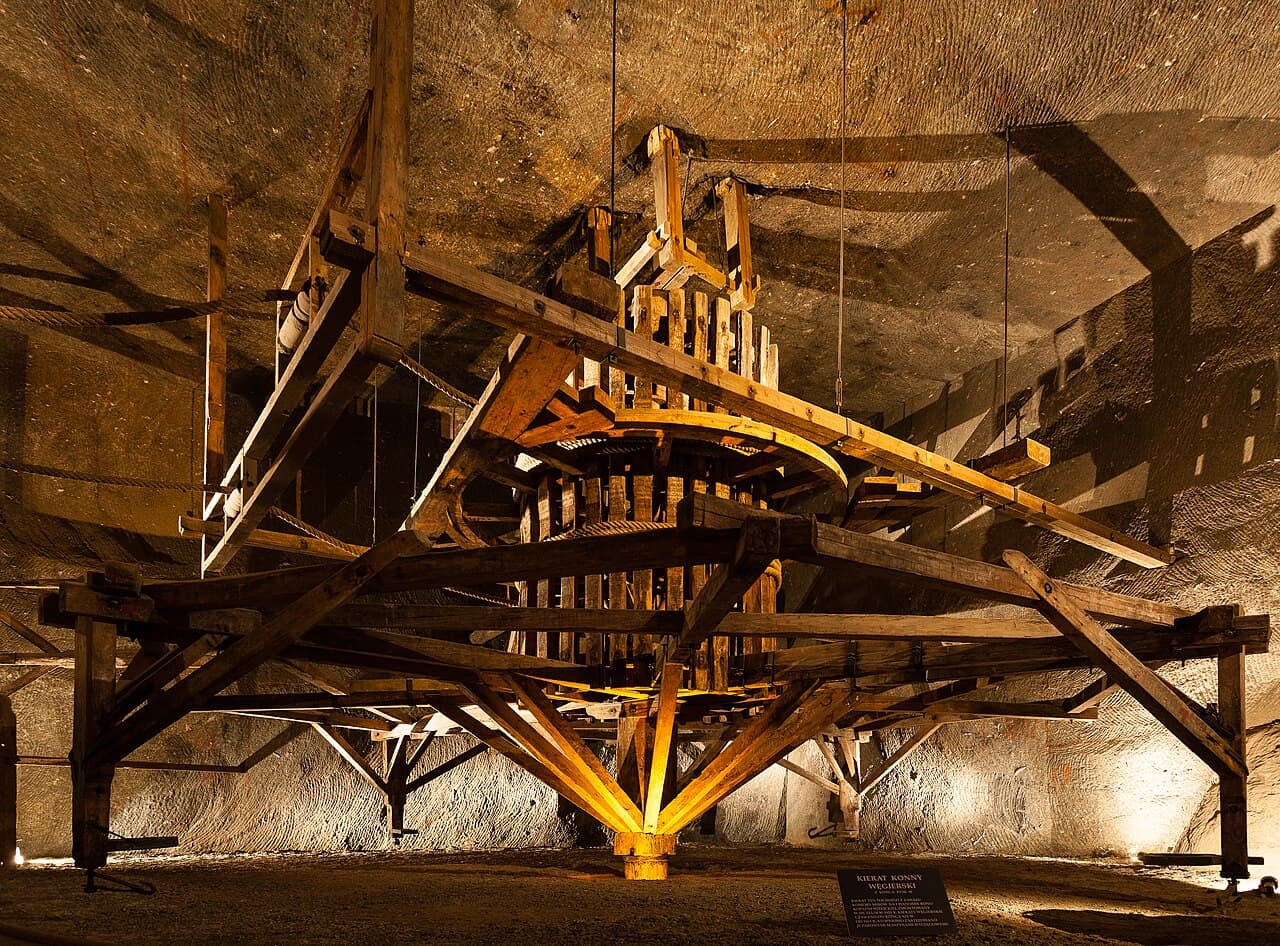
In many cases, the monopoly of salt production at these strategic sites allowed for economic dominance and facilitated taxation policies. The varying methods of salt extraction had their own costs and labor requirements, but the end product was a valuable commodity that could sustain economies for centuries. In regions where salt was plentiful, it fostered trade networks that extended beyond local borders, integrating communities into broader economic systems. The geographic distribution of these resources determined the political and economic landscapes of entire regions, making salt an indispensable element of statecraft.
The Roman salt road
One of the earliest and most significant historical examples of salt's strategic importance is the Via Salaria, the ancient Roman 'salt road.' This thoroughfare stretched approximately 240 kilometres from the salt pans at Ostia on the Adriatic coast, near what is today Porto d'Ascoli, directly to the heart of Rome. As one of the oldest Roman roads, it facilitated the transport of salt to the burgeoning city and its surrounding areas, playing a crucial role in the logistics of the Roman economy. Roman soldiers received a portion of their compensation as a salt ration known as the 'salarium,' which is the origin of the modern term 'salary.' Though historians debate whether soldiers were literally paid in salt or given money to purchase it, the term reflects the substance's intrinsic value in Roman society.

The Via Salaria was more than just a trade route; it was a lifeline that supported Rome's military and civil expansion. The road symbolised Rome's ability to harness resources from across its domains, and control over such essential commodities enabled the Roman Empire to sustain its far-reaching influence. The strategic placement of roads like the Via Salaria illustrates how salt was not merely a seasoning but a critical component of the empire's infrastructure and military logistics.
Venice and the salt monopoly
The Venetian Republic's economic prowess in the medieval and early-modern periods owed much to its control over salt. From the 9th to the 18th centuries, Venice maintained a lucrative monopoly on salt trade, tightly regulating the flow of this precious commodity. Venetian galleys transported salt from the Mediterranean and Black Sea back to the city, where it was distributed throughout northern Italy and beyond. The Republic's salt office was instrumental in generating approximately 30 to 50 per cent of state revenue, a substantial contribution that financed the construction of iconic architecture such as the Doge's Palace and the artistic patronage of masters like Bellini and Titian.
Venice's strategic dominance of salt trade routes allowed it to exert considerable influence across Europe. The Republic enforced strict controls over salt commerce, ensuring that even distant regions felt the reach of Venetian economic policies. This monopoly was not merely about profit but about maintaining a power structure that allowed Venice to thrive amidst the complex political landscape of medieval Europe. Control of salt trade routes became synonymous with maritime dominance, and Venice's ability to manage this resource reflected its broader ambitions as a maritime power.
The gabelle and the French Revolution
The gabelle, a tax on salt, was one of the most notorious aspects of French fiscal policy from the 14th century onwards. As a state monopoly, the gabelle required every individual over the age of seven to purchase a fixed amount of salt annually from royal depots, often at exorbitant prices. This tax was not uniformly applied; regions in proximity to salt production paid significantly less than those further away. Such disparities fueled widespread resentment, leading to the proliferation of salt smuggling, known as 'faux-saunage,' which became a significant underground economy.
In the lead-up to the French Revolution, the gabelle emerged as a symbol of the Ancien Régime's inequitable and oppressive taxation system. It was frequently cited in the cahiers de doléances, the lists of grievances drawn up by the estates in 1789, underscoring the widespread discontent it engendered. The gabelle's abolition was one of the Revolution's early acts, demonstrating the deep connection between salt and the broader struggles for economic and social justice. This episode highlights how control over essential resources can become a flashpoint for larger societal transformations.
The British and Indian salt
In colonial India, the British imposed a draconian salt monopoly that epitomised the exploitative nature of imperial rule. Beginning with the East India Company in 1788 and continuing under the British Raj, the salt laws severely restricted local production and levied heavy taxes on salt. Villagers along India's extensive coastline found their traditional salt-making methods either banned or heavily taxed, with the colonial government sometimes going so far as to destroy existing salt stocks to keep prices high. Mohandas Gandhi recognised the salt laws as a focal point of colonial injustice and selected them as the first target of civil disobedience.
On 12 March 1930, Gandhi embarked on the historic Salt March, walking from his ashram in Sabarmati to the coastal village of Dandi, where on 6 April he famously picked up a handful of natural salt, defying the law. This simple yet potent act inspired a nationwide civil disobedience movement, leading to the arrest of tens of thousands of Indians. While the salt monopoly persisted until 1946, the Salt March significantly undermined the moral authority of British rule in India, contributing to the empire's eventual dissolution. Gandhi's strategic choice highlighted salt's enduring symbolism as a tool of resistance and a rallying cry for independence.
Why this stopped mattering
The late 19th century marked a turning point in the history of salt, as technological advances revolutionised its production and distribution. The development of the chlor-alkali process and large-scale solar evaporation methods, particularly in regions like California, Texas, and Australia, dramatically reduced salt's cost. By 1950, global salt production had surged to around 50 million tonnes annually, a figure that rose to approximately 300 million tonnes by 2020. This exponential increase shifted salt from a strategic resource to a common commodity, predominantly used in industrial applications such as chemical manufacturing, road de-icing, and water treatment.
As salt became plentiful and cheap, its role as an economic lever for state power diminished. The ability of governments to exert control through salt taxation faded into irrelevance. No longer the backbone of state revenues or a cause for conflict, salt's transformation reflects the broader industrial shifts that reshaped global economies in the 20th century. Its strategic significance evaporated, leaving behind an era where it was once a linchpin of economic power and political influence.
The historical trajectory of salt reveals a broader truth about commodities and power. Throughout history, the importance of salt lay not in its intrinsic value but in the leverage it provided to those who controlled it. This pattern of domination through essential goods has repeated with other commodities like spices, opium, sugar, oil, and semiconductors. The critical question is not which commodity holds sway at any given time, but who has the foresight to exploit its potential. As the global economy evolves, new commodities will rise to prominence, shaping the contours of power in ways that reflect the enduring dynamics of resource control.
References
- Kurlansky, M. (2002). Salt: A World History. Walker & Company.
- Hocquet, J.-C. (1979). Le sel et la fortune de Venise (2 vols). Lille: Presses Universitaires.
- Bhattacharyya, D. (2010). Empire and ecology in the Bengal delta: the making of Calcutta. Cambridge University Press.
- Gandhi, M. K. (1930). Letter to Lord Irwin, 2 March 1930. In The Collected Works of Mahatma Gandhi, Vol. 48.


