
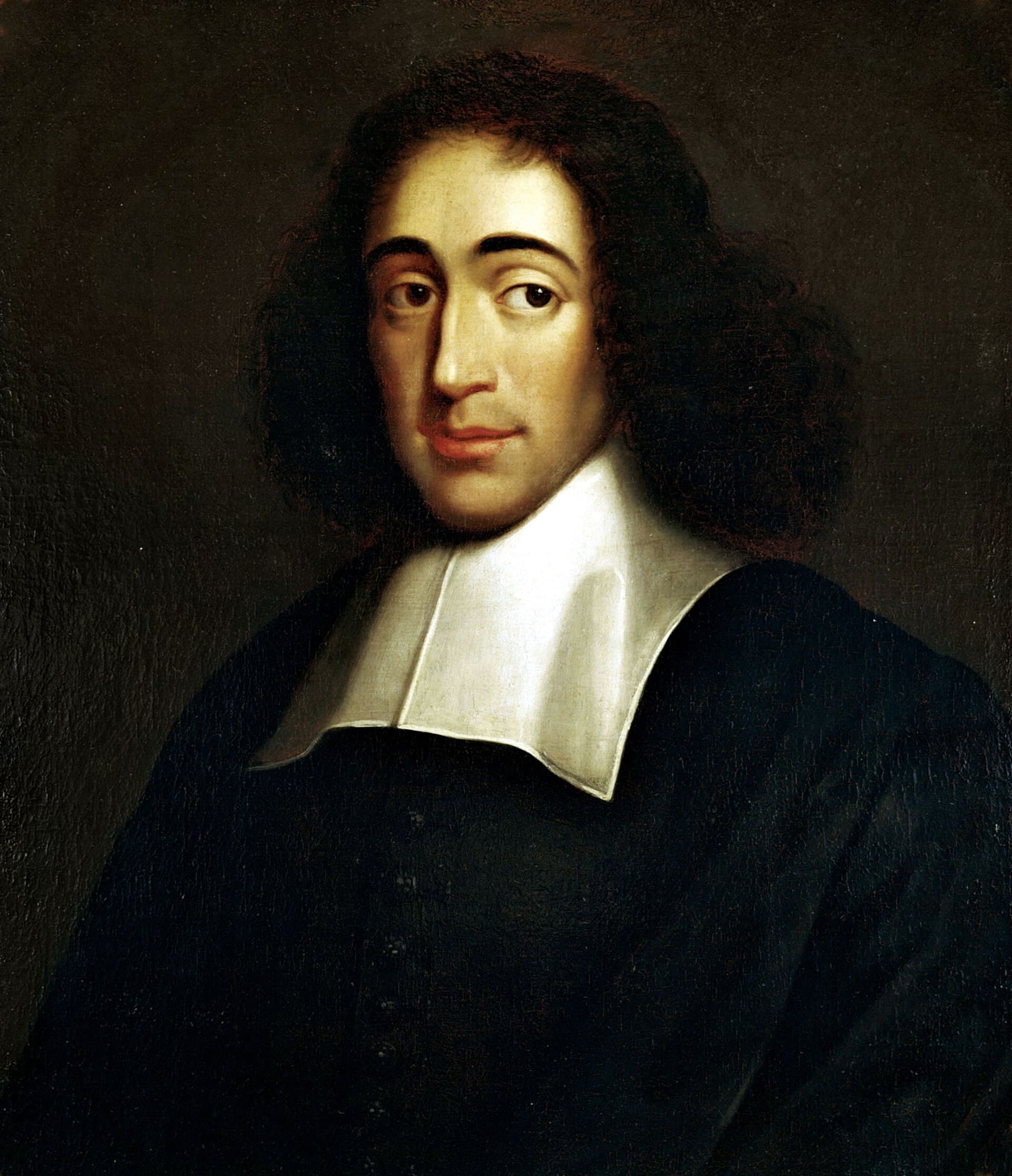
On the 27th of July 1656, in the bustling city of Amsterdam, the Sephardic Jewish community gathered at the Talmud Torah synagogue on the Houtgracht. The air was tense, the atmosphere solemn. A young man, just 23 years old, stood at the centre of this congregation’s attention. Baruch Spinoza was about to be cast out by the community into which he was born. The cherem, a form of excommunication as severe as it was isolating, was read aloud. Its text was unusually harsh even by the standards of the day: 'Cursed be he by day and cursed be he by night; cursed be he when he lies down and cursed be he when he rises up. Cursed be he when he goes out and cursed be he when he comes in. The Lord will not pardon him.' These were not mere words; they were a social death sentence, severing him from family, friends, and fellow scholars. Forbidden from speaking to any community member, from being within four cubits of any Jewish person, from having his writings read by any of them, Spinoza was effectively erased from communal life. The reasons behind this drastic action were never explicitly documented, though the surviving texts mention 'abominable heresies' and 'monstrous deeds'. Spinoza, characteristically reserved, offered no defense, no public retort. He simply left Amsterdam, eventually settling in Rijnsburg, outside Leiden, where he would begin his life anew as a lens grinder — a trade that would sustain him financially and metaphorically shape his rigorous, clear philosophical vision. Over the next two decades, he would write one of the most profound metaphysical treatises in Western philosophy, all while eschewing public recognition and enduring the silent air of exile. He died in 1677, his body worn by lung disease, his mind sharp until the very end.
What he was reading

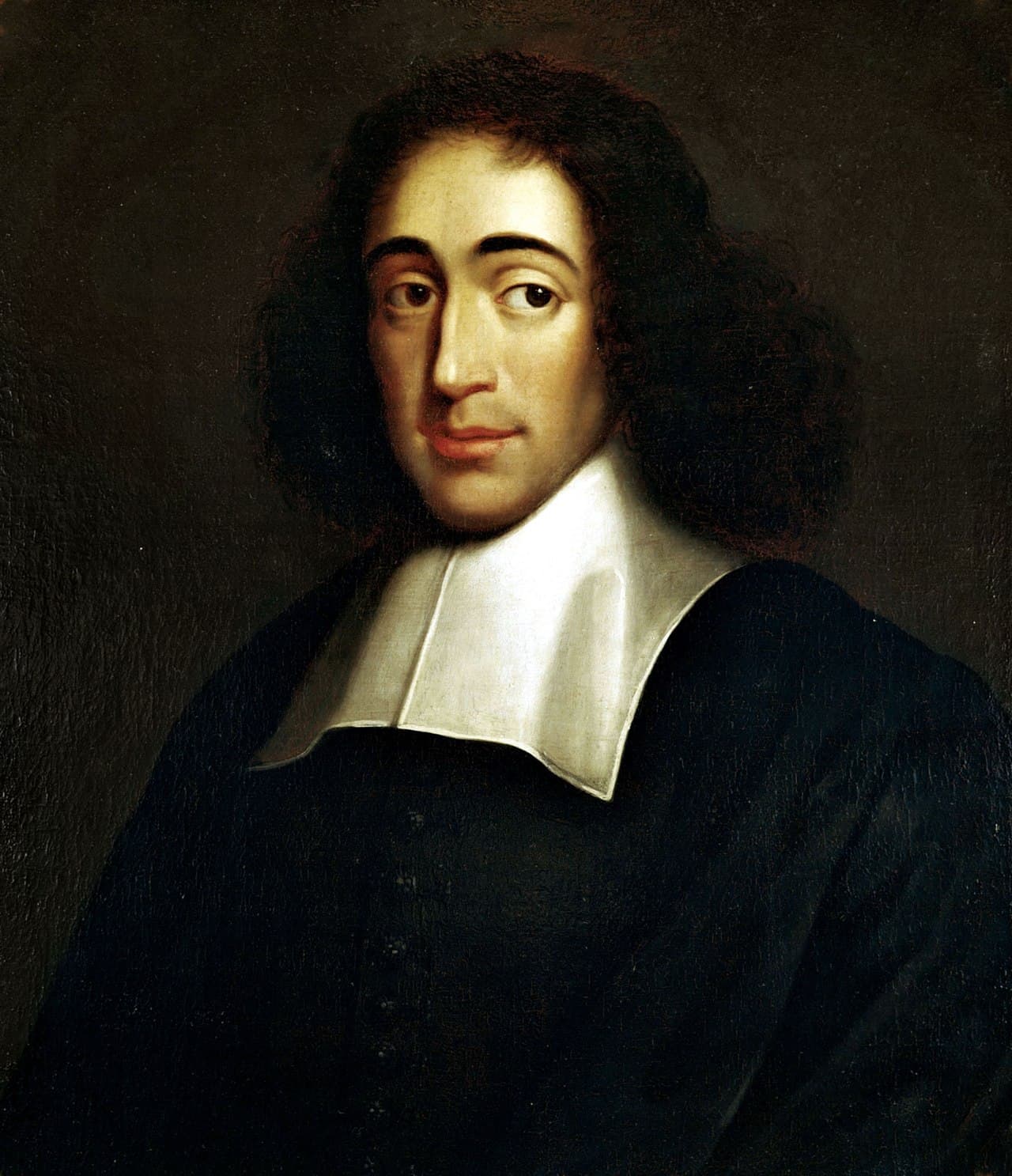
Born in 1632 to Portuguese Sephardic Jews who had escaped the Inquisition, Baruch Espinosa grew up in Amsterdam, a city both a refuge and a place of vibrant intellectual ferment. The curriculum at the yeshiva where he was educated was thorough; it included the Hebrew Bible, Talmudic discussions, and the philosophical writings of Maimonides, alongside mystical kabbalistic teachings. Spinoza was a prodigious student, and his teachers anticipated great things from him within the Jewish scholarly tradition. But his intellectual curiosity led him beyond the prescribed readings. In his late teens, Spinoza started engaging with contemporary philosophy. Descartes’ 'Meditations' and 'Principles of Philosophy', published in 1641 and 1644 respectively, reached Spinoza, likely through Latin tutors or the bustling intellectual exchanges in Amsterdam. Hobbes’s 'De Cive' circulated in the city from 1642 onwards, introducing ideas of political theory and human nature that would resonate with Spinoza's emerging thoughts.

By the time he reached his early twenties, Spinoza's philosophical position had crystallised into something distinctive, combining the deductive rigor of Cartesian thought with conclusions Descartes would have balked at. His emerging vision posited God as synonymous with Nature itself — a single substance with infinite attributes, among which thought and extension were the two accessible to human perception. Such a stance implied that everything was a necessary consequence of this singular, infinite substance, leaving no room for free will as understood by contemporary theology. Further, he approached the Bible not as a divine mandate but as a historical document, stripping it of the privileged status accorded by faith traditions. These radical ideas, stirring in Spinoza's mind, were likely what led to his excommunication, as the cherem document’s references to 'abominable heresies' suggest. While Spinoza had not yet published these ideas, the intellectual rift between him and his community was clearly profound and irreconcilable.
The Ethics
Spinoza's crowning intellectual achievement, the 'Ethics', was completed in 1675 but published posthumously due to its controversial nature. Officially titled 'Ethica, ordine geometrico demonstrata', the work was an ambitious attempt to build a metaphysical system as rigorous and self-evident as Euclid’s geometry. It begins with definitions and axioms, proceeds through propositions and proofs, and includes scholia — informal commentary that elucidates his formal arguments. Spinoza structured his work in five parts: the nature of God, the human mind, the nature of emotions, human bondage, and finally, the power of the intellect. In the first part, he defines substance, attribute, and mode, demonstrating the existence of a single infinite substance, which he identifies with God, or as he famously coined it, 'Deus sive Natura' — God or Nature.
The second part explores the mind’s nature, establishing a parallelism between thought and extension — mind and matter are modes of the same substance. The third part constructs a detailed psychology, analyzing emotions as natural phenomena. In the fourth, he tackles human bondage, dissecting what restricts human freedom, while the final part proposes that true freedom lies in the intellectual love of God — a rational understanding of the universe’s necessary order. Spinoza's geometric method, with its interlocking propositions, created a system that was both robust and controversial. The degree to which the book achieves its aims has been debated since its publication, a testament to its complexity and depth. The 'Ethics' represents an unparalleled attempt to systematize philosophy, and the methodical nature of its arguments invites readers into a dense forest of logic and deduction, challenging them to grasp its overarching vision.
Why he refused the chair
In February 1673, a peculiar opportunity presented itself to Spinoza. Johan Ludwig Fabricius, a professor at the University of Heidelberg, contacted him on behalf of the Elector Palatine, Karl Ludwig. The offer was a prestigious chair in philosophy with promises of full remuneration and intellectual freedom, bound by only one stipulation — that he not use this freedom to disturb the established public religion. This was an extraordinary offer, one that provided stability and recognition, yet Spinoza took six weeks to pen a response, ultimately declining the position. His letter of refusal is telling. Spinoza expressed uncertainty about the extent of the restriction on public religion, wary of how it might constrain his work. More importantly, he confessed a lack of desire to teach publicly, fearing it would curtail his philosophical pursuits.
Spinoza's decision reflects his unwavering commitment to philosophical independence. He valued the modesty of his current existence, living in rented rooms, supported by his income from lens grinding and modest patronage from a select few admirers like Simon de Vries, who had bequeathed him a small annuity. This choice was emblematic of a deeper philosophical stance — an embodiment of the life of quiet contemplation and intellectual liberty he cherished over societal approval or institutional affiliation. Spinoza continued to grind lenses, a trade that, while demanding and hazardous, afforded him the solitude and self-sufficiency essential for his philosophical work.
The lens grinding
In the mid-17th century, lens grinding was a skilled trade requiring meticulous attention and dexterity. Spinoza, who had opted for this craft after his excommunication, specialised particularly in microscope objectives, which were small lenses with steep curvature, demanding the highest precision. The process was laborious: each lens began as a rough blank, shaped using increasingly fine abrasives, and polished to perfection with jeweller's rouge. This work, performed on hand-cranked or treadle-driven lathes, was physically taxing and time-consuming, with each lens taking hours or days to complete. Despite the challenges, Spinoza's lenses garnered a reputation for their precision and quality. Christiaan Huygens, a prominent Dutch astronomer and contemporary, praised Spinoza's lenses in his correspondence, indicating their high esteem among scientific peers.
The demanding craft took a toll on Spinoza’s health. The glass dust generated during the grinding process aggravated his lung condition, likely contributing to the tuberculosis that plagued his later years. Spinoza himself seemed aware of the risks but chose to continue, seeing the craft not merely as a means of livelihood but as an integral aspect of his life philosophy. The independence this work provided allowed Spinoza the freedom to think and write without the compromises of patronage or institutional constraints. It was this craft, with all its challenges, that underpinned his philosophical independence, enabling him to live the life of contemplation he so valued.
What the Ethics actually says
At the heart of Spinoza's 'Ethics' lies the assertion that all of reality is a single substance, which he terms God or Nature. This substance is infinite, possessing countless attributes, but humans perceive only two — thought and extension. Every entity, from inanimate objects to human thoughts, is a 'mode', a modification of this singular substance. In this framework, traditional dichotomies between mind and body dissolve, united as expressions of the same fundamental reality. Crucially, Spinoza denies the existence of free will as traditionally conceived; everything unfolds with necessity, dictated by the nature of God. The concept of human choice, he argues, is merely an awareness of our internal desires, divorced from the recognition of their causal origins.
To Spinoza, the good life is one of understanding — attaining knowledge of nature's essential structure and one's place within it. This understanding fosters a serene acceptance of life's inevitabilities, a state he describes as 'the intellectual love of God'. His philosophy leans towards pantheism, blurring the lines between divine and worldly, challenging conventional theistic interpretations. Spinoza was labeled an atheist by contemporaries, but his ideas could also be seen within the context of Maimonidean monism. Modern thinkers like Antonio Damasio have even linked Spinoza's insights to contemporary neuroscience, recognising them as a precursor to the mind-body unity now widely accepted in the field. The radical and elusive nature of Spinoza's philosophy continues to invite debate, as scholars strive to categorise and understand his visionary system.
His later reception
Spinoza's death in February 1677 did not mark the end of his philosophical influence but rather its beginning in the public sphere. His friends, committed to preserving his legacy, published his works as the 'Opera Posthuma' later that year. This collection included the 'Ethics', the 'Tractatus Politicus', an unfinished Hebrew Grammar, and his correspondence. The reaction was swift and intense. The Reformed Church of the Netherlands condemned his writings, adding them to a list of banned books. Similar actions followed from Lutheran and Catholic authorities, who saw Spinoza's ideas as a direct threat to ecclesiastical orthodoxy. In some German cities, his books were publicly burned, a testament to the perceived danger of his ideas.
Despite the initial hostility, Spinoza's influence expanded. Leibniz, who visited Spinoza shortly before his death, was reportedly unsettled by the implications of Spinoza's system. Throughout the 18th century, Spinoza was largely viewed as a cautionary example of atheism. However, the 19th century saw a renaissance of interest in his thought. Figures like Goethe, Hegel, and Schelling engaged deeply with his philosophy, and Spinoza's impact on German Idealism was profound. By the late 20th century, scholars such as Gilles Deleuze and Jonathan Israel argued for Spinoza's centrality to the Radical Enlightenment, re-evaluating him as a pivotal figure outside the Anglo-French philosophical canon. Today, Spinoza is recognised as a seminal thinker whose ideas prefigured modern discussions on the nature of consciousness and the mind-body relationship.
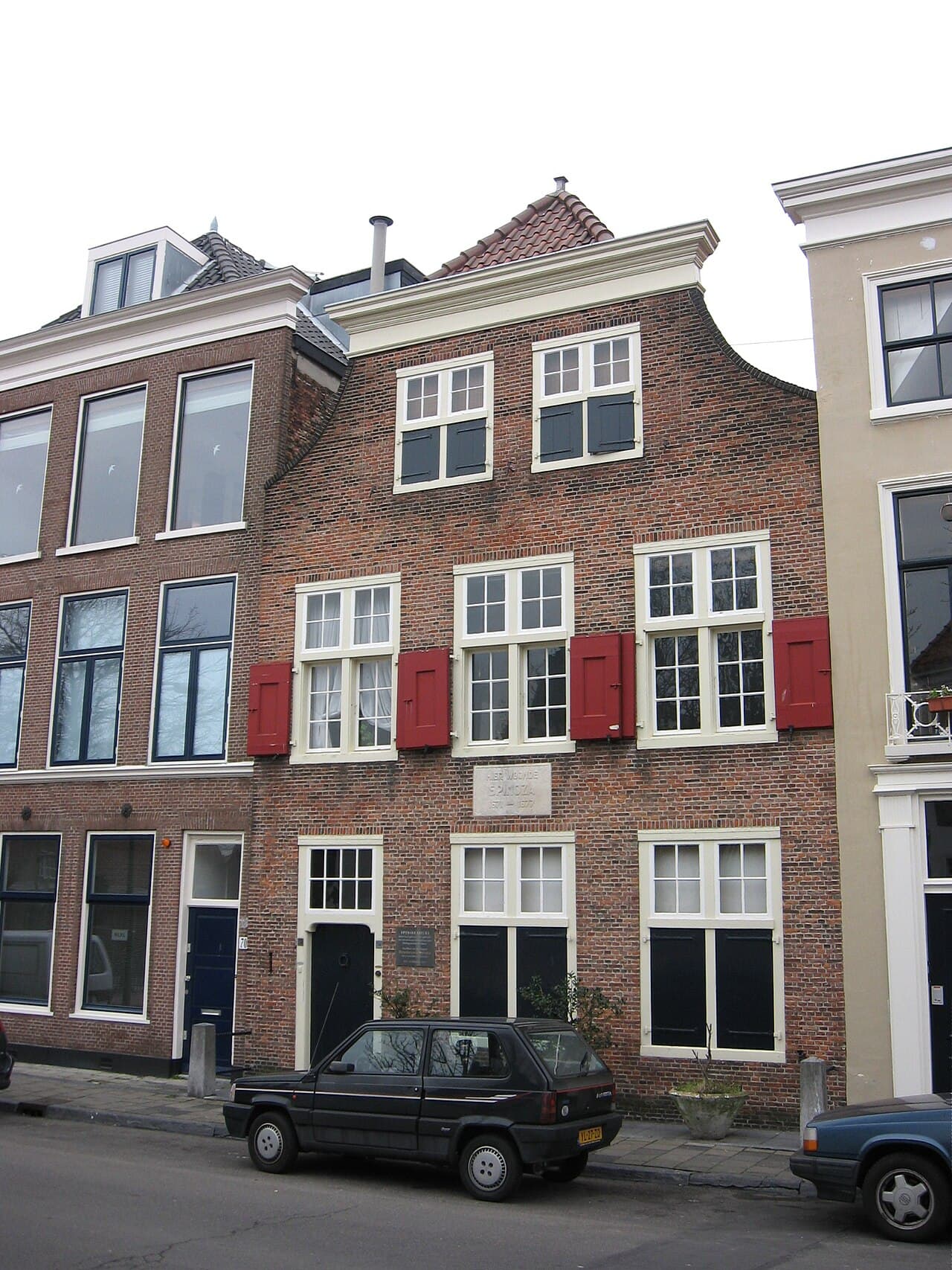
Spinoza spent his final years in a modest room in The Hague, rented from a landlord named van der Spyck. Here, in a back room filled with books and the tools of his trade, he died on 21 February 1677. An inventory taken the following day lists his possessions: 161 books spanning Hebrew, Latin, and Spanish, a lathe for lens grinding, a stock of lens blanks, some simple furniture, and his manuscripts. Among these papers lay the completed 'Ethics', unpublished and untouched by a wider audience. Spinoza, who had refused offers of chairs and patronage, chose a life of quiet intellectual pursuit over public recognition or reconciliation with the community that had cast him out. His name did not grace the title page of his masterwork during his lifetime. The 'Ethics', published with his initials and without a named publisher later in 1677, became a lasting testament to his vision. Though the house where he died no longer stands, and his personal effects have been scattered, Spinoza's work endures, continuing to provoke, challenge, and inspire.
References
- Spinoza, B. (1677). Ethica, ordine geometrico demonstrata. In Opera Posthuma. Amsterdam.
- Nadler, S. (1999). Spinoza: A Life. Cambridge University Press.
- Damasio, A. (2003). Looking for Spinoza: Joy, Sorrow, and the Feeling Brain. Harcourt.
- Israel, J. I. (2001). Radical Enlightenment: Philosophy and the Making of Modernity 1650-1750. Oxford University Press.


