
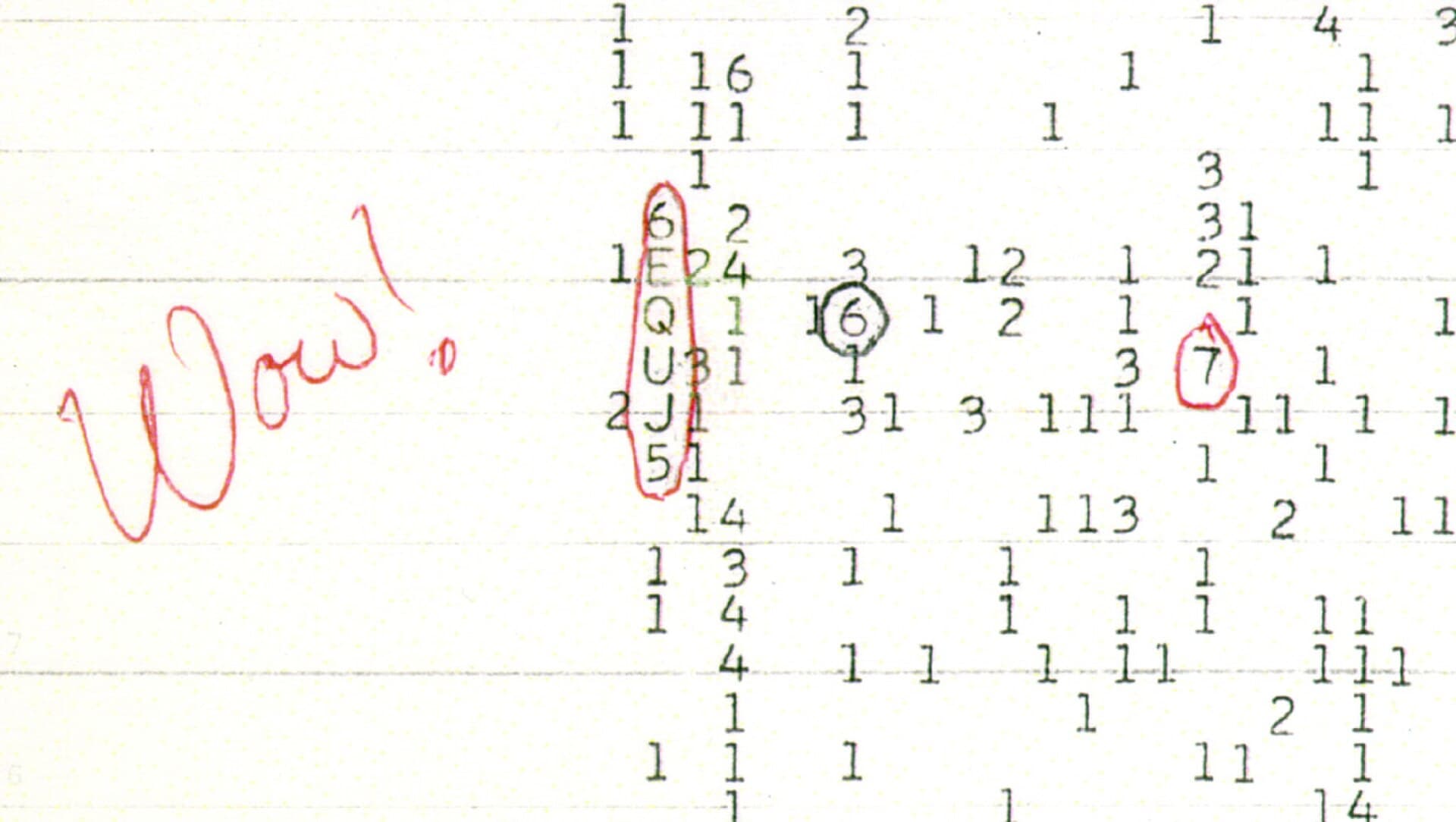
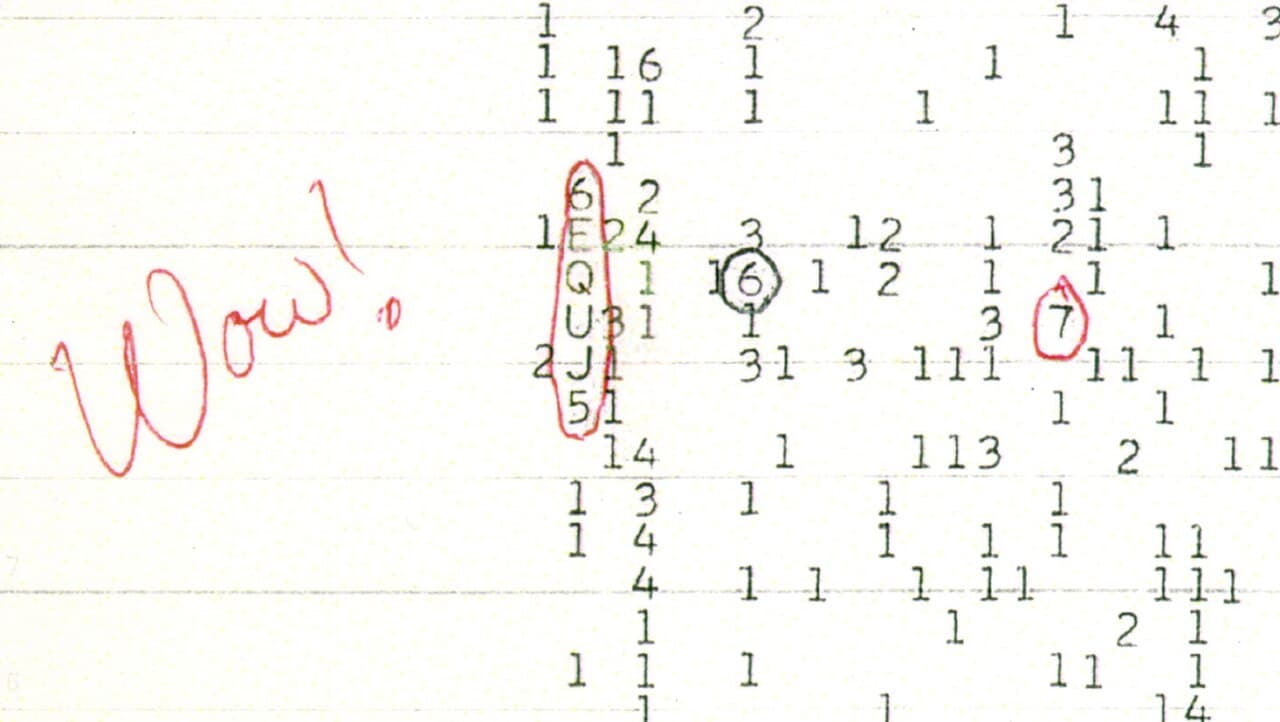
On the night of 15 August 1977, Jerry Ehman, a 41-year-old astronomer working on contract for Ohio State University's SETI program, was at home in the quiet of Delaware, Ohio. He sat at his desk, poring over a stack of printouts that had been produced three days earlier by the Big Ear radio telescope. This instrument, spanning a hectare of corrugated aluminium, was fixed in place and relied on the Earth's rotation to scan the sky. Its output, at the time, was a continuous strip of computer paper, filled with vertical columns of single-digit numbers — each digit encoding the signal intensity detected in one of fifty narrow frequency channels surrounding the 1420 MHz hydrogen line. This frequency was chosen with purpose, as SETI researchers believed any technologically advanced civilisation might use it to announce its presence. As Ehman reviewed the data from the night of 15 August, he noticed something unusual. Amidst the uniform rows of digits, in one fifty-channel slice of the spectrum, was the sequence '6EQUJ5'. This anomaly was a signal profile that rose and fell over 72 seconds, reaching a peak intensity 30 times above the background noise. Ehman was so struck by the discovery that he circled it in red pen and jotted down a single word in the margin: 'Wow!' The name stuck. To this day, no signal of comparable nature has been detected from the same direction, nor from any other.
What the printout actually showed

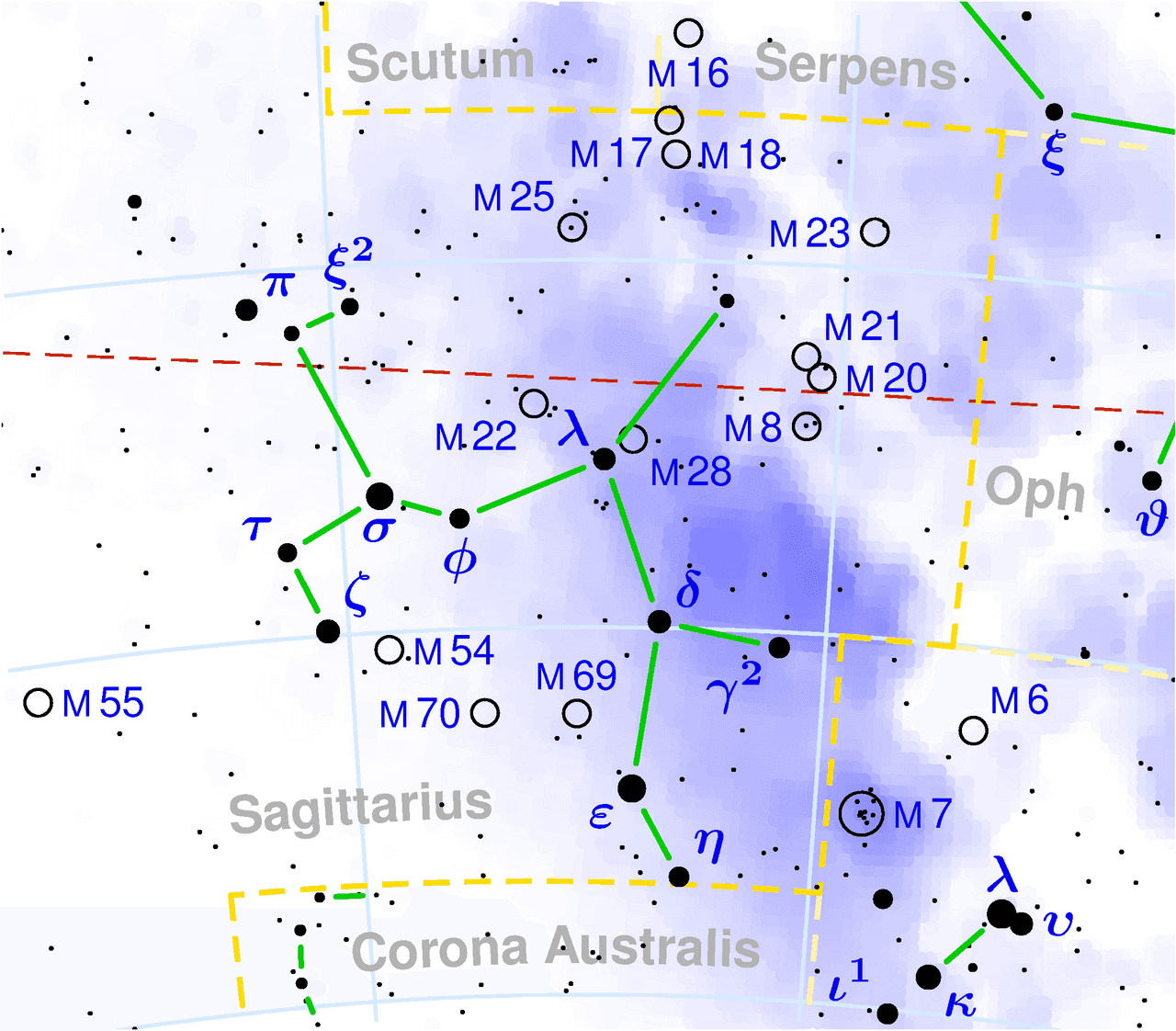
The infamous sequence '6EQUJ5' represents a series of signal-to-noise ratios taken every ten seconds. Each character encodes how many standard deviations, or sigma, above the background noise the signal was. The digits 0-9 correspond to 0 through 9 sigma, while the letters A-Z extend this scale further, with E equating to 14σ, Q to 26σ, U to 30σ, and J to 19σ. At its peak, the signal was remarkably 30 times stronger than the background noise. This intensity was not the only noteworthy aspect. The signal's duration of 72 seconds matched precisely the time it took for the Big Ear's beam to sweep across any fixed point in the sky, thanks to Earth's rotation. This alignment is critical: a terrestrial signal (such as one from a satellite or aircraft) would not mimic the distinctive rise-and-fall pattern characteristic of a celestial source moving across the telescope's field of view. Thus, the signal appeared to originate from far beyond Earth. Its bandwidth, under 10 kHz, was far narrower than that of natural astrophysical sources with similar strength, suggesting an artificially generated carrier. The arrival direction, as precisely as the Big Ear could resolve, pointed toward a seemingly unremarkable region in the constellation Sagittarius, near the globular cluster M55, devoid of any bright celestial objects.
Why people thought this was the one
In 1977, the field of SETI was still relatively nascent, yet full of promise. The first serious attempt to search for extraterrestrial signals, Project Ozma, had been conducted by Frank Drake at Green Bank in 1960. His work, and the now-famous Drake Equation formulated for a 1961 conference, had provided a conceptual framework for estimating the number of active extraterrestrial civilizations. By the 1970s, projects like the Big Ear run by John Kraus and Robert Dixon at Ohio State University had taken up the baton. Their operation was one of the most sustained and comprehensive radio SETI efforts of the decade. The Big Ear’s observational strategy was meticulously designed to maximise the chances of intercepting a narrow-band signal precisely at the 1420 MHz hydrogen line. When the 6EQUJ5 signal appeared, it seemed to meet every expectation SETI theorists had outlined for what a deliberate extraterrestrial message should resemble: a precise frequency, exceptionally narrow bandwidth, significant strength, and behaviour consistent with an interstellar source. The signal's alignment with these criteria sparked considerable excitement among senior SETI researchers in the United States and Europe. A consensus emerged that a thorough follow-up was not only warranted but essential.
The Wow! Signal arrived at a time when enthusiasm for SETI was growing. The Cyclops report of 1971 had outlined a comprehensive plan for the search, suggesting large arrays and international collaboration. The 6EQUJ5 signal seemed to validate these efforts and ideals. It was a moment when theory met reality, and the scientific community felt an electric thrill at the possibility of a genuine extraterrestrial communication. The presence of such a signal, which matched so closely to the theoretical constructs set out in the preceding years, was a fortuitous alignment of search strategy and potential discovery. Thus, the Wow! Signal quickly became a focal point for those involved in SETI, representing both a tantalising hint of success and a catalyst for further inquiry.
The follow-ups that found nothing
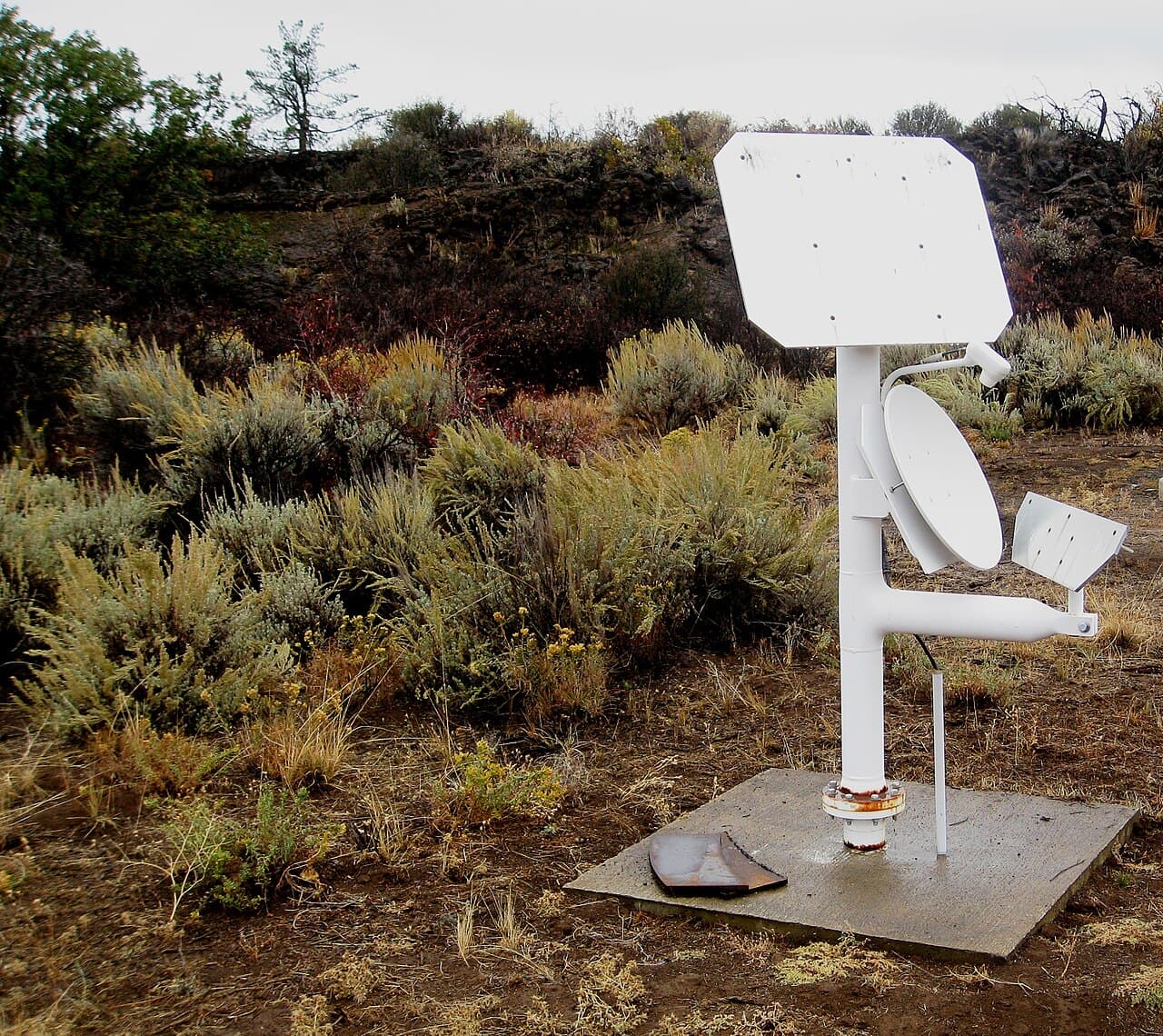
Despite the excitement, the search for a repeat of the Wow! Signal proved elusive. The Big Ear telescope revisited the same region of sky over fifty times in the subsequent years without recording anything similar. Other major facilities joined the effort. The Very Large Array (VLA) in New Mexico, with its far greater sensitivity, observed the area multiple times throughout the 1990s and 2000s but also found nothing. The Arecibo radio telescope in Puerto Rico, then the largest single-aperture telescope in the world, pointed its massive dish in the same direction. Still, nothing. Since 2007, the Allen Telescope Array in California has been monitoring the area, yet the anomaly has not recurred. The Murchison Widefield Array in Western Australia has logged hundreds of observational hours with no success. The original signal, lasting precisely 72 seconds, stands alone in the records.
The absence of repetition has left the Wow! Signal in a unique place. With no comparable event recorded, it remains an outlier, a singular point in the vast dataset accumulated by radio astronomers. The sky has been scanned with ever-increasing sensitivity and sophistication, yet that particular region near Sagittarius has yielded no further clues. Various classes of celestial objects — pulsars, masers, quasars, and transients — have been explored as potential sources, but none match the characteristics observed. The original detection remains as a solitary marker in the search for extraterrestrial intelligence, an unresolved chapter that continues to baffle scientists.
Hypotheses that have been offered and what is wrong with them
Numerous hypotheses have been proposed to explain the Wow! Signal, but none have gained widespread acceptance. The possibility of Earth-origin interference was thoroughly examined and rejected shortly after the signal's detection. The Doppler drift pattern did not fit a terrestrial source, and the frequency lay within a protected radio-quiet band, making unauthorised satellite transmissions unlikely. In 2017, Antonio Paris suggested a cometary origin, arguing that two comets — 266P/Christensen and P/2008 Y2 — could have been in the right position and emitting hydrogen at the relevant frequency. However, Robert Dixon and other analysts critically assessed this hypothesis and found it lacking in several respects, notably that neither comet was in the right place at the right time, nor were they capable of emitting the required hydrogen signature.
Other natural astrophysical sources have been considered but similarly dismissed. The idea of a natural maser was briefly entertained; however, the absence of a persistent source and the narrow bandwidth of the signal made this unlikely. A magnetar burst, as proposed by Lorimer in 2013, was another candidate, but the spectral characteristics did not align with what was observed. As of 2026, the scientific community remains divided on the nature of the Wow! Signal. It could represent a once-in-decades natural transient that eludes current understanding, or it might be a narrow-band emission deliberately produced by an intelligent source somewhere in Sagittarius. The prevailing stance, at least officially, remains one of uncertainty.
The artefact and what it tells us
The original printout that Jerry Ehman annotated is now an artefact of considerable historical significance, preserved at the Ohio Historical Society. Its physical presence serves as a reminder of a signal that, decades later, continues to provoke inquiry and speculation. The Big Ear radio telescope, where it was first detected, was dismantled in 1998, its site repurposed for a golf course, though some components have been saved as historical artifacts. Jerry Ehman himself, now in his late 80s, has consistently stood by the authenticity of the detection. He maintains that the signal was real and originated from the direction indicated, though its exact nature remains a mystery.
The significance of the Wow! Signal extends beyond the signal itself. It validated the observational strategy of using long-term, automated scans focused on the hydrogen line. It also highlighted the limitations of such setups at the time: a single-dish telescope without real-time follow-up was ill-equipped to capture more than fleeting glimpses. Today, SETI infrastructure is vastly improved, with projects like Breakthrough Listen deploying real-time anomaly detection and machine learning to capture and analyse signals as they occur. The Wow! Signal, in many ways, was a precursor that shaped the future of SETI research, underscoring both the promise and challenges of the search for extraterrestrial intelligence.
What it would mean if we got a second one
The detection of a second signal with characteristics mirroring those of the Wow! Signal would represent a paradigm shift in SETI. Modern systems like the Allen Telescope Array and the Five-hundred-metre Aperture Spherical Telescope (FAST) in China are equipped with real-time anomaly-flagging capabilities that would alert researchers almost immediately. Multiple observatories across different continents would be able to point their dishes at the source within moments, allowing for simultaneous observations. Such infrastructure was not available in 1977, but it could critically distinguish between an artificial signal and terrestrial interference today. A signal sustained for 72 seconds would not only be re-observed but also analysed with contemporary technology, providing a definitive answer to its nature.
The question of whether a second Wow! Signal will ever be detected remains open. The wait has been long — forty-eight years and counting. Advances in technology and methodology mean the possibility of a repeat discovery is treated with both anticipation and caution. Were it to happen, the implications would be profound, potentially validating decades of search and speculation. The infrastructure now in place is primed to act swiftly, reducing the likelihood of another unresolvable anomaly, but whether the cosmos will offer a second chapter to this story is uncertain.
The original printout of the Wow! Signal remains housed in an archive in Ohio. Its annotated digits, '6 E Q U J 5', are unchanged, a fixed reminder of a fleeting moment when the universe seemed to whisper. If the source was indeed located in Sagittarius, somewhere near the centre of our galaxy, the nature of that signal — whether natural or artificial — remains profoundly enigmatic. A natural source would require an as-yet-unidentified mechanism to produce such a signal, while an artificial source implies a deliberate act of communication. Both scenarios are unsettling in their own ways. The printout, with its circled annotation in red ink, stands as one of the most scrutinised pieces of paper in radio astronomy history. Yet, it still holds its secrets tightly.
References
- Ehman, J. R. (1998). Wow! - A Tantalizing Candidate. Big Ear Radio Observatory.
- Kraus, J. D. (1979). The Tantalizing Wow! Signal. Cosmic Search Magazine, 1(1), 31–34.
- Dixon, R. S. (2017). Comments on Antonio Paris's hydrogen cloud hypothesis. Ohio State University Radio Observatory.
- Tarter, J. (2001). The Search for Extraterrestrial Intelligence (SETI). Annual Review of Astronomy and Astrophysics, 39, 511–548.


