
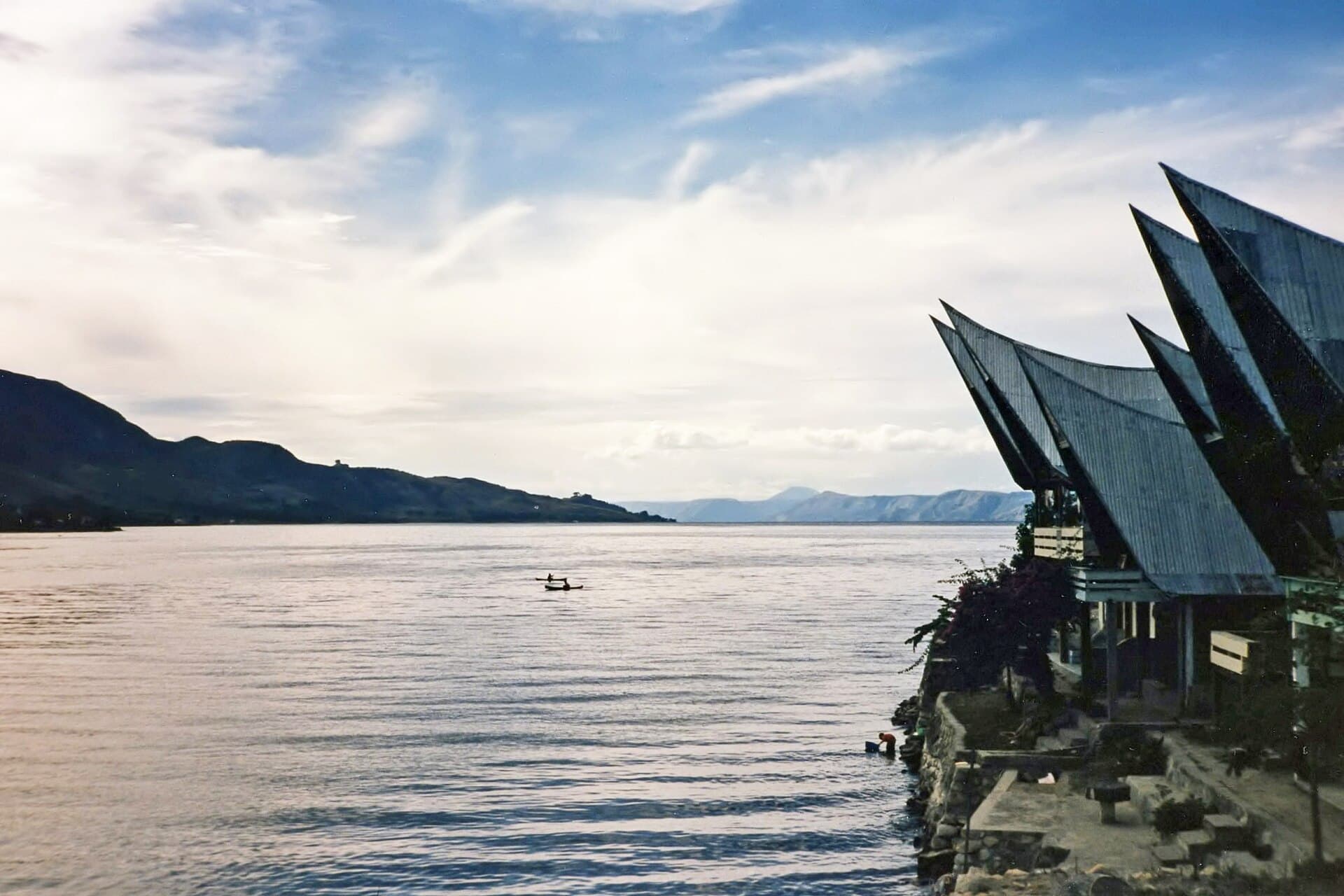
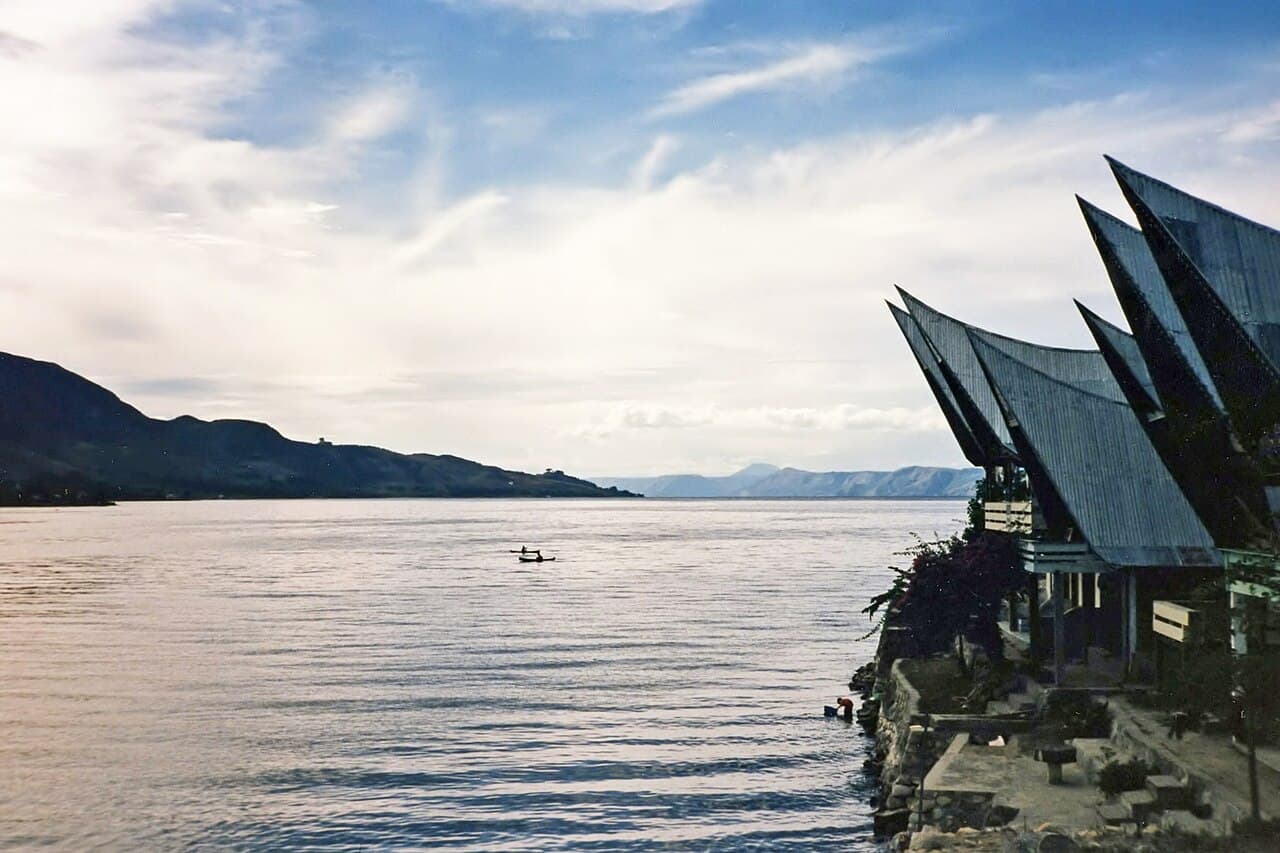
In the heart of Sumatra, Indonesia, lies Lake Toba, an expanse of water over 100 kilometres in length and 30 kilometres in width, marking the remnants of a colossal volcanic event. This lake is the caldera of an ancient volcano that erupted around 74,000 years ago. This eruption was not just any volcanic explosion—it was the largest known in the last 2.5 million years, spewing an estimated 2,800 cubic kilometres of dense rock equivalent. By comparison, the infamous 1980 eruption of Mount St Helens ejected only 2.79 cubic kilometres, and the massive 1815 eruption of Tambora released about 100 cubic kilometres. Toba's ash fell across much of South Asia, Southeast Asia, and into the Indian Ocean, with layers as thick as 15 centimetres discovered in central India, more than 3,500 kilometres away. As the skies darkened, the climate cooled, prompting debates about the fate of human populations living through this geological upheaval.
What the eruption did
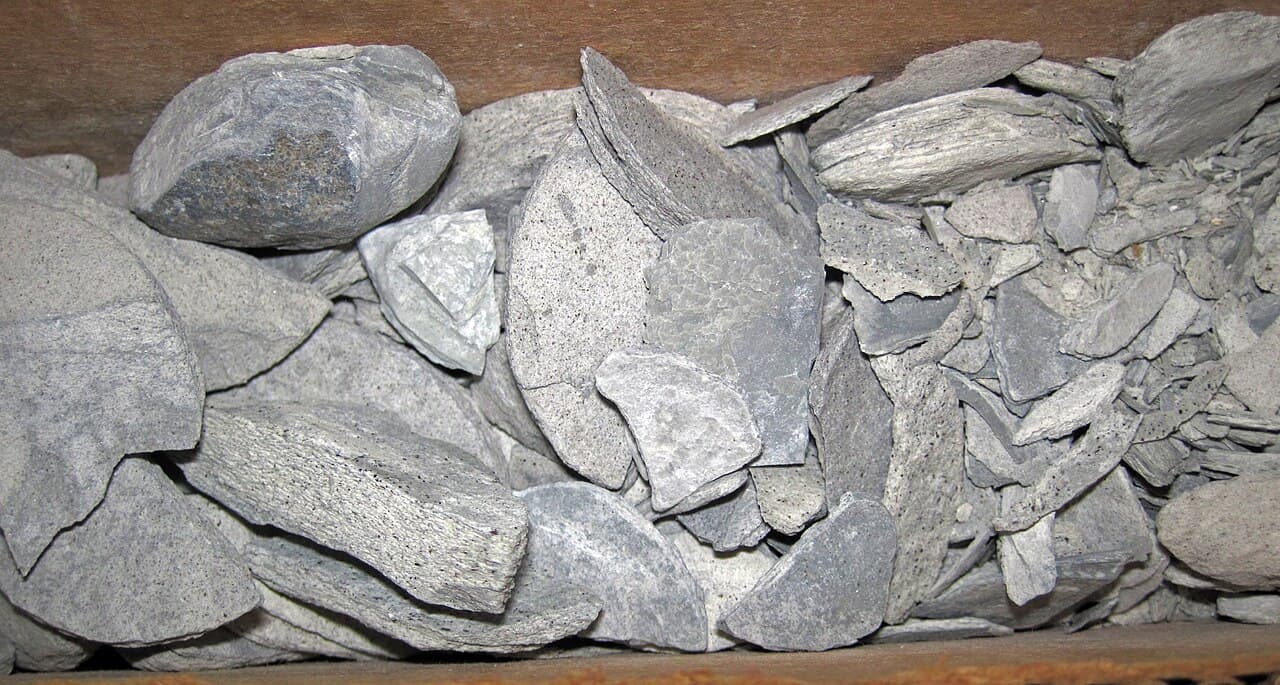
Toba's eruption was classified as a supereruption, a magnitude 8 event on the Volcanic Explosivity Index. Such events are rare, occurring approximately once every 50,000 years. Toba's explosion injected an astounding 6 billion tonnes of sulphur dioxide into the stratosphere, leading to the formation of sulphate aerosols that effectively reflected sunlight, causing a global dimming effect. Data from Greenland ice cores reveal a significant sulphate spike around 74,000 years ago, aligning with Toba’s timeline. Climate models suggest that global temperatures plummeted by 3-5°C, with the cooling more pronounced at higher latitudes. This 'volcanic winter' lasted between five and ten years, followed by a slow recovery. The eruption's immediate environmental consequences were severe, with forest covers in much of South Asia declining and disruptions evident in the regional flora and fauna of the period.
The original bottleneck hypothesis
The potential link between the Toba eruption and human evolution was prominently proposed by anthropologist Stanley Ambrose in his 1998 paper published in the Journal of Human Evolution. Ambrose observed that human genetic diversity is surprisingly low for a species of our age, especially when compared to our closest relatives. Mitochondrial DNA comparisons across modern human populations indicated that there was once a bottleneck, where the effective population size may have dwindled to 10,000 individuals or fewer. Ambrose suggested that the Toba supereruption triggered this bottleneck: its environmental impact drastically reduced the global human population to a few thousand survivors in scattered refuges. Modern humans, he argued, are descendants of this small founding population. The hypothesis quickly gained traction and was embraced in popular science, taught as fact in undergraduate courses by the early 2000s.
The pushback
Around 2005, new evidence began to challenge the Ambrose hypothesis. The archaeological site of Jwalapuram in Andhra Pradesh, India, presented crucial data: continuity of stone-tool industries above and below the Toba ash layer suggested that the local population persisted through the eruption. This evidence indicated that, although Toba had profound effects, it did not eradicate all human groups in the affected regions. Moreover, improved climate proxies and reconstructions of post-Toba conditions suggested the cooling period might have been less severe and shorter than initially assumed. Large-scale genetic studies, such as the 1000 Genomes Project completed in 2015, refined earlier bottleneck theories, showing that while a small effective population size existed, it spanned a longer period than Ambrose’s model allowed. A 2013 paper by Williams, Ambrose, and colleagues, published in Quaternary International, revised the strong claims, suggesting Toba was one of several factors contributing to bottleneck-era conditions rather than the sole cause.
What the genetics still say
Despite new evidence, human genetic diversity remains low compared to expectations for our species' age. Analysis of modern human autosomal DNA estimates a long-term effective population size of about 10,000 breeding individuals, averaged over the last several hundred thousand years. This is less a bottleneck in the catastrophic sense and more a sustained pattern of small population size, likely due to population structures—humans living in many small, isolated groups with limited interbreeding. The bottleneck interpretation around 74,000 years ago has not been entirely dismissed but is no longer the dominant explanation. More sophisticated demographic models suggest our species maintained this small effective population size as a long-term feature rather than due to a single volcanic accident. Some bottleneck events likely occurred after the out-of-Africa migration, but attributing them specifically to Toba is now considered overly simplistic.
What was lost and what was not
The consensus now accepts that Toba was a genuine and catastrophic geological event with significant short-term climate impacts. Toba likely caused regional population declines in heavily affected areas, such as parts of India, where archaeological evidence is most revealing. Humans living during that period, already dispersed across diverse regions including India and Southeast Asia, faced a challenging time. However, current evidence does not support a near-extinction bottleneck solely attributable to Toba. The species had already been structured into small, isolated groups before the eruption and remained so afterward. Continuity in sites like Jwalapuram, combined with recent genetic analyses and climate modelling, suggests a more nuanced disruption. Toba was a shock the species absorbed, leading to regional extinctions and migrations but likely not a global crash to a few thousand individuals.
Why the story persists
The 'Toba bottleneck' hypothesis has proven remarkably resilient in popular narratives, despite waning support in academic circles. Its endurance is partly due to its compelling nature—a singular event that neatly ties together low genetic diversity, human migration out of Africa, and subsequent dispersals. Additionally, the original hypothesis was published in a high-profile context, while the rebuttals are scattered across various specialised journals. Ambrose's 1998 paper in the Journal of Human Evolution made a significant impact, while subsequent critiques appear in publications like the Journal of Archaeological Science and Quaternary Science Reviews. As a result, the broader narrative lags behind the nuanced understanding now prevailing among experts.
Today, what we know is that about 74,000 years ago, a colossal volcanic eruption reshaped the region now known as Sumatra, Indonesia. Ash from the eruption spanned millions of square kilometres, leading to a temporary cooling of the global climate and causing forest diebacks in South Asia. Human populations, already dispersed across various territories, experienced what remains the largest environmental shock in our species' history. While some communities vanished and others migrated, some continued their way of life as before. What remains is a geological legacy—layers of ash and a vast caldera lake—and a species with genetic diversity still puzzlingly low. Whether Toba was a decisive factor in shaping our genetic history remains uncertain, but the eruption undeniably left its mark. The species persisted, adapting, moving, and surviving. The volcanic site remains a testament to a dramatic chapter in the human saga, a reminder of nature’s power and our ancestors’ resilience.
References
- Ambrose, S. H. (1998). Late Pleistocene human population bottlenecks, volcanic winter, and differentiation of modern humans. Journal of Human Evolution, 34(6), 623–651.
- Petraglia, M., et al. (2007). Middle Paleolithic Assemblages from the Indian Subcontinent Before and After the Toba Super-Eruption. Science, 317(5834), 114–116.
- Williams, M. A. J., et al. (2013). Late Pleistocene human population bottlenecks and the Mount Toba super-eruption. Quaternary International, 300, 192–200.
- Yost, C. L., et al. (2018). Subdecadal phytolith and charcoal records from Lake Malawi, East Africa imply minimal effects on tropical vegetation from the ~74 ka Toba supereruption. Journal of Human Evolution, 116, 75–94.


