
At 7:14 a.m. local time on 30 June 1908, over the remote basin of the Stony Tunguska River in central Siberia, an extraordinary event unfolded. This sparsely populated area, located roughly 60 kilometres north-northwest of the small village of Vanavara, was home to a few Evenki reindeer herders and a handful of Russian traders. As they went about their morning, a column of bluish-white light, brighter than the sun, streaked across the sky. Moments later, a powerful flash lit up the horizon, followed by a thunderous sound that resembled artillery fire. Two men sitting on the porch of the Vanavara trading post were thrown to the ground by the resulting shockwave. Such was its magnitude that seismographs in Irkutsk, 1,500 kilometres to the south, recorded the event, while atmospheric pressure waves were detected as far as London. Yet, despite the immense power—estimated to be between 10 to 15 megatons of TNT—no crater was left behind, and no large meteorite was ever found.
Why nobody investigated for thirteen years
In 1908, Tsarist Russia was not equipped to respond swiftly to such mysterious occurrences in its vast and largely inaccessible hinterlands. The event took place in a region that was hundreds of kilometres away from the nearest rail line, only accessible by arduous journeys involving river boats and on foot. The press at the time was occupied with other significant events, such as a coup attempt in Persia and Bulgaria's impending declaration of independence. The explosion in Siberia, while spectacular, was relegated to the status of a regional curiosity. This status was further cemented by the political turmoil that followed. The Russian Revolution of 1917 and the subsequent Civil War meant that resources were focused elsewhere, delaying any serious investigation into the Tunguska event. It wasn't until 1927, almost two decades later, that the first scientific expedition led by Soviet mineralogist Leonid Kulik ventured into the Siberian wilderness to examine the site.
What Kulik found
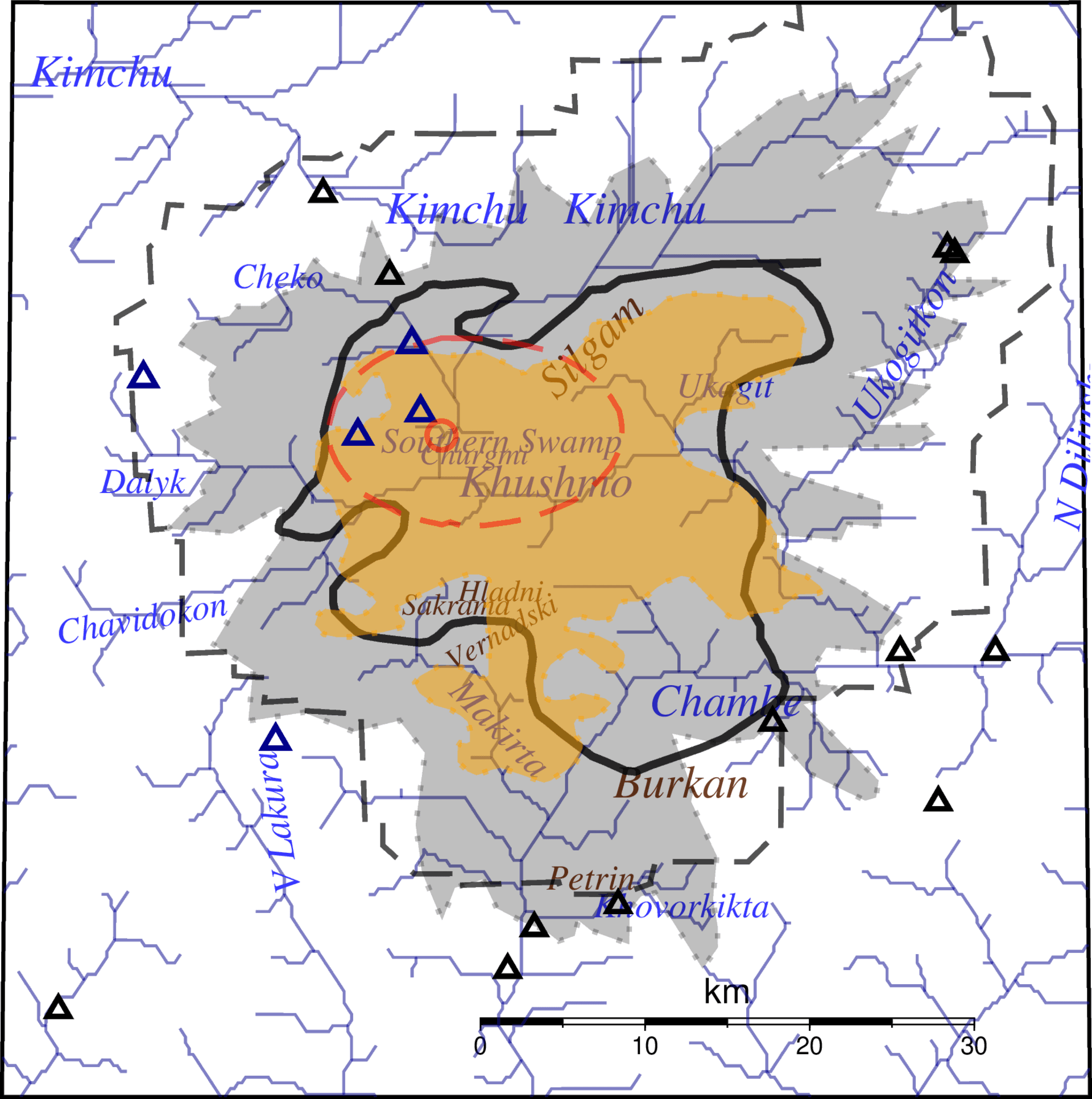
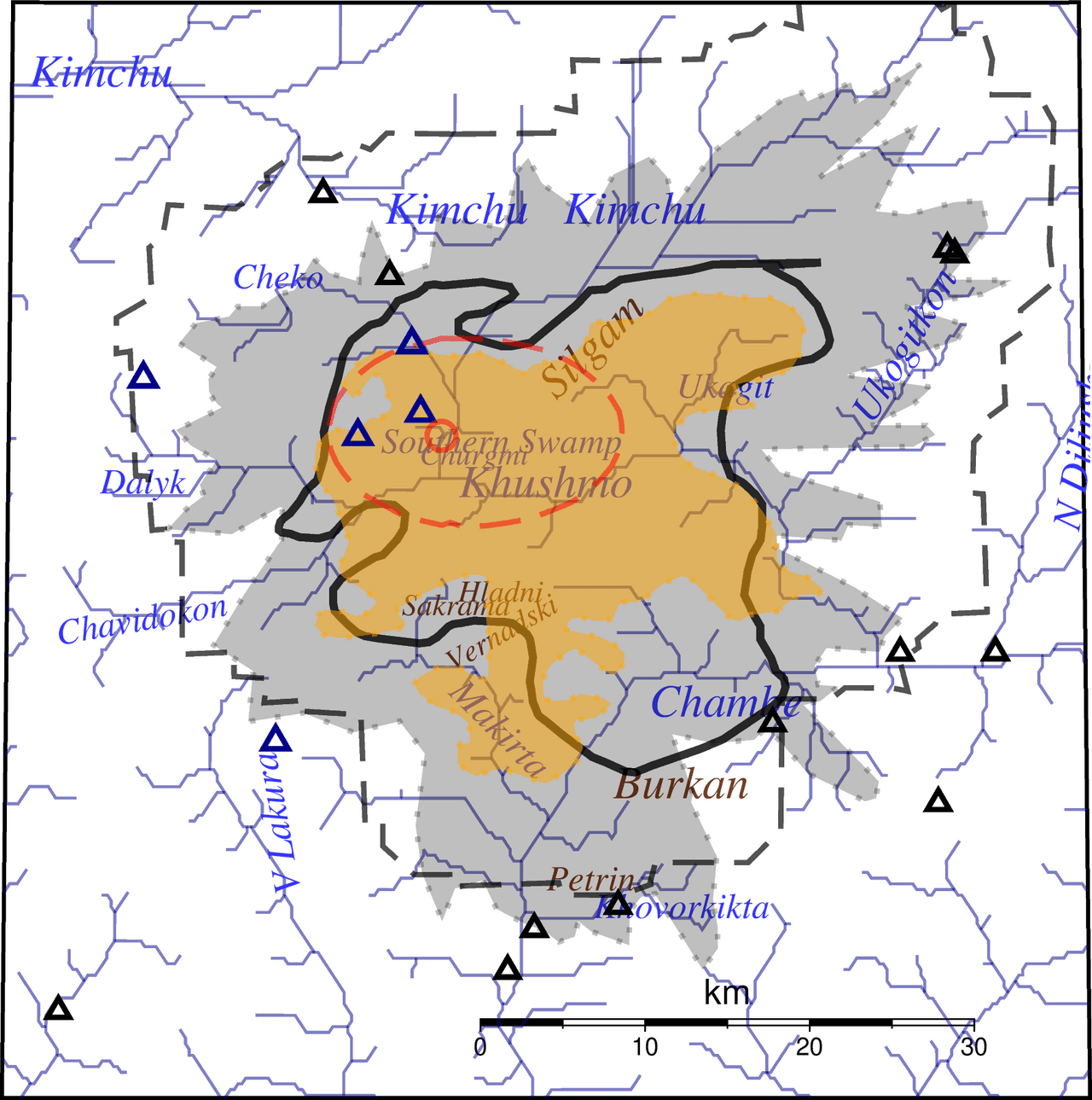
Kulik's 1927 expedition to the Tunguska site revealed a scene of astonishing devastation. Spanning approximately 2,150 square kilometres, the taiga forest had been flattened, with trees lying in a radial pattern, their tops pointing away from a central epicentre. This pattern was consistent with a massive atmospheric shockwave radiating outward. In the centre of this radial devastation, however, trees remained standing, eerily stripped of their branches and bark, indicative of an explosion that occurred directly above rather than at ground level. Kulik meticulously documented this destruction and estimated that around 80 million trees had been affected by the blast. Despite his detailed survey, he found no evidence of an impact crater. Kulik returned for further expeditions over the following years, driven by the assumption that such a powerful event must have left behind a significant impact site, yet he remained unsuccessful in this quest until 1939.
What it was
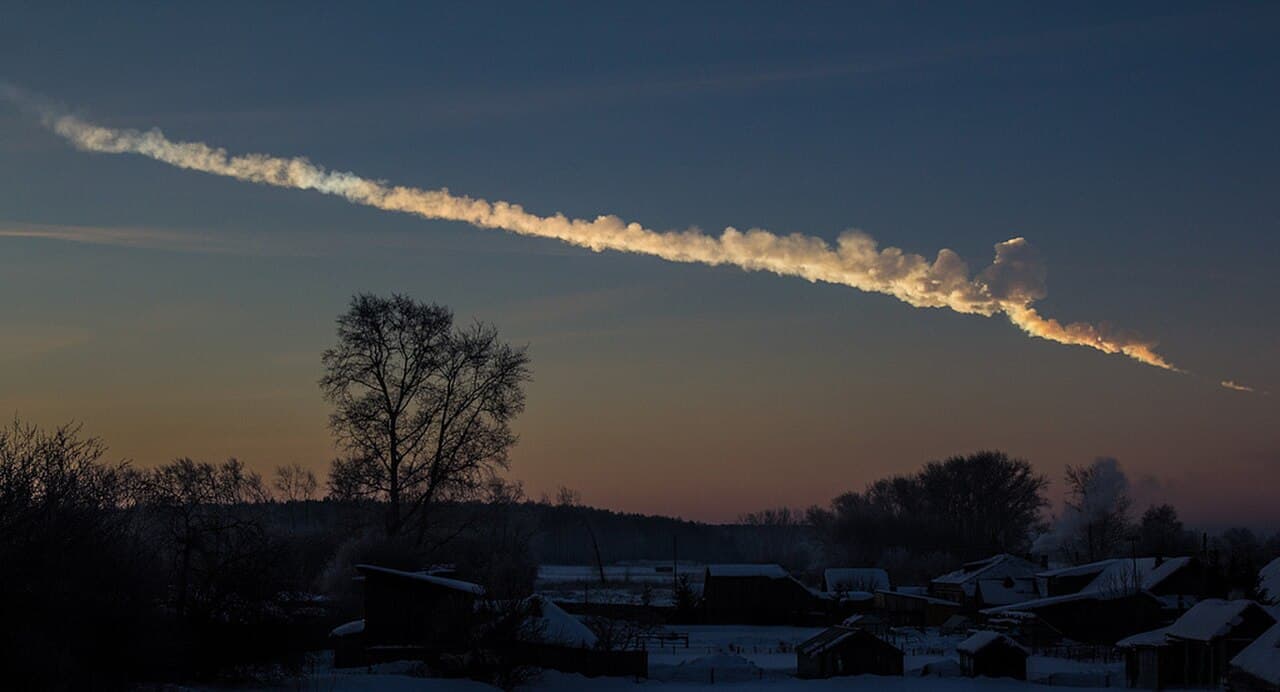
The Tunguska event, as understood through decades of scientific inquiry, is now broadly attributed to an air burst rather than a ground impact. Modern atmospheric-entry modelling has refined the consensus: a small stony or cometary body, estimated to be 50 to 80 metres in diameter, entered the Earth's atmosphere at a hyperbolic velocity of approximately 30 km/s. The intense structural stresses induced by atmospheric pressure caused it to disintegrate and explode at an altitude between 5 to 10 kilometres above the ground. This explosion, an air burst, released its energy as heat and pressure into the atmosphere, with an explosive yield roughly 1,000 times greater than the Hiroshima bomb. The absence of a crater and the radial tree-fall pattern can both be explained by this model, where the energy dissipates before reaching the Earth's surface, causing widespread destruction without an impact.
What the body was made of
The precise composition of the Tunguska body remains a subject of scientific debate. The two main contenders are a stony asteroid or a small comet. Stony asteroids are more common in this size range, whereas the lower density of cometary bodies makes them more prone to disintegration upon atmospheric entry. Analysis of microscopic spherules composed of nickel-iron and silicate, found embedded in the resin layers of trees from 1908, does not conclusively favour one hypothesis over the other, as these materials are consistent with both potential sources. Recent modelling work by Mark Boslough and colleagues at Sandia National Laboratories leans slightly towards a small stony asteroid, possibly of the LL chondrite class, as a more likely candidate. However, the exact nature of the Tunguska body remains unresolved, leaving open a tantalising area for further research.
The 2007 Lake Cheko question
One intriguing hypothesis proposed in 2007 by Luca Gasperini and his team suggested that Lake Cheko, situated approximately eight kilometres northwest of the Tunguska epicentre, might be the result of an impact from a fragment of the Tunguska body. The lake, with its elongated shape and magnetic anomalies, appeared to align with what one might expect from an impact crater. However, subsequent investigations have cast significant doubt on this theory. A study by Collins et al. in 2008, followed by Russian analyses of sediment cores, suggested that Lake Cheko predated the 1908 event. These cores contained layers of organic material that were clearly older than the Tunguska explosion, supporting the notion that the lake's formation was unrelated to the event. As a result, the Lake Cheko hypothesis is now largely dismissed within the scientific community, although it serves as a compelling case of scientific inquiry and debate.
Why the event matters
The Tunguska event holds significance for several reasons. Firstly, it remains the only directly observed impact event of its size in recorded history. Comparatively, the Chelyabinsk meteor in 2013, which caused widespread damage in Russia, was about 30 times less powerful. Secondly, the scale of Tunguska is crucial for operational purposes; it represents a class of threat that demands vigilance from civil defence systems worldwide, as events of this magnitude are statistically expected every 100 to 500 years. Lastly, Tunguska serves as a benchmark for the planetary defence community. Detection systems, such as NASA's NEO Surveyor mission and ground-based telescopes, are calibrated to identify objects in this size range to provide adequate warning. Understanding and preparing for such celestial encounters help to mitigate potential threats to human populations and infrastructure.
The story of the Tunguska event also serves as a reminder of the precariousness of our position in the universe. If the celestial object responsible for the Tunguska explosion had entered Earth's atmosphere just four hours later, the rotation of the planet would have placed its trajectory over St Petersburg, with potentially catastrophic consequences for one of Russia's major urban centres. Instead, the event's location meant that it impacted an area with only a few hundred inhabitants, resulting in three reported deaths. While we have been spared another impact of this scale since 1908, statistically, another is due. The science of planetary defence continues to advance, driven by the necessity of preparing for a future event that is as inevitable as it is unpredictable.
References
- Boslough, M. B. E., & Crawford, D. A. (2008). Low-altitude airbursts and the impact threat. International Journal of Impact Engineering, 35(12), 1441–1448.
- Vasilyev, N. V. (1998). The Tunguska Meteorite Problem Today. Planetary and Space Science, 46(2-3), 129–150.
- Collins, G. S., et al. (2008). Evidence that Lake Cheko is not an impact crater. Terra Nova, 20(2), 165–168.
- Kulik, L. A. (1927-1939). Russian expedition reports, summarised in Krinov, E. L. (1966). Giant Meteorites. Pergamon Press.


