
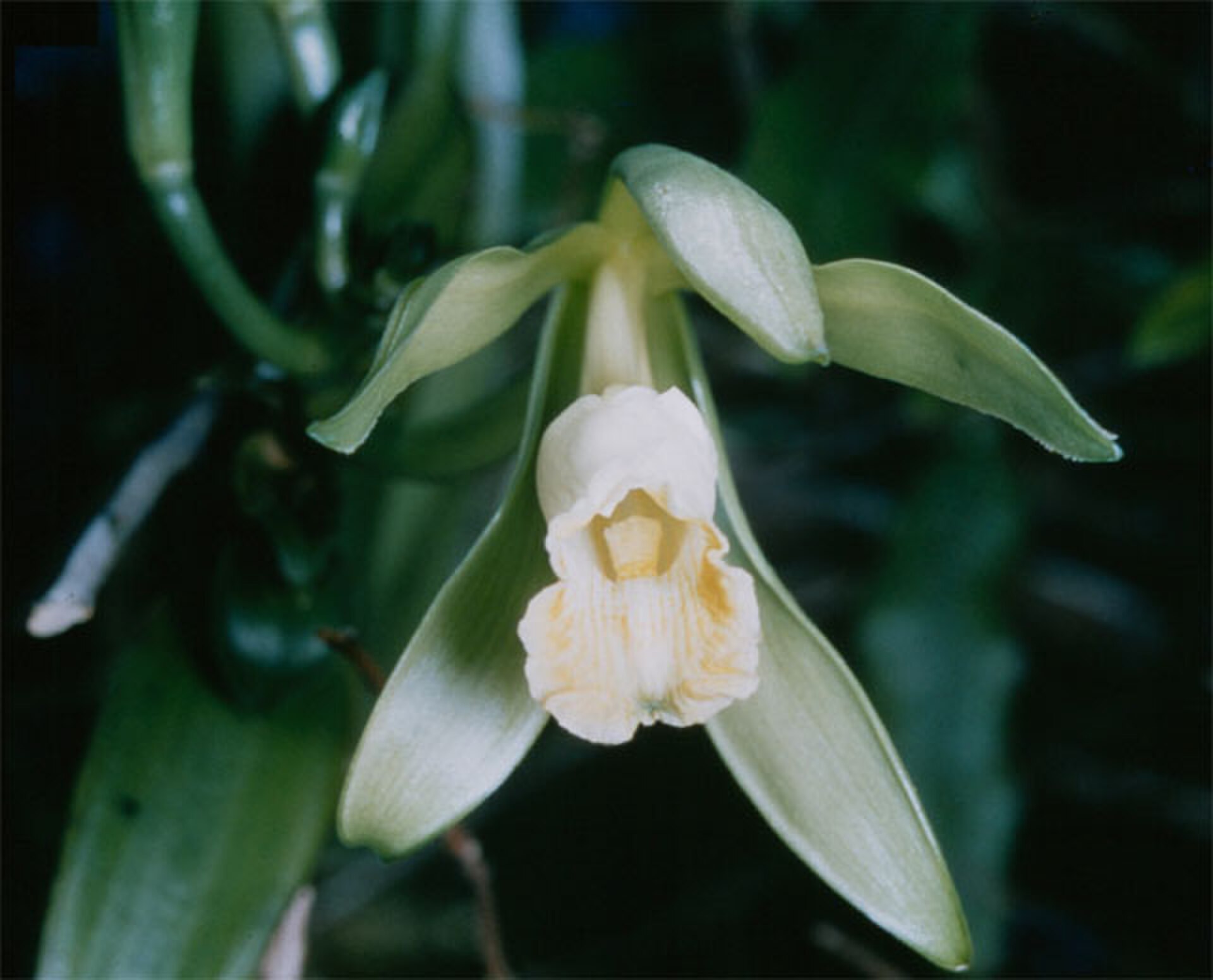
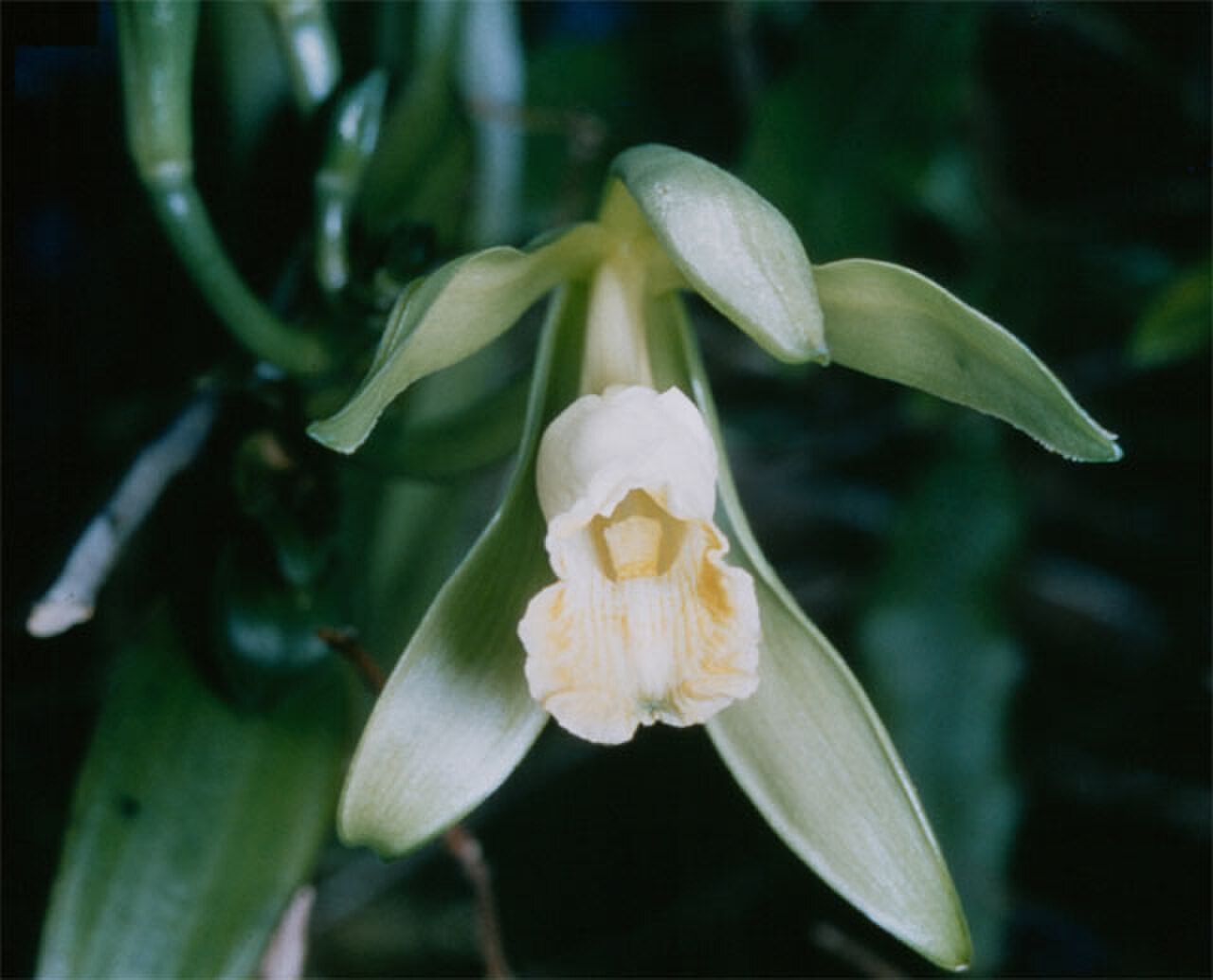
The vanilla orchid, Vanilla planifolia, has a very particular tale. It originates from the dense, lowland forests of southern Mexico and Central America, where its survival depended on an intricate relationship with a specific genus of stingless bees known as Melipona. These bees are finely adapted to the structural complexity of the orchid's flowers. The pale yellow-green blooms, fleeting as they last only a day, rely on these tiny pollinators for reproduction. The Melipona's small stature and unique behaviour allow it to navigate the structural fold of the flower, known as the rostellum, which separates the flower's male and female parts. In the absence of Melipona, no fruit forms. By the seventeenth and eighteenth centuries, European colonial agronomists had transported vanilla orchids to tropical regions worldwide, from Java to Madagascar. Despite flourishing growth, the absence of Melipona rendered these efforts futile — the pods simply did not form, cementing Mexico's near-monopoly on this exquisite spice.
What the Aztecs called it
In pre-conquest Mesoamerica, vanilla was an esteemed flavouring for cacao. The Aztecs referred to it as tlilxochitl, or 'black flower,' a term inspired not by the plant's pale blooms but by the dark, cured pods. The Totonacs of Veracruz, early cultivators of vanilla, engaged in extensive trade of the spice across the Aztec empire. It was Hernán Cortés who introduced vanilla to Europe, bringing it back to Spain in the 1520s. Throughout the colonial period, the Spanish maintained a tight grip on vanilla cultivation knowledge within Mexico, fiercely protecting their lucrative trade. Efforts to grow vanilla outside its native region consistently faced the same pollination obstacle. Despite blooming in diverse locales, from Java to Réunion (then Île Bourbon), the absence of fruit meant that vanilla remained a rare and costly delicacy, second only to saffron in value in 18th-century Europe.
The spread of vanilla cultivation mirrored the patterns of European colonial expansion, yet it was perpetually stymied by its botanical dependency on Melipona. Attempts to circumvent this natural constraint through artificial means met with limited success. The Spanish administration, acutely aware of the economic importance of vanilla, guarded the secrets of its cultivation, allowing the spice to maintain its status as a symbol of luxury and an emblem of their colonial prowess.
Réunion, 1841
The story of vanilla's transformation outside of Mexico is intimately tied to the island of Réunion. In 1819, the agronomist Marchant introduced vanilla cuttings to the island, hoping to capitalize on its potential. The plants thrived, their vines spreading luxuriantly, but the familiar problem persisted: flowers bloomed, yet pods were rarely set, the result of occasional accidental pollination. Despite various attempts using tools like camel-hair brushes to hand-pollinate the flowers, success was scant and unpredictable. It was in this environment of frustration and experimentation that a young boy named Edmond would make a groundbreaking discovery.
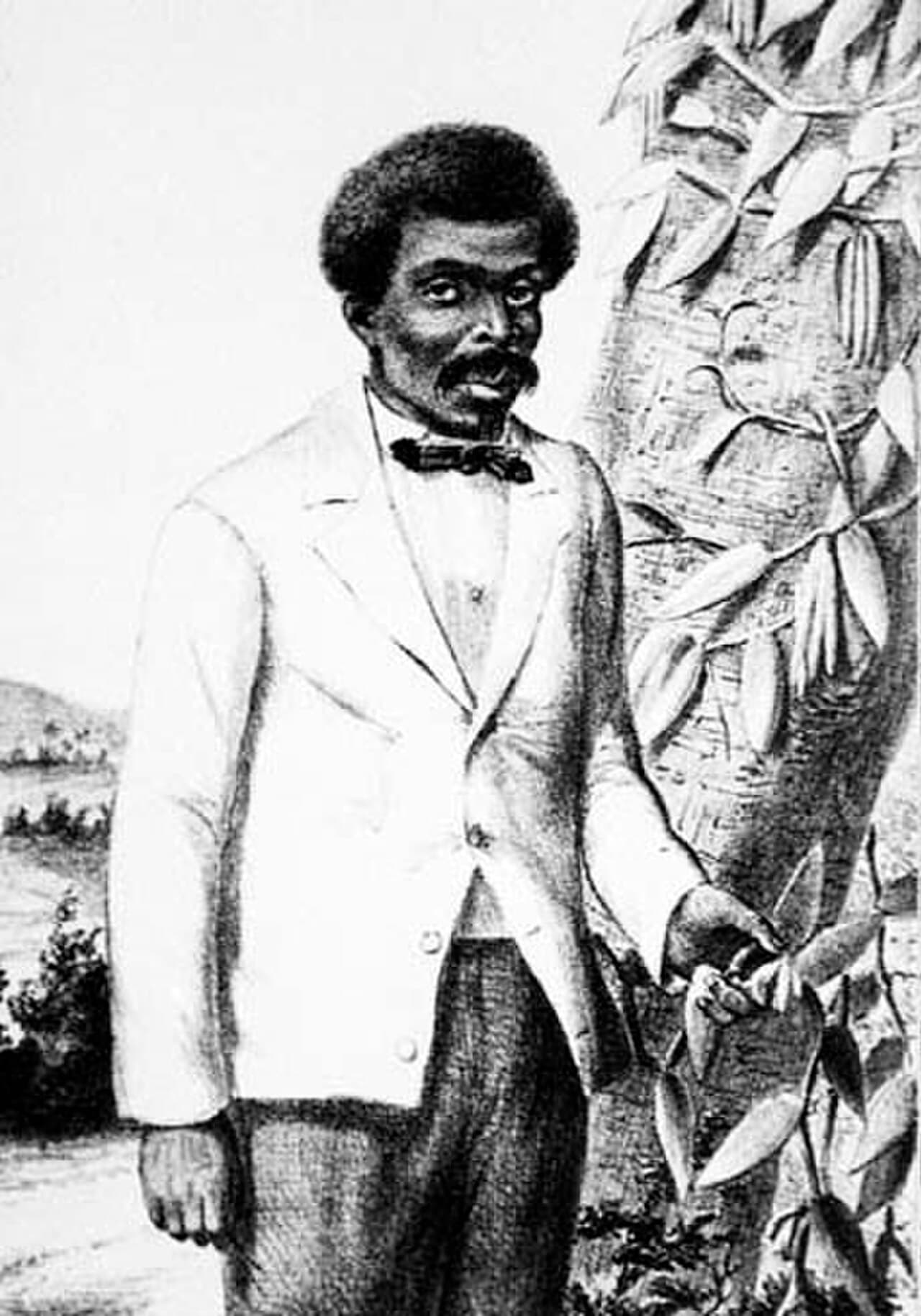
Edmond, a twelve-year-old enslaved on the plantation of Férréol Bellier-Beaumont, was introduced to botany at a young age. Born around 1829 and of African descent, Edmond's life on the island was one of servitude, yet he absorbed the knowledge imparted to him with keen interest. In 1841, he demonstrated a revolutionary technique to Bellier-Beaumont. Using a thin sliver of bamboo or a thorn, he deftly lifted the rostellum, allowing the anther to press against the stigma — a swift, one-second action. This simple yet effective method changed everything. Bellier-Beaumont, astonished by the boy's ingenuity, confirmed the reliability of the technique, which quickly spread throughout Réunion and beyond, revolutionizing vanilla cultivation globally.
What Edmond Albius did and what was made of it
Edmond's hand-pollination method was remarkably effective and easy to learn, requiring minimal training and executing efficiently on a large scale. This breakthrough rapidly transformed the vanilla economy on Réunion. By the 1850s, the island's vanilla exports had surged, and Madagascar, adopting the Albius technique, would eventually become the world’s leading vanilla producer. The vanilla that flavours much of today's commercial products owes its existence to his discovery. When slavery was abolished in the French colonies on 20 December 1848, Edmond gained his freedom and adopted the surname Albius — a nod to the Latin word for white, in stark contrast to the colour of his skin and indicative of his new status.
Despite his monumental contribution, Edmond Albius lived in poverty for much of his life, working in menial jobs on Réunion until his death in 1880. The recognition of his contribution was slow, overshadowed by figures such as Charles Morren, a Belgian botanist who had earlier attempted hand-pollination in a greenhouse in Liège in 1836 with less success. While Morren's method was a precursor, it lacked the simplicity and reliability of Albius's approach. Over time, acknowledgment for the innovation gradually shifted back to Albius, largely thanks to Bellier-Beaumont's advocacy and local historians who ensured his story was not forgotten.
The Melipona that was missing
Melipona, the genus of stingless bees native to Mexico and Central America, plays a crucial role in the natural pollination of vanilla. The flower of the vanilla orchid presents a precise geometric challenge: its anther and stigma are separated by the rostellum, a barrier that only the Melipona, with its diminutive size and specific movements, can navigate successfully. Other insects, including the more common honeybees, either cannot fit within the flower’s confines or fail to trigger the necessary contact points to achieve pollination. Hummingbirds, though adept at pollinating many types of orchids, do not possess the tactile precision required for vanilla.
Field studies continue to show that Melipona-pollinated vanilla flowers produce fruit at significantly higher rates than those pollinated by other insects. Yet, attempts to introduce Melipona to other tropical regions have consistently failed due to their specific environmental adaptations. The Aztecs, lacking the scientific terminology, nonetheless observed the correlation between these particular bees and successful pod formation, insights that modern entomology has since confirmed. The exclusivity of this natural pollination process only underscores the brilliance of Edmond Albius's method, which bypassed a two-century-old problem with an elegant human solution.
What vanilla is, chemically
Vanillin, the principal flavour component of vanilla, is a simple organic compound with the chemical formula C8H8O3. This molecule is responsible for the characteristic aroma and taste associated with vanilla pods. Despite the complexity of natural vanilla, vanillin is the star player, present in cured vanilla pods at one to two per cent by weight. However, the vast majority — approximately 99 per cent — of vanillin used today in food and fragrance is synthetic, derived from guaiacol or lignin, a byproduct of wood pulp production.
The allure of natural vanilla lies in its complexity, with hundreds of compounds contributing to its rich profile. The process of extracting these flavours is laborious: fresh vanilla pods undergo a lengthy curing process, alternating between sun-drying and sweating in blankets, which spans six to eight months. During this period, enzymatic reactions convert precursors into vanillin, enhancing the pod’s aromatic qualities. The final cured product is only about 25 per cent of the original green pod weight, explaining why natural vanilla commands such a premium price — around $600 per kilogram as of 2024, vastly outpricing its synthetic counterpart.
Modern Madagascar and the cyclone problem
Today, Madagascar is the powerhouse of natural vanilla production, responsible for about 80 per cent of the global supply. The vanilla industry there is dominated by smallholder farmers who meticulously pollinate their crops by hand using Edmond Albius's method. Each flower has a narrow window for pollination, heightening the labour intensity of the crop. Madagascar's climate poses significant challenges, particularly the cyclone seasons that can devastate vanilla crops. In 2017, Cyclone Enawo severely affected Madagascar, destroying roughly a third of its vanilla output and causing global prices to spike to nearly $700 per kilogram.
The volatility of vanilla prices is exacerbated by theft and climate change. Farmers often tattoo pods with identifying marks to prevent theft before harvest. The increasing intensity and frequency of cyclones due to climate change threaten to further disrupt production. Vanilla's dependency on specific geographic and climatic conditions, combined with its labour-intensive cultivation process, makes it particularly vulnerable. Yet, despite these challenges, the cultural and economic significance of vanilla persists, a testament to the enduring impact of Edmond Albius's 1841 discovery.
When next you encounter a vanilla bean, remember that its journey to your table is the result of two pivotal accidents. Evolution gave rise to a flower uniquely adapted to a single small bee in Mexico. History then intervened in the form of Edmond Albius, a young enslaved boy on a distant French colony, who solved a puzzle that had eluded scientists for two hundred years. The process he devised remains unchanged, a testament to human ingenuity in the face of nature's constraints. While statues and a few place names honour Albius on Réunion, his contribution largely goes unrecognized by those who enjoy the fruits of his labour. The bean, however, tells his story with every fragrance it releases.
References
- Ecott, T. (2004). Vanilla: Travels in Search of the Ice Cream Orchid. Penguin.
- Lubinsky, P., et al. (2006). Origins and dispersal of cultivated vanilla (Vanilla planifolia Jacks., Orchidaceae). Economic Botany, 60(2), 127–138.
- Soto Arenas, M. A., & Dressler, R. L. (2010). A revision of the Mexican and Central American species of Vanilla. Lankesteriana, 9(3), 285–354.
- Cameron, K. M. (2011). Vanilla Orchids: Natural History and Cultivation. Timber Press.


