
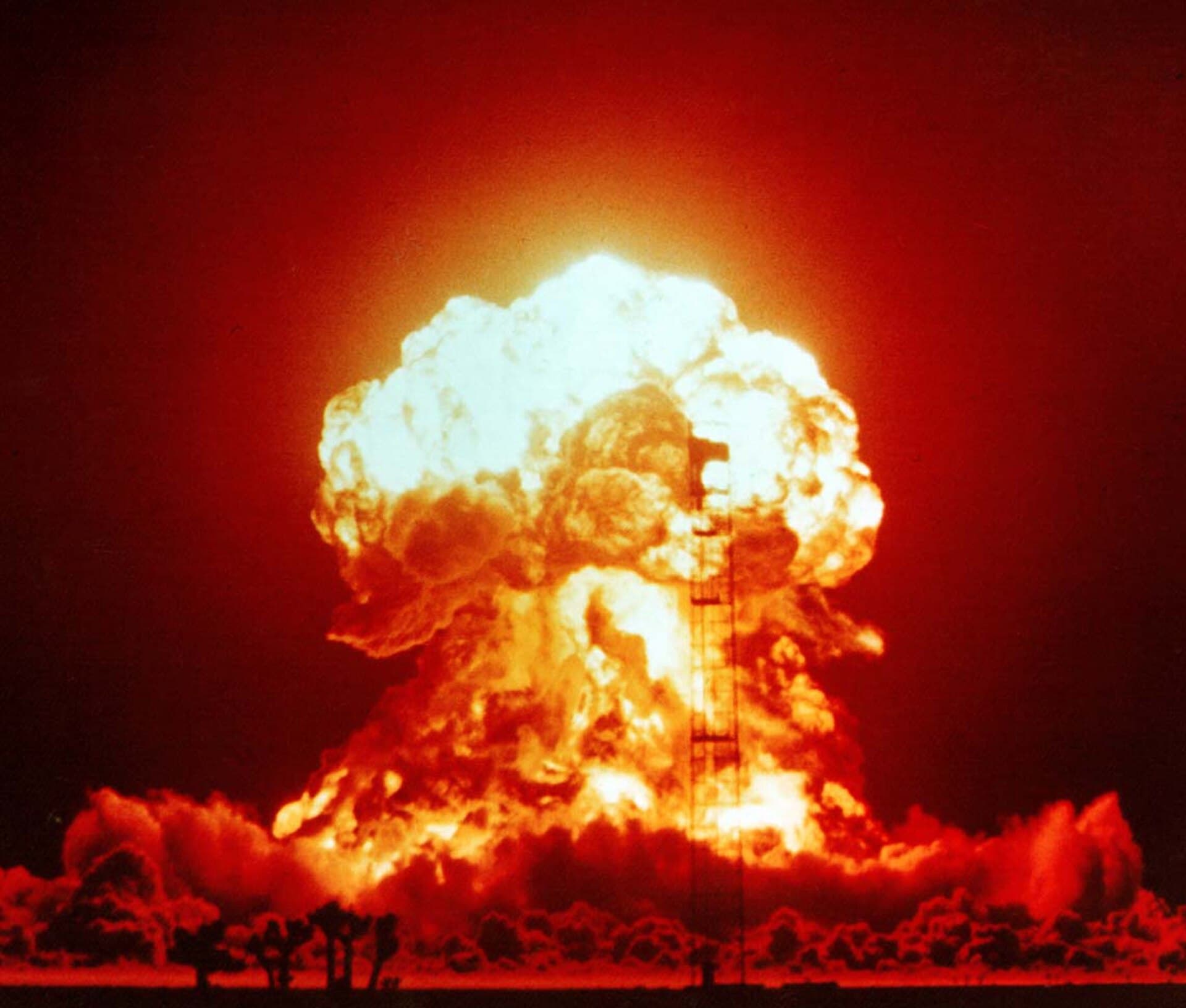
At precisely 00:53 GMT on 22 September 1979, the US Air Force's Vela Hotel satellite 6911, stationed in geostationary orbit, detected what its bhangmeters were designed to capture: the distinct double-flash signature of an atmospheric nuclear detonation. This satellite, part of a constellation launched to enforce the Partial Test Ban Treaty, recorded two intense sub-millisecond pulses of light. The first was a brief and intense flash, followed milliseconds later by a longer-lasting fireball signature. This was the unmistakable fingerprint of a nuclear explosion, the kind that should not have happened undetected. The estimated yield, according to the photometric data, was between 2-3 kilotons — indicative of a small fission device. The location was remote, somewhere over the South Atlantic or the southern Indian Ocean, near Prince Edward Island, Marion Island, or the Bouvet area. In the hours following the detection, the US intelligence community was briefed, and soon after, the Carter administration faced a critical decision: how to interpret and respond to this enigmatic incident.
What the satellites were
The Vela program was launched in 1963, following the ratification of the Partial Test Ban Treaty, which prohibited nuclear testing in the atmosphere, underwater, and outer space. This treaty, however, lacked a viable verification mechanism from the ground, leading to the development of the Vela satellites. These satellites, deployed in pairs on opposite sides of the Earth in geostationary orbit, were tasked with monitoring the entire globe for signs of nuclear tests. By 1979, the Vela constellation had been operational well beyond its intended lifespan. Despite their age, the satellites had recorded 41 atmospheric nuclear tests, each corroborated by known nuclear programs except for two minor anomalies considered as data glitches. The detection on 22 September was notably distinct; the optical signal was robust and the double-flash signature was unmistakably consistent with a nuclear explosion, leaving little room for doubt in its initial interpretation.
The Vela satellites were equipped with bhangmeters, photometric devices specifically designed to detect the unique light signature of nuclear detonations. This technology was critical in distinguishing between the rapid, intense initial flash and the subsequent longer-lasting fireball — a characteristic profile of atmospheric nuclear explosions. This proficiency had made Vela an indispensable component in monitoring compliance with international treaties aimed at limiting nuclear proliferation.
What was looked for

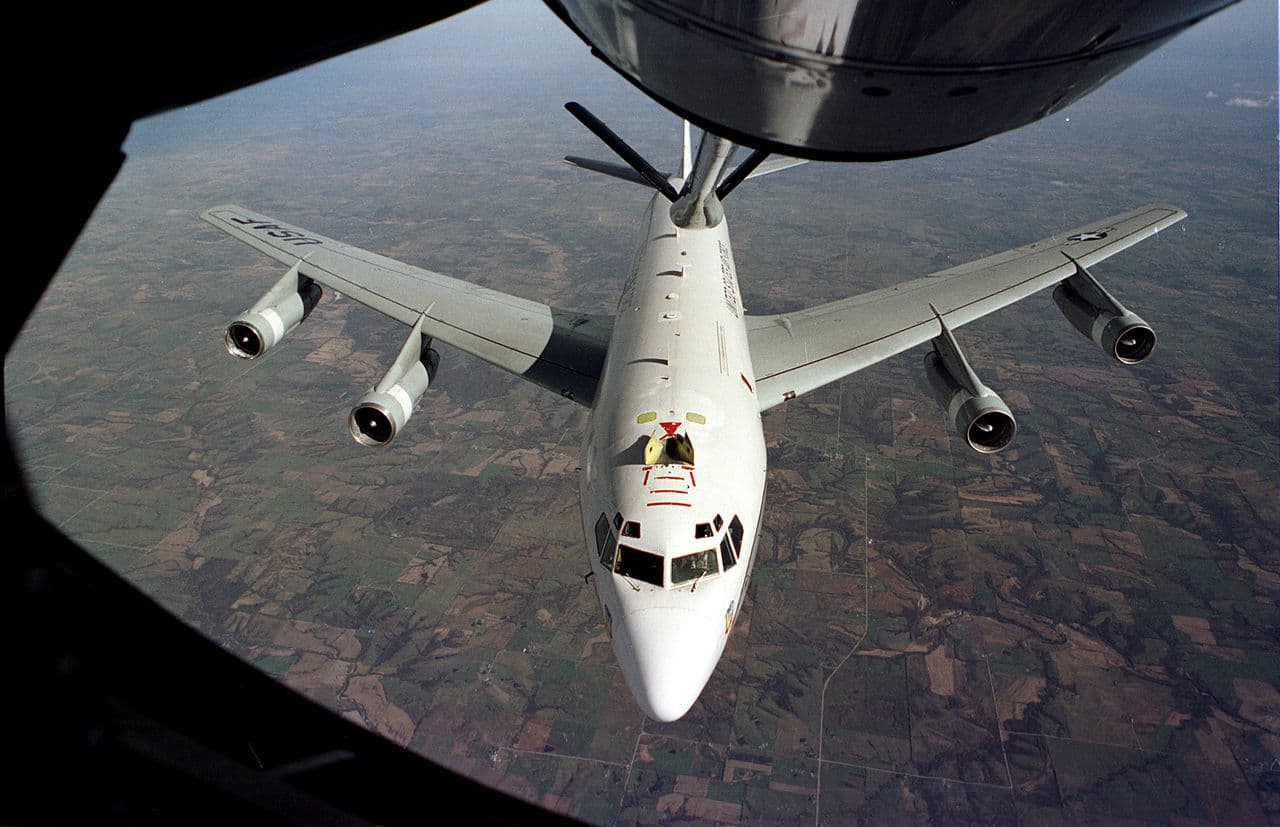
Following the detection of a potential nuclear test, a standard verification protocol was activated. This involved collecting atmospheric samples, as radioactive fallout from such tests could persist at altitude for several days or weeks. The US Air Force's WC-135 aircraft, specialized in atmospheric sampling, were promptly dispatched from bases in Australia and South Africa. Over the course of 72 hours, these aircraft conducted numerous sorties over the suspected test area. However, despite extensive efforts, they found no trace of radioactive fallout. This absence could imply several scenarios: the fallout had either dispersed before their arrival, their flight paths missed the dispersal pattern, or there was simply no fallout to detect.
Simultaneously, hydroacoustic data was examined by the US Navy's SOSUS system analysts. These underwater sound surveillance systems, although primarily focused on submarine detection, were capable of picking up the acoustic signatures of underwater explosions. An anomaly consistent with such a detonation was noted, but it remained ambiguous and inconclusive. Additionally, the Arecibo radio telescope recorded an ionospheric disturbance coinciding with the event, which aligned with the expected effects of a high-altitude explosion. Despite these observations, no concrete physical evidence corroborated the Vela satellite's findings, leaving the incident shrouded in uncertainty.
The investigation
In response to the event, President Carter commissioned a panel of independent scientists to scrutinise the Vela data. This panel, led by Jack Ruina, a former director of ARPA, included prominent figures such as astrophysicist Wolfgang Panofsky. Their extensive review culminated in a May 1980 report, which controversially concluded that the most plausible explanation was a sensor anomaly or a meteoroid impact on the Vela satellite, relegating the likelihood of a nuclear test to a remote possibility. This conclusion stood in stark contrast to the interpretations of intelligence-community analysts, who favoured the nuclear test theory based on the strength of the optical signature.
The Ruina panel's emphasis on the lack of corroborating evidence — no fallout, no definitive acoustic confirmation, and no seismic data match — was a critical factor in their findings. However, this conservative conclusion was met with scepticism, particularly among analysts who had scrutinised the data and remained convinced of its nuclear nature. The tension between the panel's public conclusion and the internal assessments of intelligence analysts would remain a point of contention and debate, preserved in classified documents for many years.
Who could have done it
Among the nations considered capable of conducting such a test, three candidates have been seriously discussed since 1979. Israel and South Africa were both known to have ongoing nuclear weapons programs during this period, and their diplomatic isolation rendered a clandestine test plausible. Israel had reportedly developed nuclear weapons capability by the late 1960s, while South Africa, under Prime Minister P. W. Botha, had committed to maintaining a nuclear deterrent. The hypothesis of a joint test between these two nations in the South Atlantic has been the dominant unofficial interpretation since the 1980s.
There is a substantial body of evidence suggesting collaboration between Israeli nuclear physicists and the South African government throughout the 1970s on weapons-related research. Notably, South Africa had completed its first nuclear device by 1979, a fact later confirmed when it dismantled its nuclear program in the early 1990s. The Israeli-South African joint-test hypothesis received further credence when former President Carter, in his 2010 memoir, endorsed this interpretation, albeit unofficially. Despite persistent public denials from both nations, the hypothesis remains compelling for many scholars and analysts, who argue that it neatly aligns with the known capabilities and geopolitical realities of the time.
The dissenting candidates
Alternative explanations for the 1979 event have been proposed over the years. The Ruina panel's micrometeoroid hypothesis, which suggested that a small space rock might have struck the Vela satellite, creating a sensor artefact, has been met with criticism. Critics point out that no other Vela detection of an actual nuclear test exhibited a comparable two-pulse profile, making this explanation seem improbable given the nuclear-like signature of the data.
Other nations, including France, the Soviet Union, and India, have been considered as potential culprits, albeit with significant caveats. France's atmospheric testing had been largely confined to the Pacific, with no tests aligning geographically or temporally with the Vela event. The Soviet Union, while possessing the capability, lacked a plausible motive given their commitment to test-ban diplomacy at the time. India's nuclear program, although active, was not advancing at a pace that would support such a test in 1979. Each alternative candidate presents considerable weaknesses, making them less viable than the Israeli-South African hypothesis.
What declassification has shown
The declassification of documents from the late 1990s onwards has offered new insights into the 1979 event. A 1979 Naval Research Laboratory report, made public in 2006, concluded that the optical signature was 'almost certainly' indicative of a nuclear test. A 1980 Department of State cable, released in 2010, revealed that some senior US officials privately accepted the Israeli-South African interpretation, acknowledging the political impossibility of public confirmation at the time.
The diplomatic context of the period — marked by the US's complex relations with Israel, the apartheid South African government, and ongoing arms limitation talks with the Soviet Union — provides a backdrop for the Carter administration's preference for an officially inconclusive finding. Although South African records from the post-apartheid era reference weapons development, they do not specifically address the 22 September 1979 event. Similarly, disclosures by Mordechai Vanunu and subsequent leaks have confirmed the existence of Israel's nuclear program without pinpointing this particular incident.
The official US position, as of 2026, continues to be one of indeterminate origin concerning the 22 September 1979 event. However, the consensus among historians of nuclear proliferation and intelligence — figures like Leonard Weiss, William Burr, and Avner Cohen — is that it was indeed a joint Israeli-South African nuclear test. The political implications of acknowledging that two US allies conducted an undeclared atmospheric test in violation of international agreements were significant enough to maintain official silence. While the responsible governments have since changed fundamentally, the event itself remains an unresolved chapter in nuclear history, with its primary witnesses now mostly gone and the decisive data ensconced in archives.
References
- Ruina, J. P., et al. (1980). Ad Hoc Panel Report on the September 22 Event. Office of Science and Technology Policy. [Declassified 1980.]
- Cohen, A. (1998). Israel and the Bomb. Columbia University Press.
- Weiss, L. (2011). Israel's 1979 nuclear test and the U.S. cover-up. Middle East Policy, 18(4), 83–95.
- Burr, W., & Cohen, A., eds. (2019). The Vela Incident: South Atlantic Mystery Flash in September 1979 Raised Questions About Nuclear Test. National Security Archive Electronic Briefing Book 570.


