
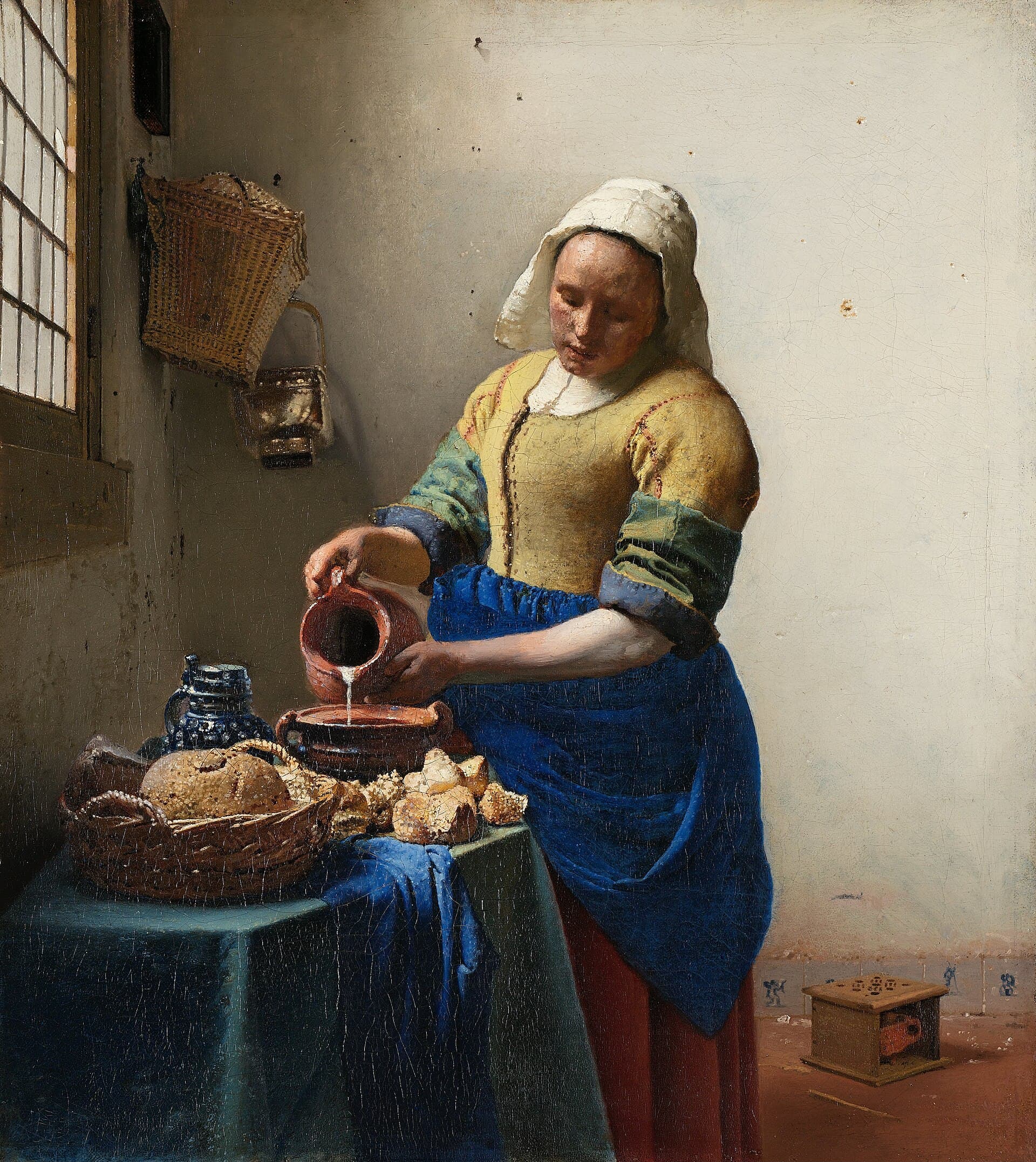
Johannes Vermeer remains an enigmatic figure in the annals of art history. Baptised in Delft on 31 October 1632, he was buried there on 16 December 1675. Despite his lasting legacy as a master of light and composition, the documentary record of his life is remarkably sparse. We know he married Catharina Bolnes in 1653, fathered eleven children, and left behind an estate catalogued in 1676. Vermeer's membership in the Delft Guild of Saint Luke in 1653 affirms his status as a professional painter, yet what we lack is telling: no letters, no journals, no apprentices, and not even a single self-portrait. Out of the 34 paintings that survive, each work is a testament to his skill, but they offer little insight into the methods he employed. Without a contemporaneous biographical text, any speculation about his technique derives from the paintings themselves.
What is unusual about the paintings
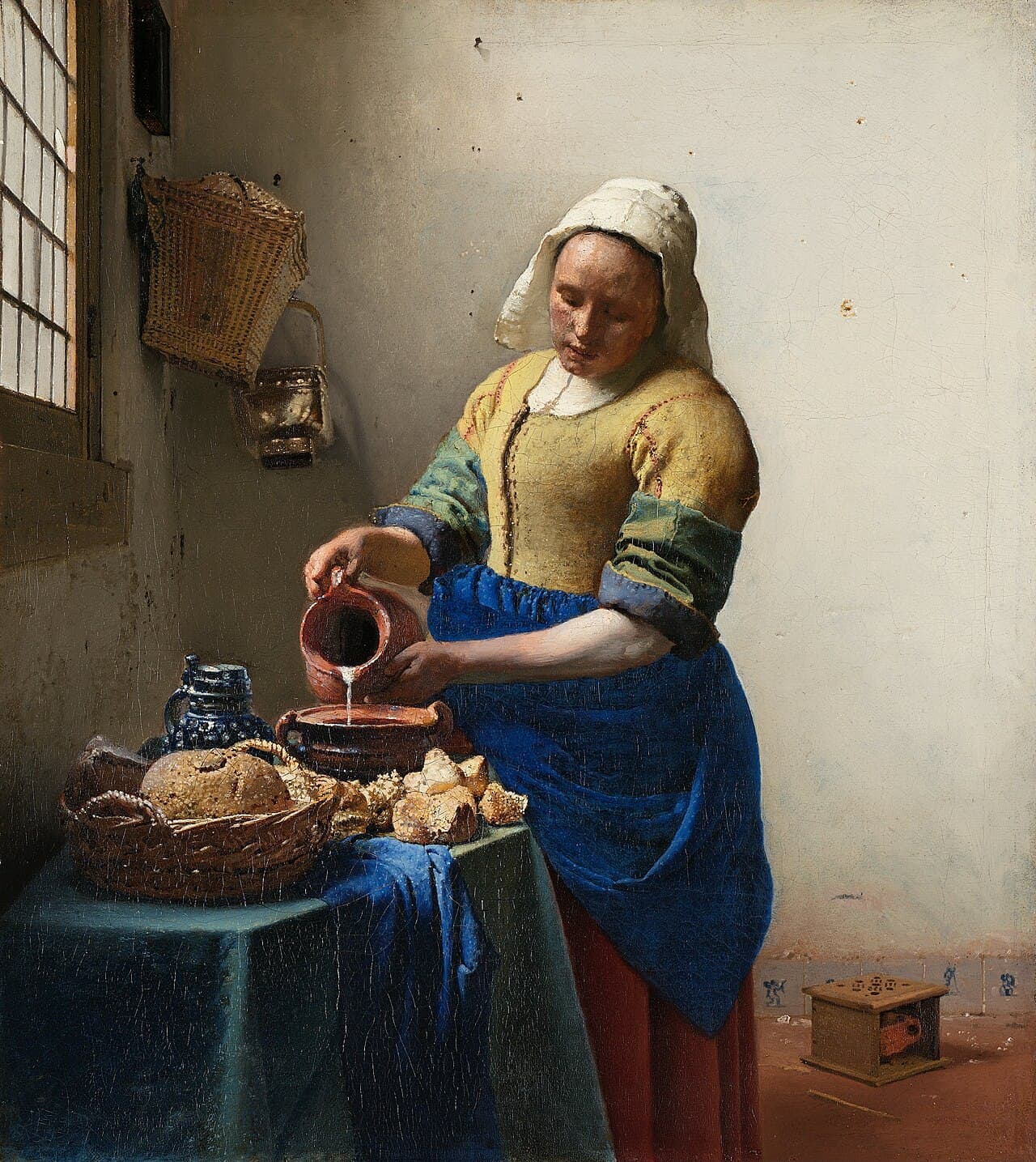
Several aspects of Vermeer's paintings have fueled the hypothesis that he may have utilised a camera obscura. The first is his treatment of highlights, which often appear as distinct circles of light. This 'bokeh' effect, well-known to photographers today, can be observed in the bread crusts of 'The Milkmaid' (c. 1660) and other works. Such a rendering of highlights was unusual for painters of the time unless they were viewing the scene through an optical device. Secondly, Vermeer’s mastery of perspective is evident in his interior scenes, which can be reconstructed with precise geometric accuracy. This consistency surpasses what most artists of his era achieved by eye alone. Lastly, the smooth transitions in shadow areas suggest a blending technique more akin to working from a projected image, as opposed to the more common practice of building up tones layer by layer.
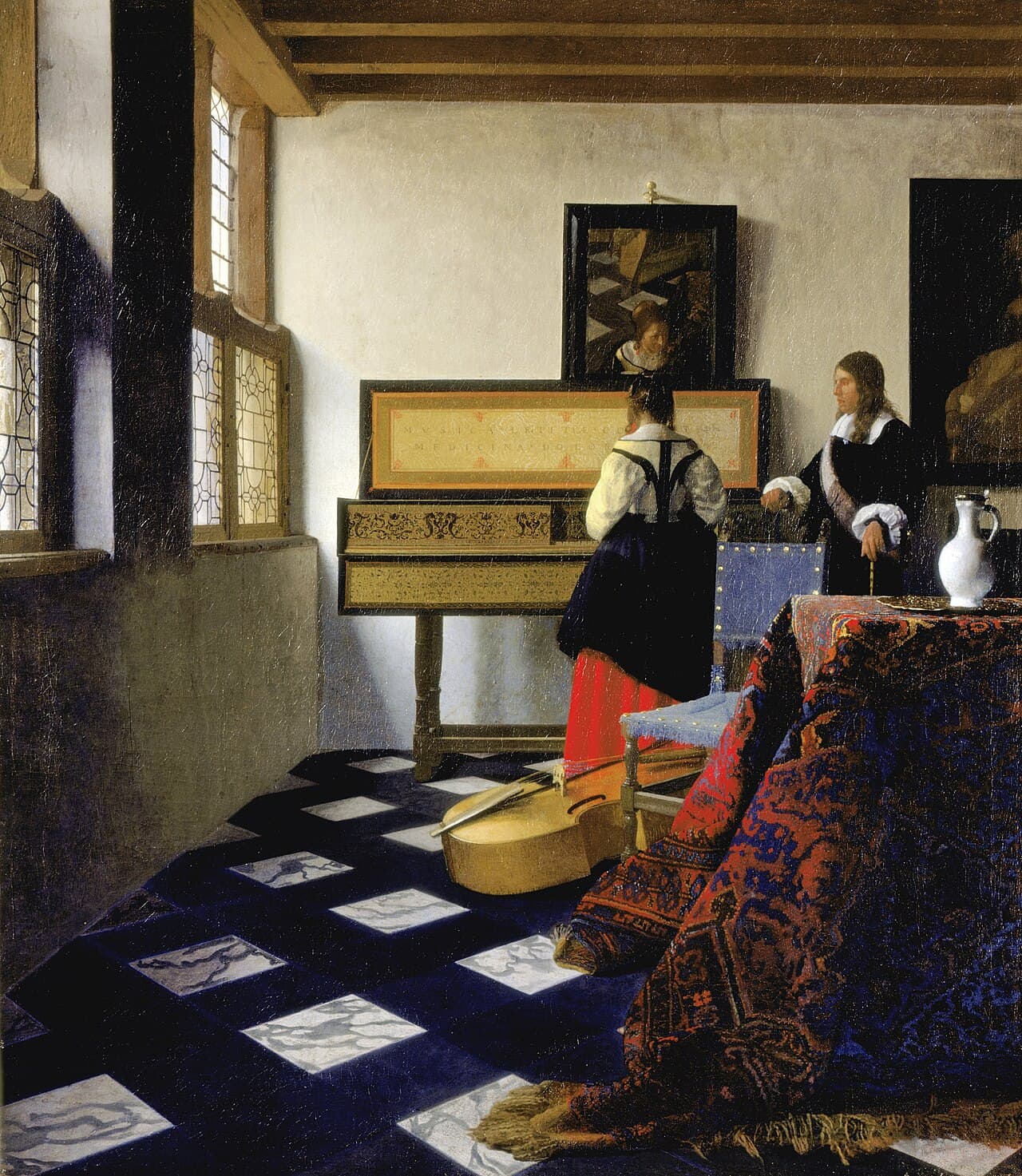
These technical details have been pivotal in the ongoing debate. While the aesthetics of Vermeer's paintings captivate, it is the underlying execution that compels closer scrutiny. The meticulous alignment of perspective in works such as 'The Music Lesson' (c. 1665) aligns well with the characteristics of an optical projection. This raises the possibility that Vermeer, a painter of remarkable precision, sought optical tools to enhance his natural talents. Yet, each of these observations remains an inference, compelling but not conclusive. The idea that Vermeer might have used a camera obscura is tantalising, particularly given the absence of concrete evidence of his exact techniques.
What a camera obscura is
The camera obscura is a simple optical device that has intrigued minds for centuries. Essentially, it consists of a darkened box or room with a small aperture — a pinhole or lens — on one side. Light from an external scene passes through this opening and projects an inverted image onto the opposite wall or screen. By Vermeer's time, the camera obscura was well established. Cornelis Drebbel had created a portable version by 1620, and Johannes Kepler had described its principles as early as 1604. Constantijn Huygens, an influential figure and the father of the astronomer Christiaan Huygens, wrote with enthusiasm about its uses in 1622.
While it is undisputed that Vermeer could have accessed such a device, whether he actually did remains speculative. The materials and knowledge required to construct and utilise a camera obscura were certainly available in 1660s Delft. Thus, the notion that Vermeer employed this tool to achieve his extraordinary compositions is not beyond the realm of possibility. However, this possibility stands as conjecture, absent of any direct documentation or tools found in his possession.
The Hockney-Falco thesis
In 2001, the painter David Hockney and the physicist Charles Falco proposed a provocative theory that many Renaissance and Baroque masters utilised optical projections in their work. Their book, 'Secret Knowledge', examined artists like Caravaggio, Velázquez, Ingres, and notably Vermeer. The argument centred on geometric anomalies in paintings, such as arms slightly off-axis and chandeliers with dual vanishing points, suggesting that artists periodically adjusted their setups to align with projected images. Hockney and Falco's thesis sparked vigorous debate, with Vermeer specialists showing more receptivity to the idea for him than for some of the other artists discussed.
The Hockney-Falco thesis brought to light the notion that optical aids were not mere crutches but sophisticated tools for achieving artistic precision. This idea sparked renewed interest in examining the paintings with a critical eye towards possible technical aids. Though some scholars remain sceptical, the thesis has undeniably opened new avenues for considering the practical methodologies behind artistic genius. Vermeer, in particular, with his flawless perspective and light manipulation, stands as a compelling case for such an investigation. His work invites the question of whether the precision in his paintings is attributable solely to innate skill or a combination of skill and optical technology.
Tim Jenison's reconstruction
A fascinating exploration of Vermeer's potential methods came through Tim Jenison, a Texas-based video engineer with no formal art training. Driven by curiosity, Jenison embarked on an ambitious project from 2008 to 2013 to replicate Vermeer's painting technique using only tools and techniques available in the 17th century. He chose 'The Music Lesson' (c. 1665) as his model, constructing a room to its exact dimensions and populating it with period-appropriate props and lighting.
Jenison employed a combination of a small concave mirror and a flat mirror on a stand to project the scene onto a canvas. The resulting painting, completed without any prior painting experience, bore a striking resemblance to Vermeer's original. Documented in the 2013 film 'Tim's Vermeer', this experiment did not constitute proof of Vermeer's methods, but it compellingly demonstrated the feasibility of producing similar results using optical techniques. Jenison's work suggests that with the right optical equipment, even someone without traditional artistic skill could approach the quality of Vermeer’s output, adding an intriguing dimension to the debate about the use of technology in art.
What the X-rays show
Recent advancements in technical analysis have provided new insights into Vermeer's paintings. From 2017 to 2023, a collaborative project between the Rijksmuseum and the Mauritshuis undertook detailed X-radiograph and infrared reflectography studies. These investigations revealed several key findings: Vermeer often painted over carefully prepared grounds, with some compositions lacking visible underdrawing in infrared, consistent with tracing a projected image directly onto the canvas. Other works displayed underdrawing, indicating that his methods were not static but varied across his oeuvre.
The studies also highlighted pinhole-like circles of confusion in areas of intense highlight, an effect unlikely to result from brushwork alone. The current consensus acknowledges that Vermeer likely used optical aids in some capacity, though his process was not as simple as tracing projections. These findings suggest a more nuanced approach, where Vermeer might have integrated optical techniques within a broader painting practice, adapting methods as required by the subject and composition. The technical studies underscore the complexity and adaptability of Vermeer's artistic practice, challenging oversimplified narratives of his techniques.
Despite the technical scrutiny, what survives is the enduring marvel of Vermeer’s artistry. Whether he utilised a camera obscura, a system of mirrors, or a simple grid, his paintings remain extraordinary achievements. 'Girl with a Pearl Earring' and other masterpieces are not diminished by the possibility of technological assistance. The texture of a cheek, the subtlety of light, these are the artist’s true domain. The dichotomy of 'art versus optical aid' has often obscured the more intriguing question: what combination of methods did Vermeer employ, and how did it contribute to his enduring legacy? This question remains open, inviting further exploration and discovery in the study of one of history’s most enigmatic painters.
References
- Steadman, P. (2001). Vermeer's Camera: Uncovering the Truth Behind the Masterpieces. Oxford University Press.
- Hockney, D. (2001). Secret Knowledge: Rediscovering the Lost Techniques of the Old Masters. Thames & Hudson.
- Jenison, T., & Penn, T. (Directors). (2013). Tim's Vermeer. Sony Pictures Classics.
- Rijksmuseum & Mauritshuis. (2023). Vermeer (exhibition catalogue and technical research summaries).


