
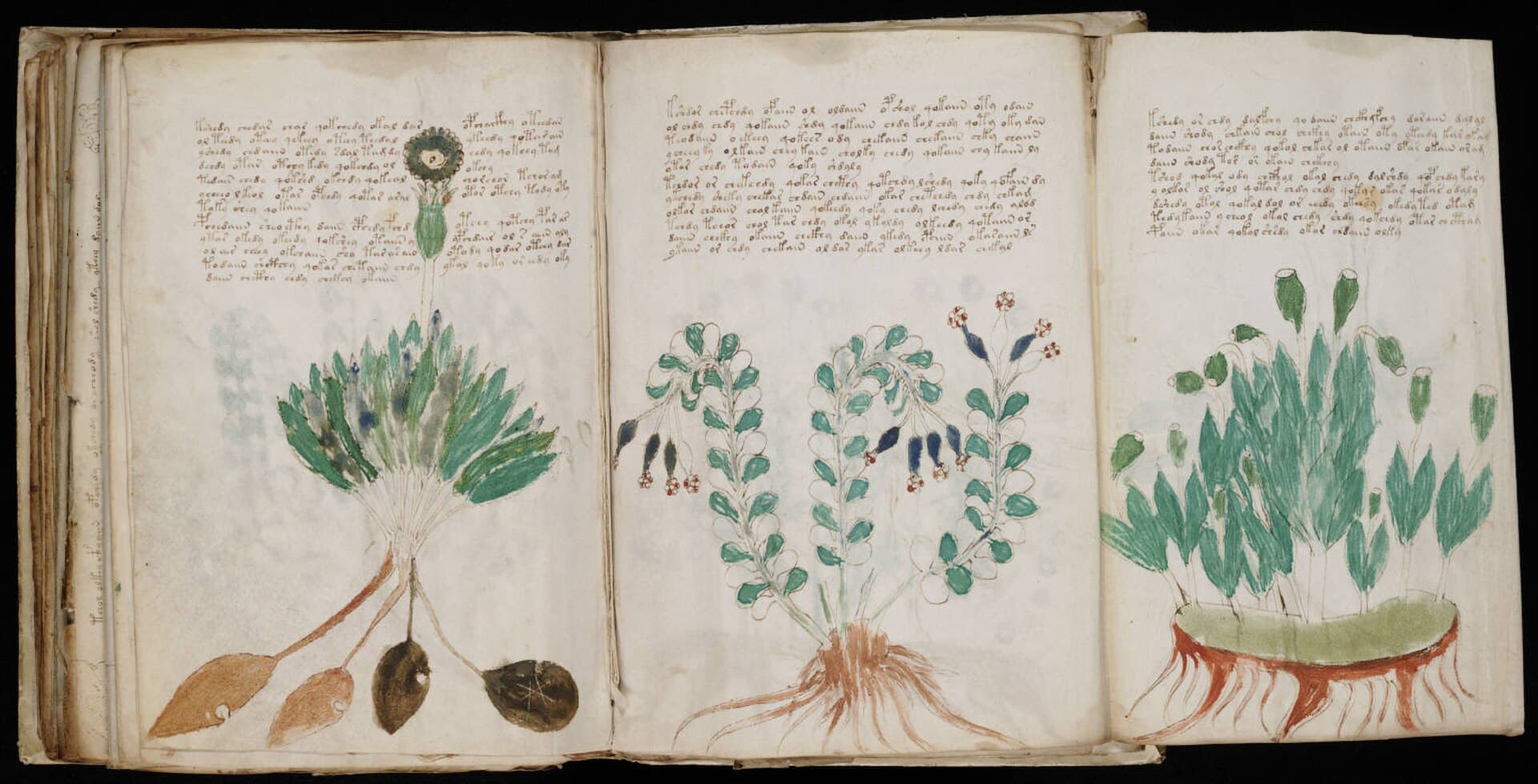
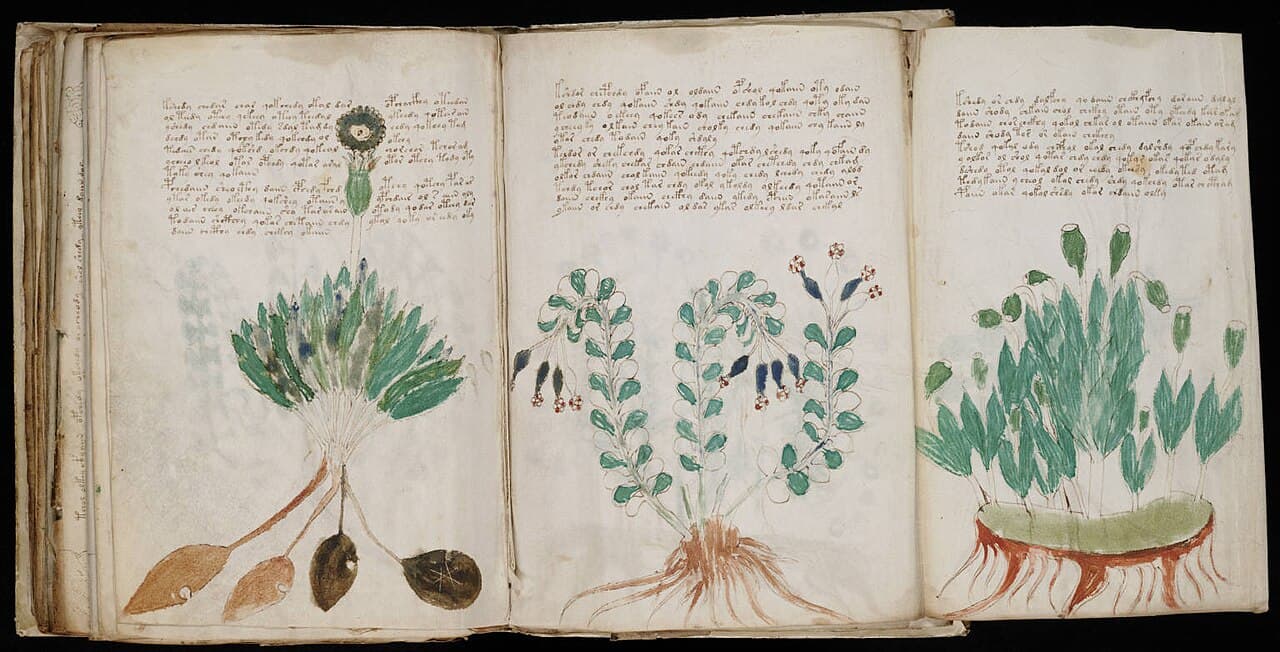
In the hushed halls of the Beinecke Rare Book Library at Yale University resides one of the most enigmatic artifacts of historical literature, known as Beinecke MS 408, or more commonly, the Voynich Manuscript. Since 1969, this peculiar codex has intrigued scholars with its approximately 240 vellum pages, each filled with handwritten script and illustrations that defy conventional botanical or astronomical knowledge. Radiocarbon dating places its creation between 1404 and 1438, a period rich with intellectual curiosity and exploration. Despite centuries of analysis and investigation, the manuscript’s language and purpose remain elusive, offering no answers to the questions it poses. It is a small book—measuring just 23 by 16 centimetres—yet it carries the weight of mystery that has stumped generations of linguists, historians, and cryptographers.
How it became known
The manuscript emerged into modern consciousness through the hands of Wilfrid Voynich, a Polish-Lithuanian antiquarian bookseller who acquired it in 1912 from a Jesuit college in Frascati, Italy. Its provenance, a crucial element in the manuscript’s history, includes a letter from Johannes Marcus Marci, dated 1666, addressed to Athanasius Kircher—a noted polymath and intellectual of his time. The letter implored Kircher, known for his work in hieroglyphic decipherment, to unravel the manuscript’s secrets. Yet, despite his reputation as a solver of puzzles, Kircher did not succeed. The letter hints at a previous owner of significant stature, possibly Emperor Rudolf II of the Holy Roman Empire, who reportedly valued it enough to part with 600 gold ducats around 1600.
This fascinating journey from a Jesuit library to a prominent European scholar’s desk underscores the manuscript’s allure. Marci’s letter not only serves as a historical breadcrumb but also as a testament to the enduring intrigue that the manuscript has provoked. Each custodian of the Voynich Manuscript has passed it on with the hope that someone, someday, might finally decipher its cryptic text.
What it physically contains
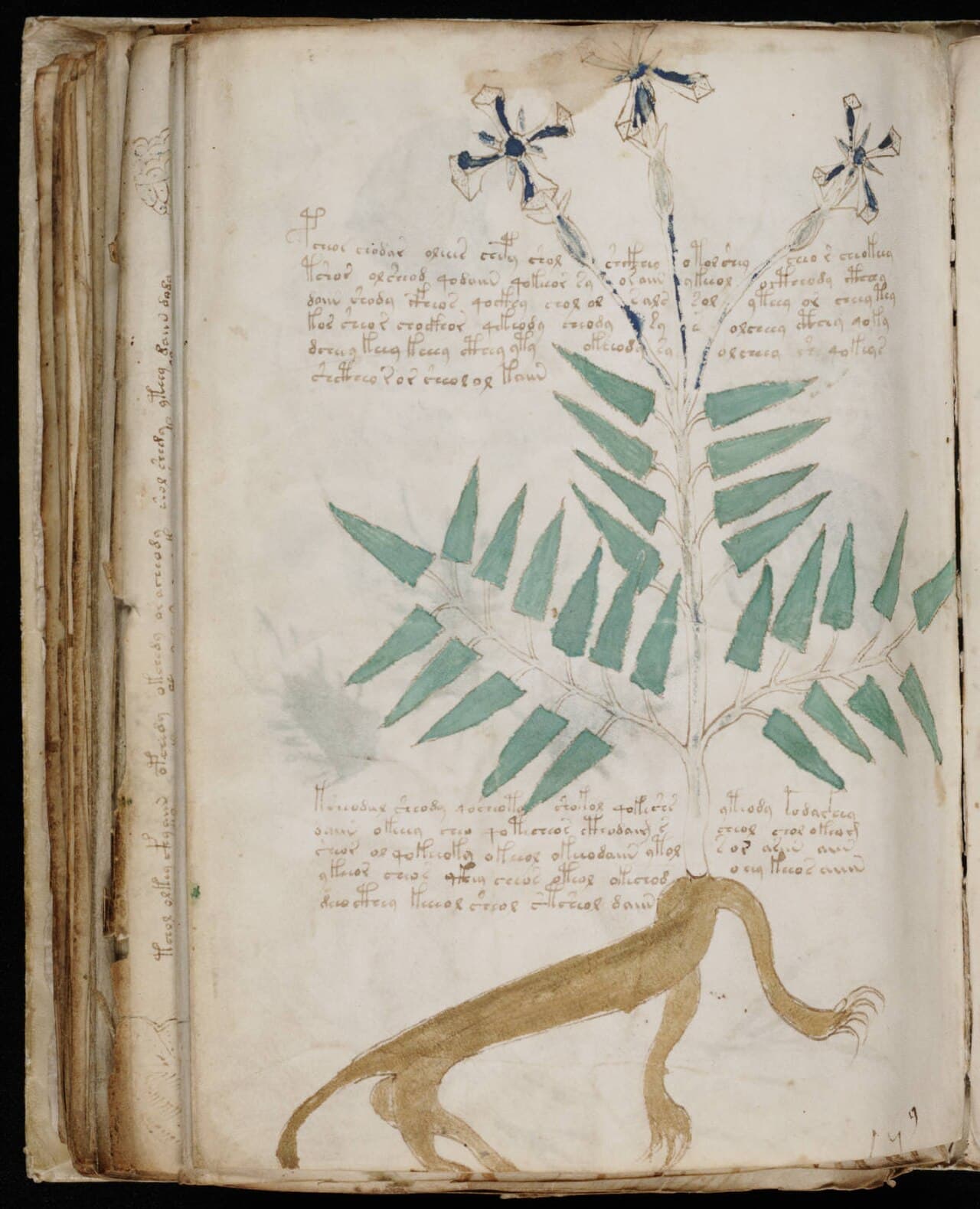
Modern scholarship divides the Voynich Manuscript into six distinct sections, each characterized by unique illustrations that hint at an array of subjects. The herbal section dominates the manuscript, filled with drawings of plants that no botanist has conclusively identified. These illustrations, replete with roots, leaves, and flowers, suggest a compendium of botanical knowledge that straddles the boundary between reality and imagination. Following this is the astronomical section, where zodiacal symbols and star charts populate the pages, hinting at an understanding of the heavens that is both familiar and peculiar.
The manuscript also ventures into the biological or balneological domain, presenting images of nude figures seemingly immersed in green pools, connected by a series of tubes. This section, possibly anatomical or alchemical, teases with its potential meanings. Meanwhile, the pharmaceutical section, with its jars and labelled plant parts, suggests a practical purpose—perhaps a medieval apothecary’s manual. Lastly, a 'recipes' section closes the codex, comprising paragraphs of text devoid of illustrations, a narrative element that remains as impenetrable as the text itself. Natural earth pigments colour the illustrations, but their application lacks the precision one might expect, indicating that the original artist and the colourist may not be the same.
The script
The text of the Voynich Manuscript is penned in a script that has resisted identification. Written left to right, it comprises an alphabet of approximately 20 to 30 distinct characters, a count that varies depending on the treatment of ligatures. The European Voynich Alphabet (EVA), a system developed in the 1990s, remains the most widely adopted framework for cataloguing these characters. Despite its indecipherability, the text exhibits features characteristic of natural language, such as adherence to Zipf's law regarding word frequency, consistent word lengths, and discernible syntactic structures with both high-frequency 'function words' and lower-frequency 'content words'.
Furthermore, there is observable regional variation in the vocabulary across the manuscript’s sections, another hallmark of a structured language. The consistent patterns seen in the script suggest an underlying logic, making the Voynich Manuscript not merely a random assemblage of symbols but a vessel of coherent, though as yet undeciphered, content. Linguists and cryptologists have long been fascinated by these features, which challenge the simplistic notion of the manuscript being a hoax.
Theories
Over the years, the Voynich Manuscript has inspired a plethora of theories regarding its origins and purpose. One theory posits that it is written in a natural language, yet to be identified, with candidates ranging from obscure Romance languages to an Old Turkic dialect or even Nahuatl. None of these hypotheses has withstood rigorous linguistic scrutiny. Another theory suggests it could be a constructed language, though its features are unusual for such an invention. A more conventional idea is that it encodes a known language through a complex cipher, though repeated attempts by experts, including cryptographers from both World Wars, have failed to crack any code it might conceal.
The possibility of the manuscript being a hoax has gained some traction, with certain statistical features supporting the notion of a meaningless text designed to mimic a real language. However, counterarguments highlight the manuscript's compliance with Zipf’s law, its syntactic complexity, and its regional vocabulary variations as evidence against this theory. Finally, there are speculations that the text might be the result of glossolalia or trance-writing, yet such ideas lack substantial empirical backing. Each of these theories underscores the manuscript's complexity and the challenges inherent in deciphering it.
The hoax hypothesis under pressure
Gordon Rugg’s 2004 proposal presented the most compelling case for the Voynich Manuscript as a hoax. He demonstrated that a 16th-century scribe could have created a text with similar statistical properties using a mechanical device known as a 'Cardan grille'. This method, Rugg suggested, could generate text-like outputs without meaningful content. While his argument was influential, it has since faced significant challenges. Scholars, including Claire Bowern at Yale, have pointed out that the manuscript exhibits linguistic features that the Cardan grille cannot replicate, such as stable noun-modifier order and consistent internal vocabulary.
Moreover, the systematic regional variation across the manuscript's sections suggests a level of complexity and intent incompatible with a simple mechanical generation. Bowern's analysis further highlighted that the manuscript's mutual information statistics align more closely with those of natural languages than with those of known hoaxes. While Rugg's hypothesis brought a fresh perspective to the debate, it remains a contested viewpoint rather than a definitive explanation, showcasing the ongoing discourse around this enigmatic text.
What computers have not done
The advent of computational linguistics and machine learning has brought new tools to the analysis of the Voynich Manuscript. Despite these technological advances, no algorithm has succeeded in delivering a comprehensive or convincing translation. Notable attempts, like Greg Kondrak's suggestion of a Hebrew underpinning in 2018 and Gerard Cheshire's proto-Romance proposal in 2019, have ultimately fallen short of establishing a coherent narrative across the manuscript’s text. The persistent failure of these high-profile efforts highlights the complexity and perhaps the unique nature of the manuscript’s content.
While computational methods have confirmed that the manuscript is not random and likely encodes meaningful information, they have yet to unlock its secrets. The current state of research suggests that while the text adheres to statistical norms of language, the absence of any sustained decipherment indicates that whatever language or code the manuscript employs remains beyond our current understanding. This enduring puzzle continues to capture the imagination of both seasoned linguists and amateur sleuths alike.
The Voynich Manuscript remains an open question, inviting speculation and scholarly inquiry in equal measure. Its eventual decoding is a tantalising possibility, yet history reminds us that some texts may never be fully understood without the contextual knowledge their creators and original readers possessed. This prospect, rather than diminishing the manuscript’s intrigue, adds a layer of intellectual humility to our understanding of historical texts. The book resides in New Haven, easily accessible in high-resolution online formats, patiently awaiting the day when someone might finally comprehend its elusive message. In its silence, the manuscript challenges us to respect the unknown and acknowledge the limits of our current knowledge.
References
- Rugg, G. (2004). The Mystery of the Voynich Manuscript. Scientific American, 291(1), 104–109.
- Reddy, S., & Knight, K. (2011). What we know about the Voynich manuscript. Proceedings of the 5th ACL-HLT Workshop on Language Technology for Cultural Heritage, Social Sciences, and Humanities.
- Beinecke Rare Book & Manuscript Library, Yale University. MS 408 — high-resolution digital edition.
- D'Imperio, M. E. (1978). The Voynich Manuscript: An Elegant Enigma. National Security Agency / Center for Cryptologic History.


