
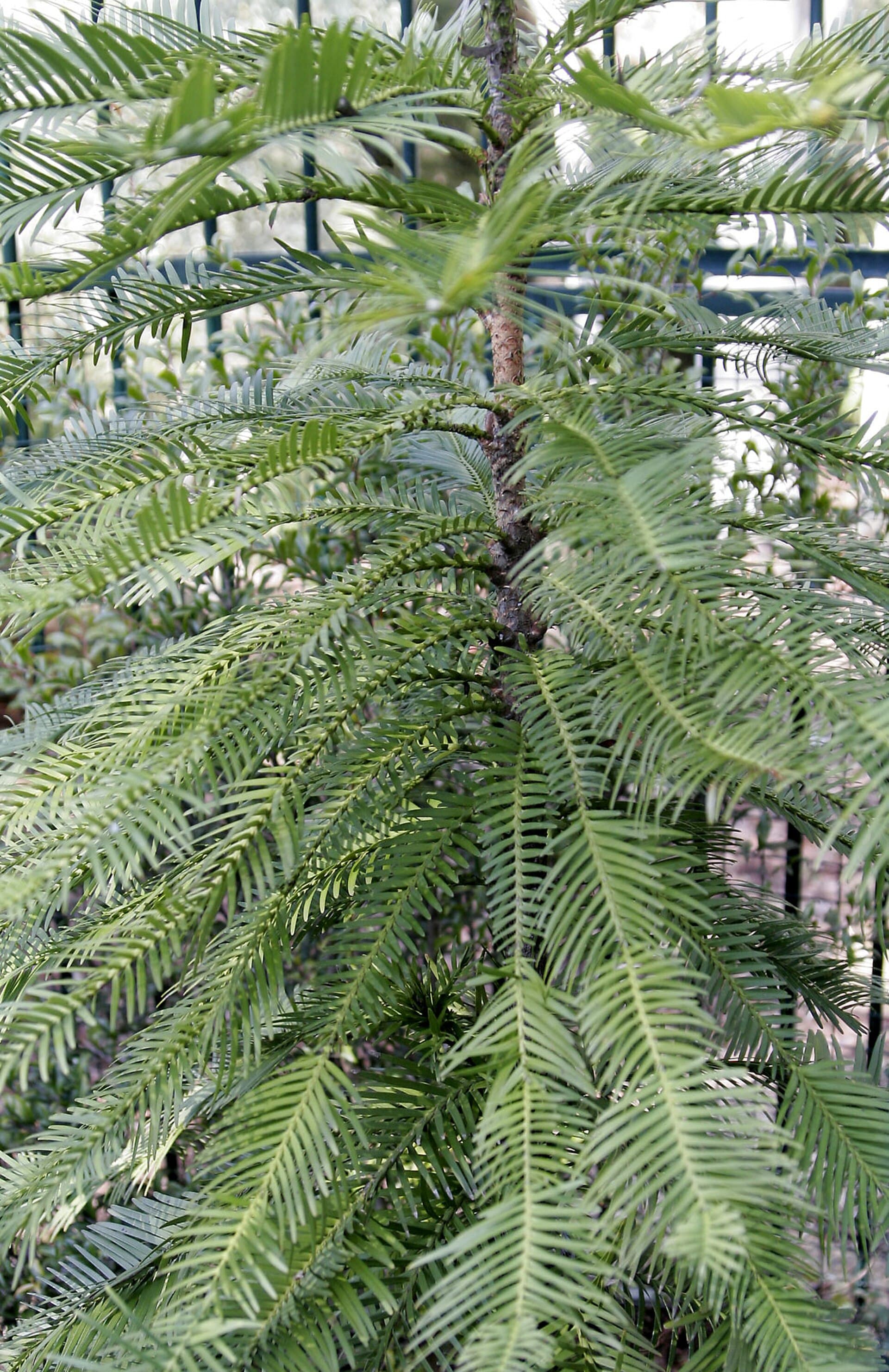
On a long weekend in September 1994, David Noble, a field officer with the New South Wales National Parks and Wildlife Service, embarked on a canyoning expedition into an unnamed canyon in Wollemi National Park. Situated roughly 150 kilometres northwest of Sydney, the park offered a rugged and largely unexplored landscape, ideal for a recreational canyoner like Noble. As he abseiled down the gorge, which had been noted on his list for its inaccessibility, he stumbled upon something that would soon captivate the scientific community. At the bottom, beside a stream, he discovered a stand of about forty large trees, their foliage distinctly unusual. These trees bore frond-like leaves arranged in flat sprays, markedly different from any pine he had encountered before. Their bark, pale and waxy, bore a texture reminiscent of bubbling chocolate. Noble, intrigued by this unfamiliar find, broke off a small twig, tucked it into his backpack, and climbed out. Upon returning to Sydney, he presented the twig to a botanist at the Royal Botanic Gardens. Within two months, the tree was identified as a member of the Araucariaceae family, yet it did not match any known living genus. By 1995, this ancient lineage was formally described as a new genus, Wollemia, with one species, Wollemia nobilis. Its closest known relatives had been documented in fossils estimated to be around two million years old, making the discovery a botanical sensation.
What had been known from fossils
Prior to Noble's discovery, Wollemia-type leaf and pollen fossils had been unearthed across the southern continents for decades. These fossils, with the oldest examples dating from the Late Cretaceous period—about 90 million years ago—painted a picture of a diverse plant family that once thrived across the Gondwana supercontinent. During the Mesozoic era, this family was a dominant component of the forests, contributing significantly to the ancient landscape. However, as the continents gradually drifted apart and Australia moved northwards, the climate became drier. This shift led to a steady decline in the diversity of the Araucariaceae family throughout the Tertiary period. By the Pliocene, approximately 5 to 2 million years ago, most lineages were thought to have vanished. The idea of discovering live populations akin to these ancient fossils was akin to finding a small population of Tyrannosaurus in a remote valley. Thus, the identification of Wollemia nobilis as a surviving member of this lineage was acknowledged as one of the most momentous botanical events of the twentieth century, shaking the foundations of what was known about plant extinctions and survival.
What the trees actually are
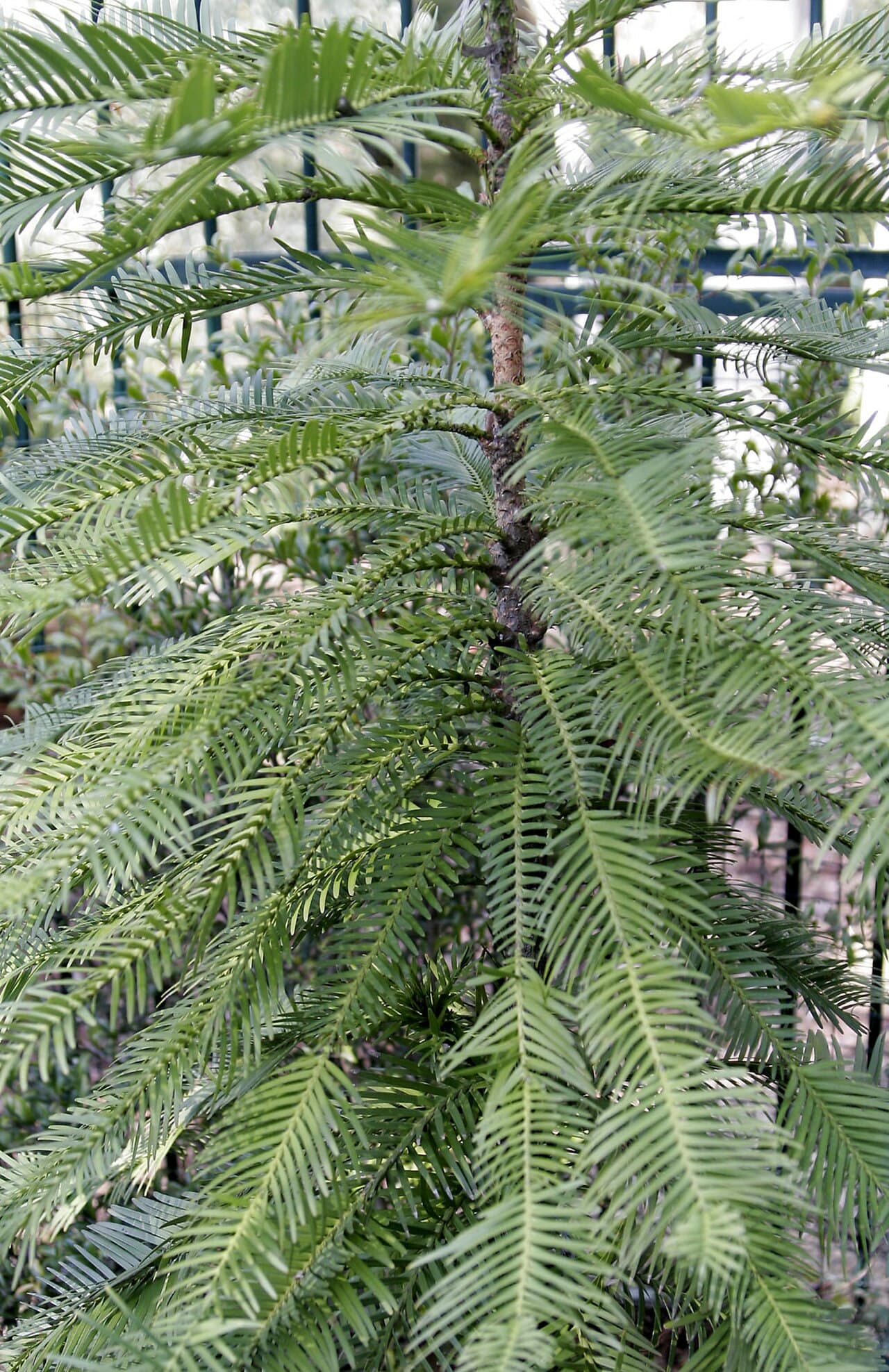
The Wollemi pine, a towering giant reaching up to 40 metres, defies typical coniferous characteristics. Its trunk, bulging with irregular nodules, presents an unusual sight, earning it comparisons to bubbling chocolate. The tree's branches grow in distinct, synchronized flushes, with all the shoots extending together before pausing for a considerable time. Periodically, older branches are shed, paving the way for new sprouts to emerge from the trunk's base. Reproduction occurs both sexually, with separate male and female cones growing on the same tree, and asexually, through coppicing from the base, allowing a single root system to support multiple trunks at varying stages of maturity. In the late 1990s, Catherine Offord at the Royal Botanic Gardens Sydney conducted DNA fingerprinting on the wild population. Her research revealed alarmingly low genetic diversity among the trees. The entire wild population, estimated to include around 90 to 100 mature individuals across two adjacent gorges, was nearly genetically identical. This genetic uniformity suggested that the Wollemi pine was a relictual survivor of a once widespread lineage, now confined to a single clonal grove.
Why this gorge
The survival of the Wollemi pine in its secluded gorge can be attributed to three notable features of the location. First, the gorge is remarkably deep and narrow, descending approximately 600 metres with towering sandstone cliffs that create a cool, moist microclimate. This environment provides a stark contrast to the surrounding landscape, which is often hot and dry, offering the trees a sanctuary of stability. Second, a permanent stream runs through the gorge, acting as a vital buffer against droughts that have decimated other populations on the adjacent, less protected slopes. Third, the gorge's isolation from fire has been crucial. The Blue Mountains region is notorious for its susceptibility to bushfires, yet the steep, wet, vertical walls of the gorge have protected the pines from such devastation. This isolation was tested during the devastating 2019-2020 Australian bushfires. Flames crept perilously close to the canyon rim, prompting an urgent response. The New South Wales Rural Fire Service orchestrated a helicopter operation that laid down a fire-retardant perimeter. Thanks to these efforts, the wild grove survived the ordeal.
How they are being saved
Conservation efforts for the Wollemi pine have taken a dual approach since the late 1990s. The first strategy focuses on in-situ protection. The exact location of the wild grove remains a closely guarded secret, accessible only by helicopter or by those willing to undertake a rigorous canyoning expedition. The National Parks and Wildlife Service diligently monitors the area for unauthorised visits, fungal pathogens, and any signs of disturbance. The second strategy is ex-situ propagation. The Royal Botanic Gardens Sydney initiated a programme using cuttings to cultivate the trees, and since 2006, Wollemi pines have been available for sale through commercial nurseries. These sales extend to private gardeners and public institutions worldwide. This commercialisation is not merely a financial endeavour but a crucial conservation strategy. By distributing the species globally, the risk of total extinction is mitigated—should the wild grove face destruction, the species lives on in cultivation. By 2025, Wollemi pines are thriving at Kew Gardens, the New York Botanical Garden, and private gardens in fifty countries. While these cultivated specimens are descendants of the original wild clones, the concern over genetic uniformity remains pressing.
Phytophthora and other threats
The wild grove's survival is increasingly threatened by Phytophthora cinnamomi, a soil-borne water mould notorious for its destructive impact on Australian native plants. Dubbed the 'biological bulldozer,' this pathogen was detected in the wild Wollemi grove in 2005, likely introduced by an unauthorised visitor's boots. In response, monitoring and biosecurity protocols have been drastically tightened. Access to the grove is now severely restricted to a select few researchers annually, who must adhere to stringent decontamination procedures. Meanwhile, climate change poses an ever-growing threat, altering the fire regime in the Blue Mountains. With conditions becoming drier and heat events more extreme, the gorge's natural fire insulation may no longer be reliable. The near-catastrophe during the 2019-2020 bushfires demonstrated that emergency interventions are possible but raised concerns about the feasibility of repeating such measures with every future fire season. The challenges facing the Wollemi pine underscore the precarious nature of its existence and the urgent need for continued vigilance and innovation in its conservation efforts.
The discovery of Wollemia nobilis has reshaped our understanding of extinction and survival. While it is not a 'living fossil' in the strictest sense, as it is morphologically distinct from its ancient ancestors, it represents a lineage thought to have vanished from the living world. This revelation was not without precedent—discoveries such as the coelacanth, ginkgos, and ancient cycads also challenged extinction narratives—but it served as a poignant reminder that 'extinct' is often a reflection of our search efforts rather than an absolute biological reality. The proximity of the Blue Mountains to Sydney, a major urban centre, highlights the unexplored potential of our natural world. The Wollemi pine exemplifies the surprises waiting to be uncovered in less traversed landscapes, urging us to remain curious and vigilant in the face of what remains unseen.
References
- Jones, W. G., Hill, K. D., & Allen, J. M. (1995). Wollemia nobilis, a new living Australian genus and species in the Araucariaceae. Telopea, 6(2-3), 173–176.
- Offord, C. A. (2011). Pushed to the limit: consequences of climate change for the Araucariaceae. Annals of Botany, 108(2), 347–357.
- Peakall, R., et al. (2003). Comparative genetic study confirms exceptionally low genetic variation in the ancient and endangered relictual conifer, Wollemia nobilis. Molecular Ecology, 12, 2331–2343.
- NSW National Parks and Wildlife Service. Wollemi pine conservation programme.


