
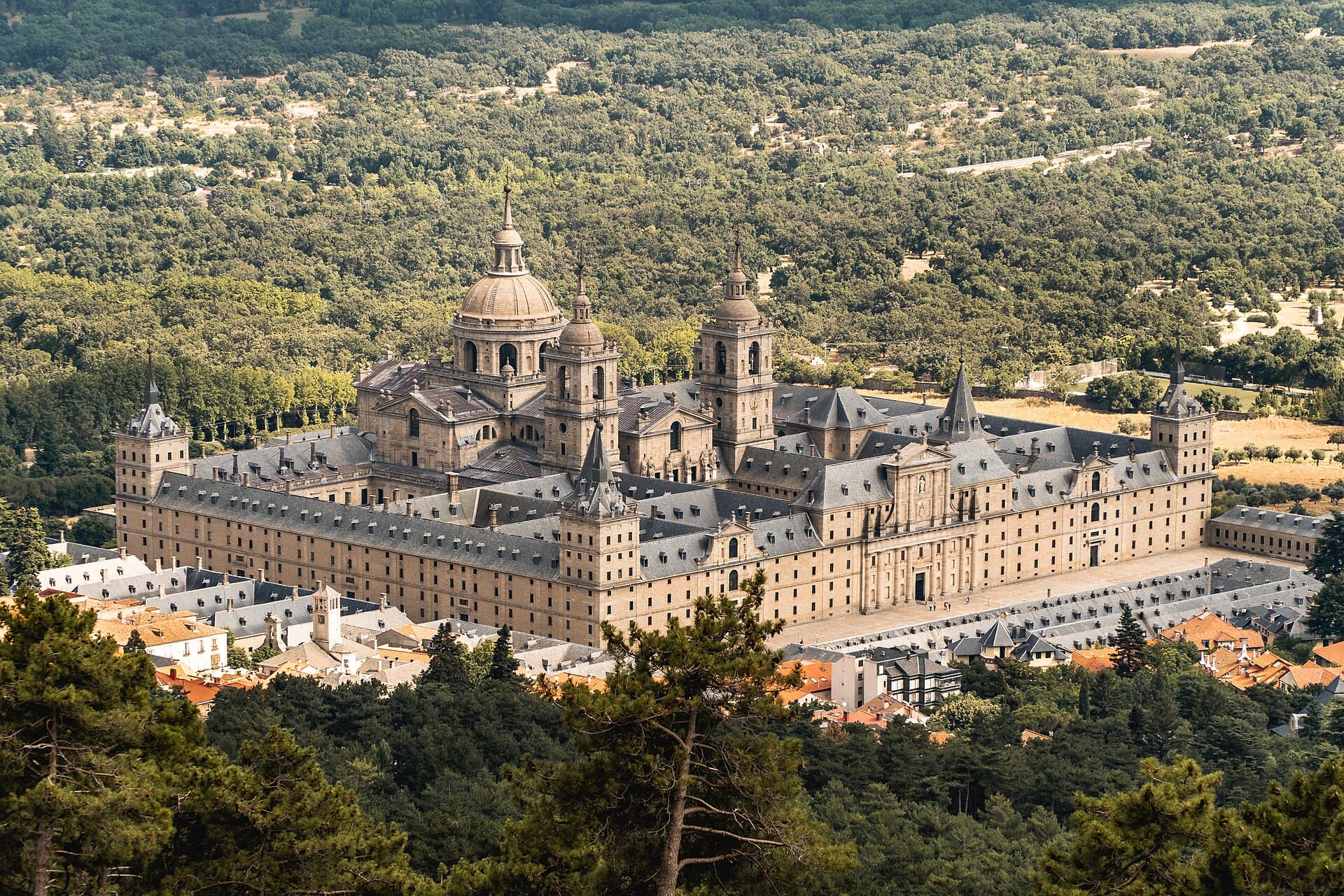
El universo (que otros llaman la Biblioteca) se compone de un número indefinido, y tal vez infinito, de galerías hexagonales. The universe (which others call the Library) consists of an indefinite — and perhaps infinite — number of hexagonal galleries. So begins 'La biblioteca de Babel', a story by Jorge Luis Borges published in 1941 in his collection 'El jardín de senderos que se bifurcan'. In just six pages, Borges constructs an infinite expanse of knowledge and futility, narrated by an unnamed librarian who spends his life searching for a singular book among the Library’s innumerable shelves. This Library, a repository of every conceivable 410-page book constructed from twenty-five characters including the period, comma, and space, holds more volumes than the atoms in the observable universe. The combinatorial immensity — 25 to the power of 1,312,000, nudging beyond 10 to the power of 1,800,000 — implies that every truth, every falsehood, and every conceivable permutation thereof rests somewhere within. Yet this enormity is deceptive; the Library, in encompassing everything, offers nothing. Borges, in an astonishing feat of brevity, elucidates why infinite knowledge collapses into oblivion.
Borges's life when he wrote it
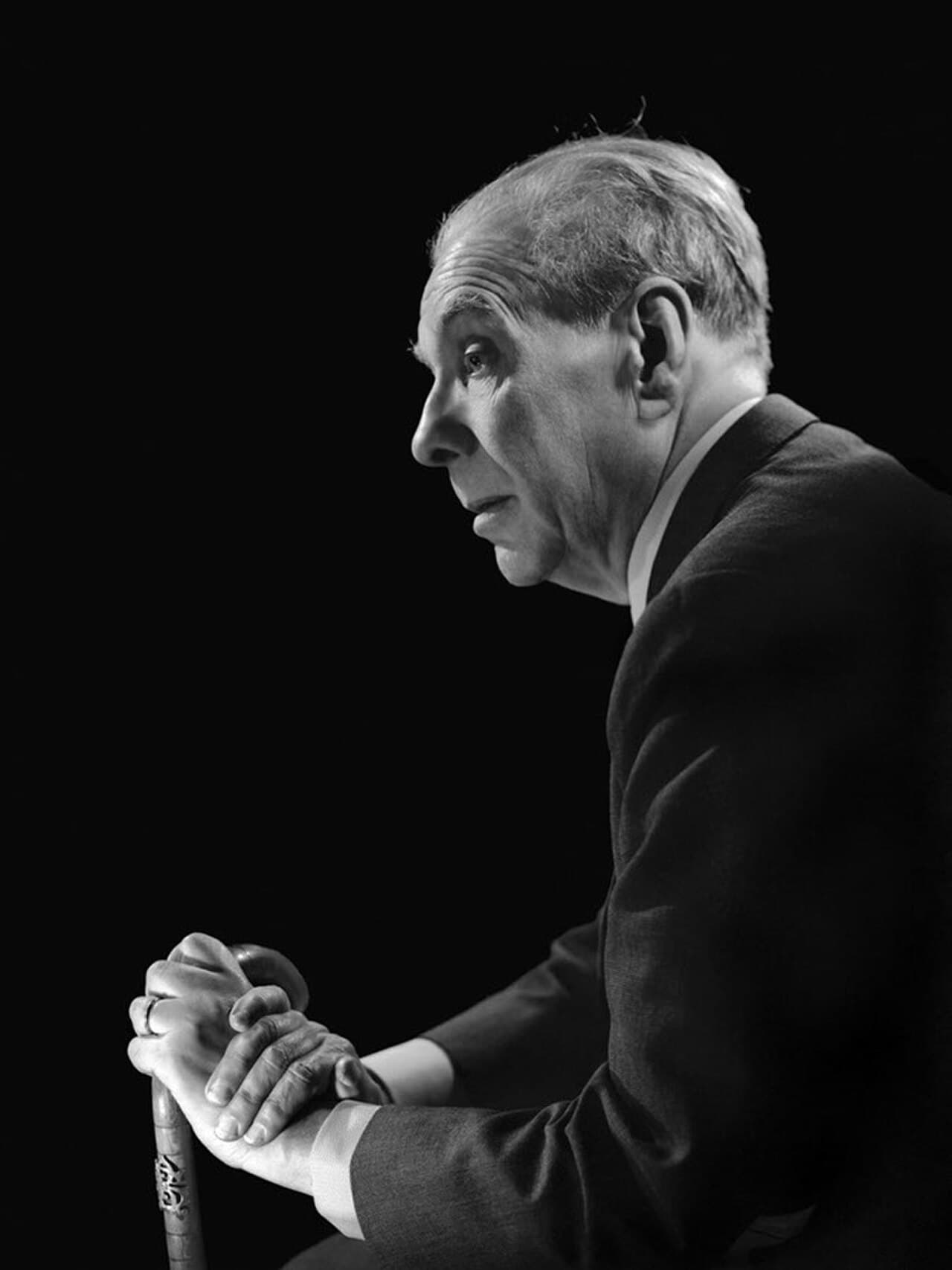
At the time of writing 'La biblioteca de Babel', Borges was 42 years old and employed as a junior librarian at the Miguel Cané Municipal Library in Buenos Aires, a position he held from 1937 to 1946. It was a mundane job, beneath his intellectual stature, within an establishment whose cataloguing system he found to be in disarray. Despite his literary reputation, he was largely ignored by colleagues and patrons alike, allowing him ample time to delve into his own creative endeavours. Borges was also grappling with the onset of blindness, an inherited condition that would culminate in total darkness by 1955. This backdrop of a decaying vision and bureaucratic monotony infused his work with a unique perspective on the infinite and the finite, a personal metaphysics constructed against the backdrop of an underutilised library in a working-class neighbourhood.
Borges’s own experience of cataloguing the unread, yet existing, aligns closely with the story’s conceit — a library filled with books no one can read or comprehend in full. The narrative reflects the existential dread of a librarian, a position Borges himself held, tasked with curating an infinite library that relentlessly obscures the very knowledge it contains. His growing blindness paralleled the metaphorical blindness of the librarians in the story, who search ceaselessly for meaning in an unfathomable universe of text. It is a profound exploration of the human condition, echoed in Borges’s life of labour in a library where his own works might languish unread.
What the Library actually contains
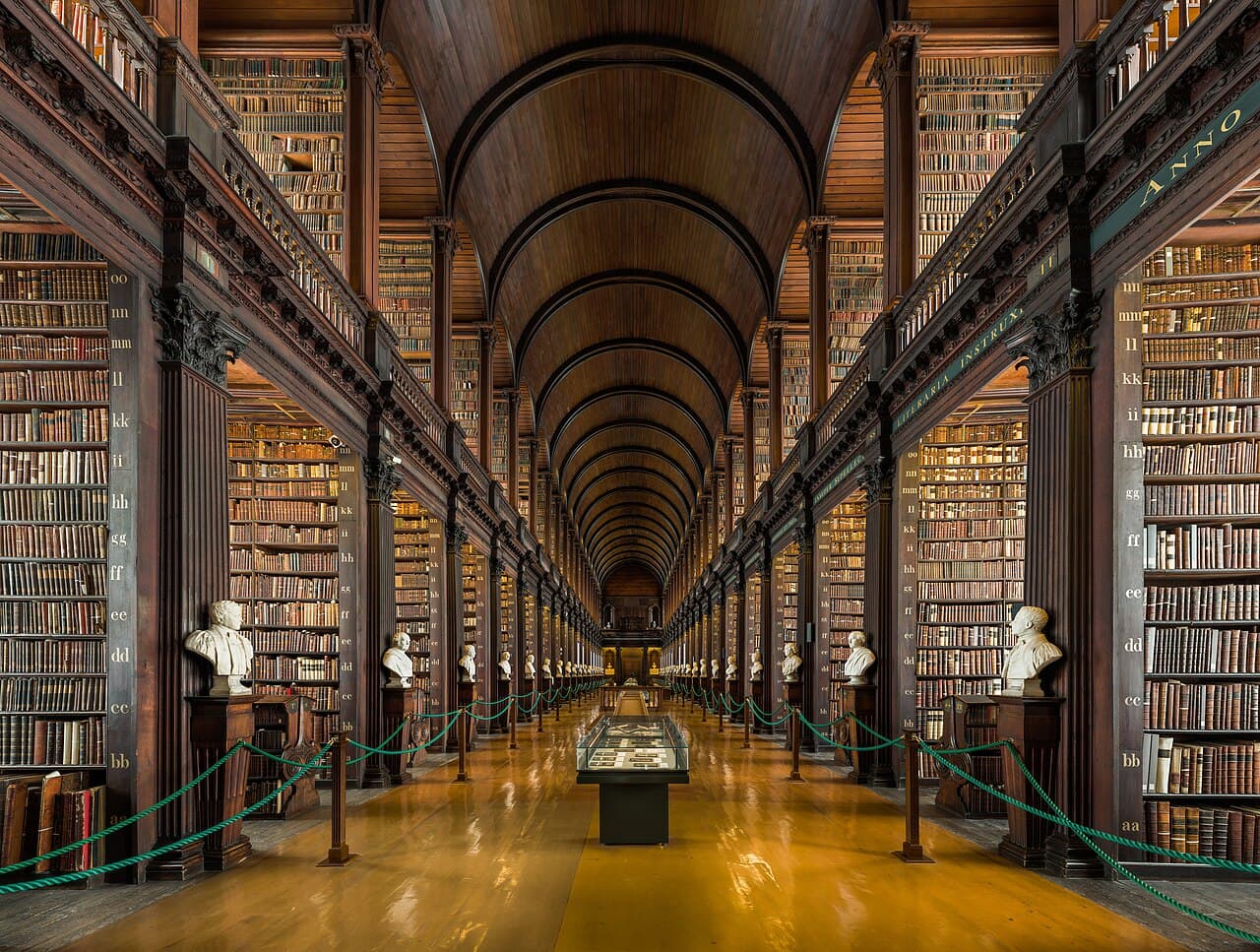
The precise specifications of the Library's holdings are staggering. Each hexagonal gallery comprises twenty bookshelves, with each shelf accommodating 35 books. Each book spans 410 pages, and each page is arranged into 40 lines of 80 characters. Borges specifies an alphabet of twenty-two letters, augmented by the period, the comma, and the space, resulting in a total character count of 1,312,000 per book. This yields a library of 25 to the power of 1,312,000 possible books — a finite number, yet so vast it teeters on the brink of the infinite. Despite the tantalising notion of infinity, Borges’s Library remains finite by strict mathematical definition.

Within this system, every conceivable permutation of a 410-page book exists. The Library should contain, as a matter of probabilistic certainty, all manner of texts: sacred scriptures, biographies both real and false, and even a catalogue purporting to explain the Library's very existence. Yet, as the narrator laments, such key texts — the Vindication, the Catalogue — remain elusive, their promise of elucidation swallowed by the oceanic expanse of unmeaning volumes. The Library, through its sheer scope, becomes a paradoxical space where all knowledge is present yet perpetually inaccessible.
What the story is really about
Borges’s Library serves as a metaphorical exploration of the metaphysics of total knowledge. It is a space where every conceivable narrative or assertion is housed, ranging from perfect truths to elaborate falsehoods. Therein lies the biography of the librarian himself, the complete history of human events, dictionaries both accurate and nonsensically scrambled, and much more. This seemingly exhaustive trove underscores Borges's point: the presence of any specific truth is rendered meaningless by the indistinguishable multitude of falsehoods and trivialities surrounding it. In a universe where everything exists, nothing is effectively accessible.
The Library presents a stark commentary on information and meaning. Its existence prefigures modern discussions in information theory, specifically the issue of search costs in vast data spaces. The challenge is not merely the possession of information but the ability to retrieve and utilise it meaningfully. Borges articulates the futility of total knowledge without discernment, a prescient insight that resonates with the challenges faced by contemporary information theorists. His narrative foreshadows the complexities of navigating information-rich environments, where the signal is lost amidst overwhelming noise.
How modern thinkers have re-read it
Since the 1990s, Borges's 'Library of Babel' has been revisited by scholars across disciplines. Daniel Dennett's 'Library of Mendel' analogy in 'Darwin's Dangerous Idea' (1995) interprets it within the context of evolutionary theory, suggesting that in the vastness of potential genomes, most are non-viable, yet a search mechanism — natural selection — finds the few that are. William Goldbloom Bloch's 2008 work, 'The Unimaginable Mathematics of Borges's Library of Babel', offers a thorough mathematical analysis, examining the structure and practicalities of Borges’s conceptual universe. Bloch computes dimensions and discusses the probability of encountering a legible book, concluding that it is vanishingly small.
In 2015, Jonathan Basile launched a website that brings Borges’s vision into the digital realm. This online Library of Babel implements a computational model where users can search for any 3,200-character string and locate it within the site. The experience is hauntingly similar to the one Borges described — a sea of gibberish punctuated by moments of accidental coherence. The project underscores the story’s enduring relevance, illustrating the narrative’s insights through a modern digital lens and engaging users in the same existential contemplation as Borges’s original librarians.
Why the story keeps being read
Borges's 'Library of Babel' has inspired a diverse array of adaptations and interpretations since its publication. Its insights into the nature of information and meaning resonate deeply in today's digital age, where the proliferation of content often threatens to drown out substance. Adaptations include graphic novels, opera, and even video games, each medium grappling with the story’s core theme: that an information environment providing everything ultimately yields nothing meaningful.
In the context of automated text generation and large language models, Borges's insights are particularly poignant. Modern algorithms generate text based on probability distributions rather than exhaustively sampling all possibilities, yet the conceptual parallels remain. Borges did not foresee these technologies, yet his narrative encapsulates the pervasive fear that automated content might dilute meaningful communication to noise. The story’s thought experiment thus finds renewed significance as we navigate an era defined by unprecedented information access and the attendant search for clarity and relevance.
What the librarians are
The narrator of Borges’s tale is an aged librarian, on the verge of death, who has dedicated his life to the fruitless pursuit of the Library's ultimate book, the Vindication. Despite his certainty of its existence, guaranteed by combinatorial mathematics, the vastness of the Library renders his search hopeless. As he reflects on the various responses of his peers — some becoming 'Purifiers', others 'Inquisitors', and some abandoning hope altogether — Borges captures the spectrum of human reactions to an uncaring universe.
This allegory extends beyond librarianship to a broader philosophical meditation on existence and the search for meaning. Borges presents a microcosm of humanity's quest to find purpose amid chaos, illustrating that even in the face of insurmountable odds, individuals will adopt varying stances in response to an unfathomable cosmos. The librarians embody our struggle to derive sense from a world where truth exists in principle but remains elusive in practice, echoing Borges's own literary and existential concerns.
In the story’s concluding passage, the narrator, confronting his mortality, clings to the possibility that the Library's structure is finite but unbounded. He imagines that one who ventures far enough might find themselves traversing familiar books in repetition, suggesting an elegance in the Library’s cyclical nature. This vision offers a solitary solace, a belief that the search for meaning, though unending, follows a comprehensible pattern. Borges, who passed away in 1986 in Geneva, left behind a legacy defined by such profound explorations. Though he wrote few novels, his shorter works, like 'La biblioteca de Babel', encapsulate the philosophical depth and narrative precision that continue to captivate readers and thinkers alike.
References
- Borges, J. L. (1962). La biblioteca de Babel / The Library of Babel. In Ficciones, transl. A. Bonner, New York: Grove Press.
- Bloch, W. G. (2008). The Unimaginable Mathematics of Borges's Library of Babel. Oxford University Press.
- Dennett, D. C. (1995). Darwin's Dangerous Idea. Simon & Schuster.
- Basile, J. (2015). Library of Babel — computational implementation.

