
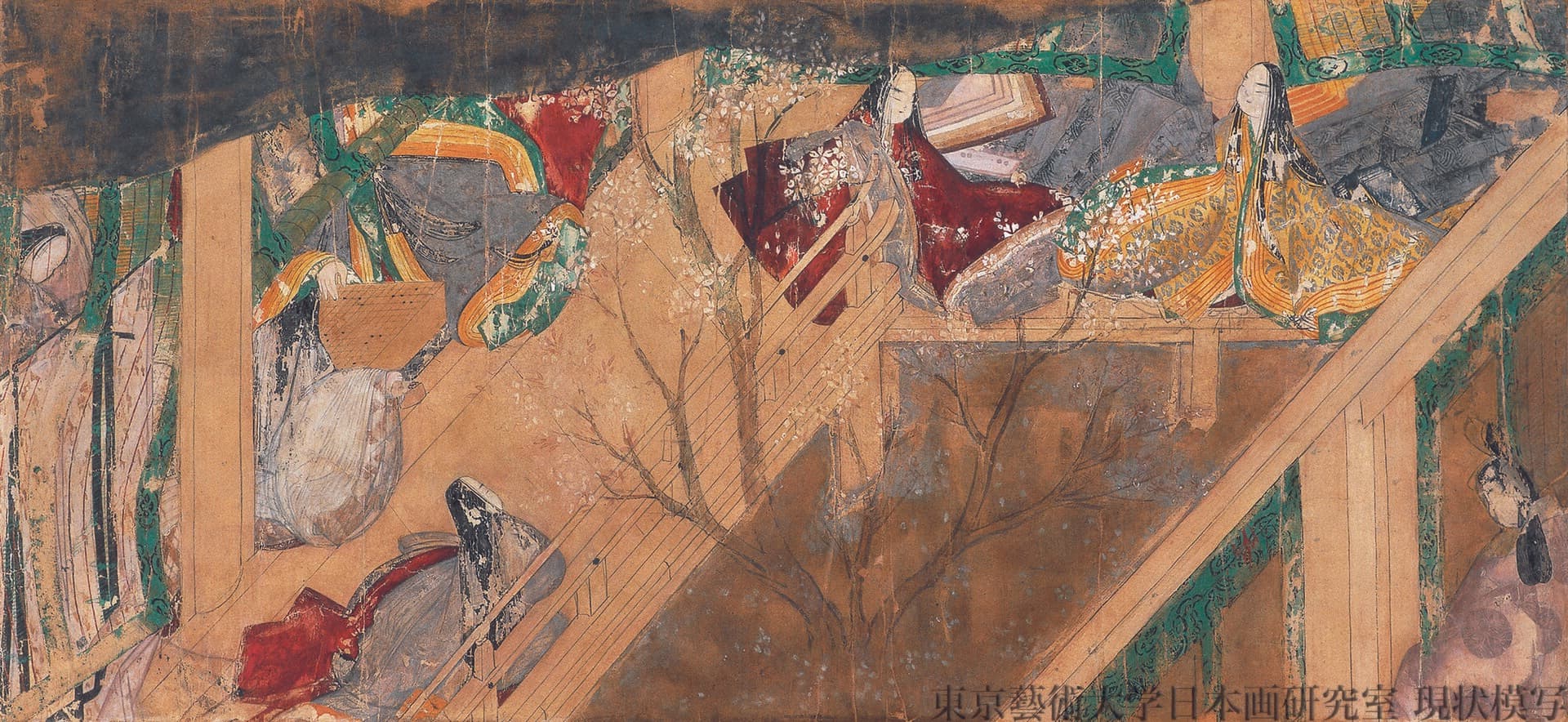
In the early years of the eleventh century, the courtly life at Heian-kyō, present-day Kyoto, was a delicate tapestry of aesthetic pursuits, poetry, and political intrigue. Among the distinguished occupants of the Imperial Palace was a noblewoman of the third rank, known to her contemporaries as Murasaki Shikibu. She served as a lady-in-waiting to Empress Shōshi, the consort of Emperor Ichijō, and in the quiet moments between her courtly duties, she engaged in a literary endeavour that would echo through the ages. Her real name lost to history, Murasaki Shikibu penned a narrative in the flowing hiragana script, a Japanese syllabary more personal and expressive than the Chinese characters used by her male peers. This narrative, which would later be titled "The Tale of Genji," spans fifty-four chapters and fills approximately 1,200 modern pages. It chronicles the life and loves of Hikaru Genji, a fictional imperial prince, and extends beyond his death to explore the lives of his descendants. Since its completion around 1010, the work has been a cornerstone of Japanese literature, providing a glimpse into the psychological and social intricacies of its characters. The Western world was introduced to this literary masterpiece through Arthur Waley's translation between 1925 and 1933, revealing a novel of psychological depth and narrative sophistication that rivalled the works of Henry James, crafted centuries before the European novel took shape.
What 'novel' means here
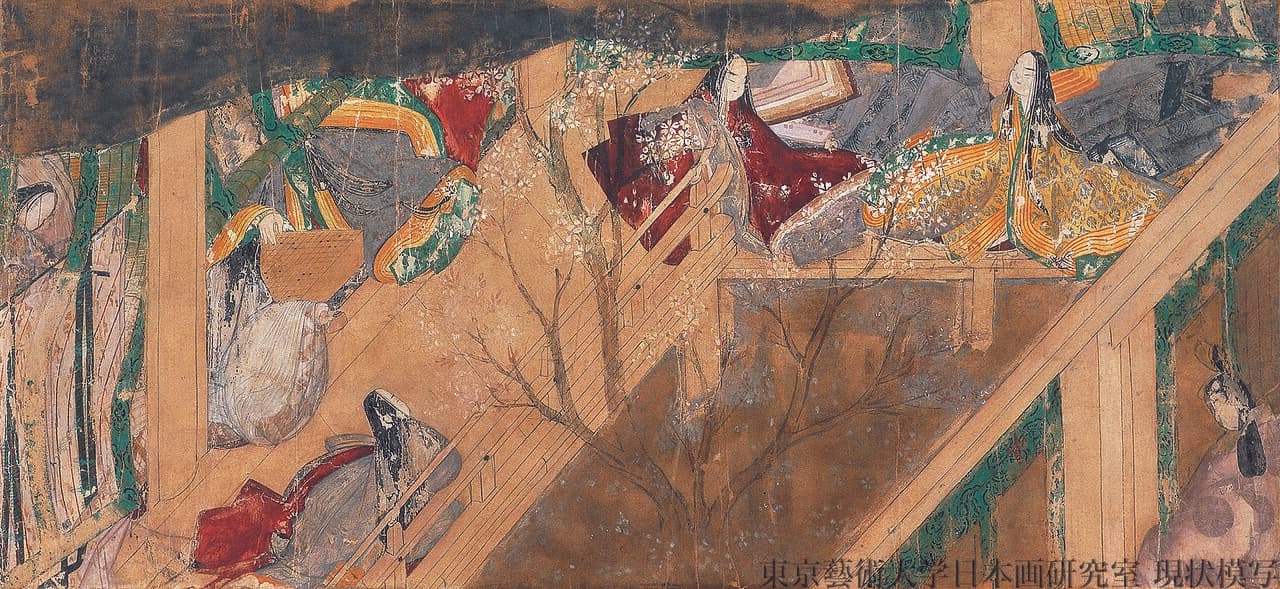
The assertion that "The Tale of Genji" is the world's first novel hinges upon what one considers a novel to be. Long before Genji, narratives like the Greek romances of antiquity, Chinese classics, and Sanskrit epics such as the Kathāsaritsāgara graced the literary world. However, these works lack the intricate psychological depth that characterises modern novels. Genji is profoundly novelistic in the sense defined by Henry James—a singular vision of prose fiction, exploring recognisable characters with rich inner lives, woven into a coherent narrative arc with subplots and an acute attention to the psychological and social dimensions of human experience. Other Japanese narratives from the Heian period, like "Taketori Monogatari" or "Ise Monogatari," resemble romance cycles or story collections rather than novels as we understand them today. Genji's divergence from these forms, its unity of authorial voice and its psychological realism, marks its significance in literary history.
What we know about Murasaki
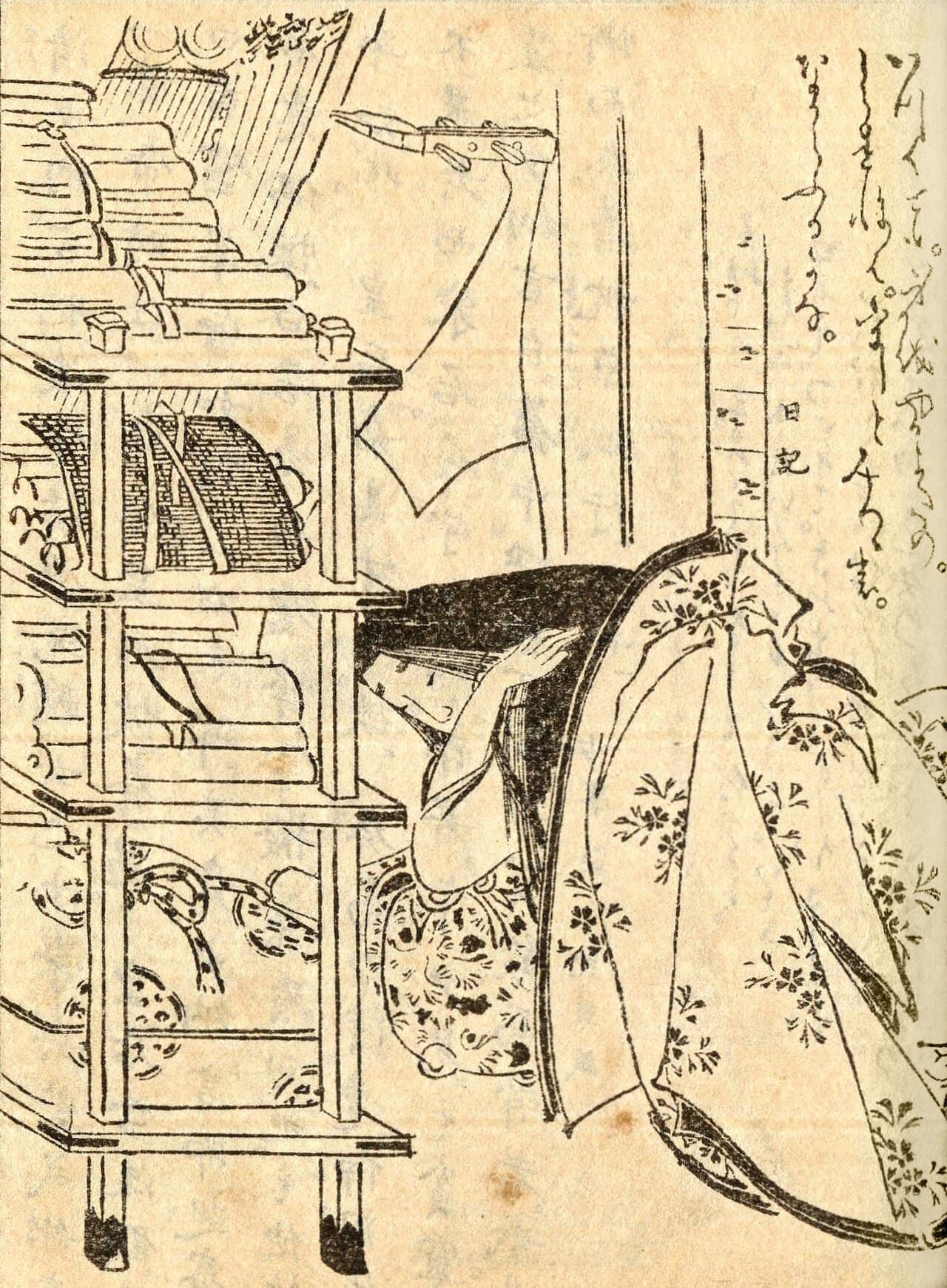
Murasaki Shikibu, the author behind Genji, was born around 973 into a minor branch of the illustrious Fujiwara clan, the dominant political force of the Heian period. Her father, Fujiwara no Tametoki, was a scholar and provincial governor. The nickname 'Murasaki' is thought to derive from a character in her own novel, while 'Shikibu' refers to her father's bureaucratic position. Her real name, however, remains unrecorded. Murasaki's education was unusually robust for a woman of her time; she acquired a proficiency in Chinese literature, ostensibly by eavesdropping on her brother's lessons—a feat her father ruefully acknowledged as a breach of gender norms. She was married to Fujiwara no Nobutaka, a court official significantly her senior, around 998. His death in 1001 left her a widow with a young daughter. By 1006, Murasaki had entered the service of Empress Shōshi. Her diary, the "Murasaki Shikibu Nikki," dated around 1008-1010, offers a candid, sometimes caustic view of court life. It includes a notably acerbic passage critiquing Sei Shōnagon, her contemporary and author of "The Pillow Book." Beyond this diary, much of Murasaki's life must be pieced together from historical inference, leaving us a fragmentary yet intriguing portrait.
The Heian court
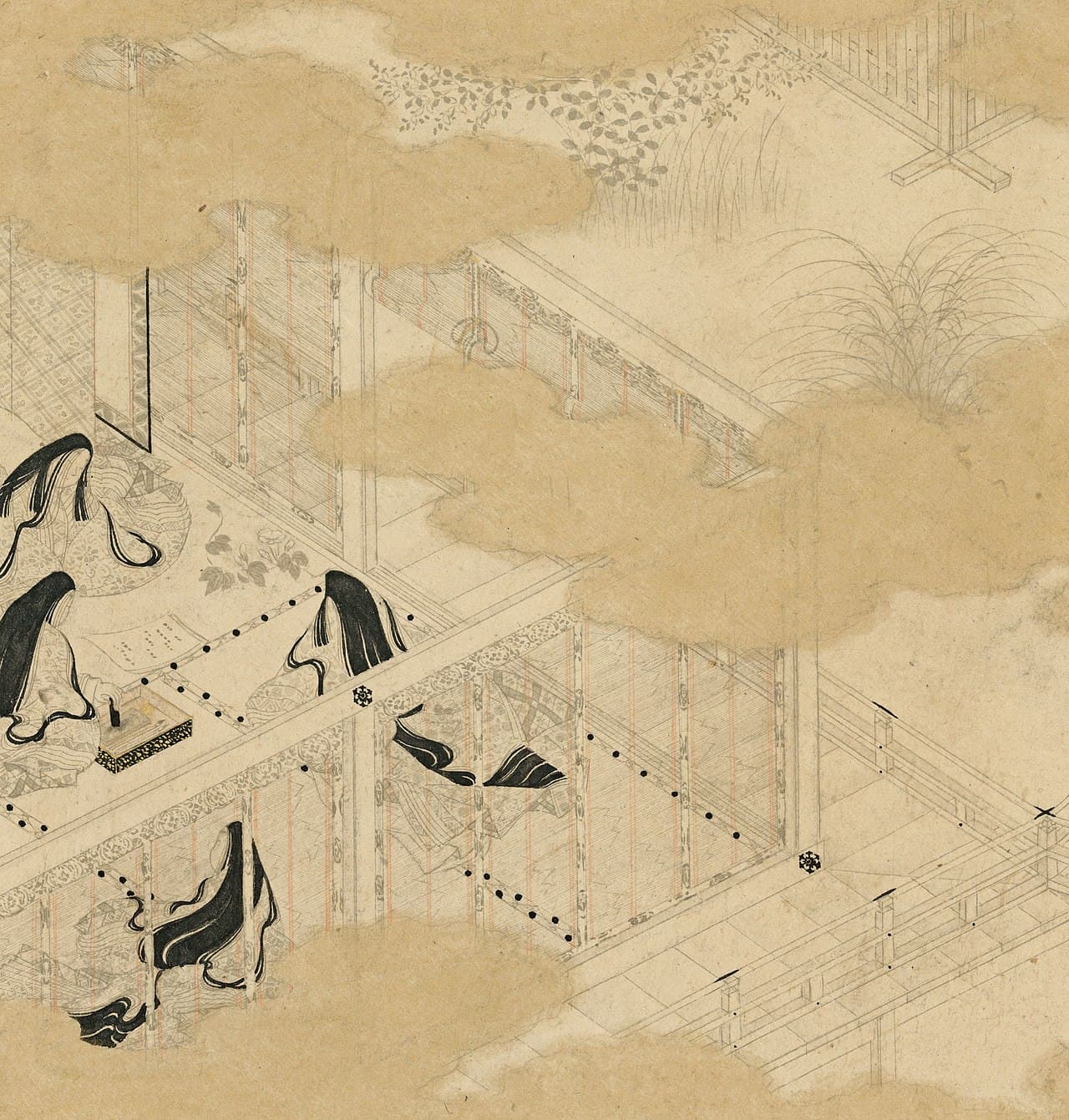
The Heian period, spanning 794 to 1185, marks an era of cultural blossoming in Japan, characterised by a court that placed greater emphasis on aesthetic refinement than on governance. The aristocracy, who wielded real power behind the throne, indulged in poetry, calligraphy, the seasonal changes, and the artful exchange of letters. Such pursuits defined the social fabric of the time. Every educated individual was expected to compose tanka poetry, a skill often tested during ceremonial occasions. The courtly life was a web of complex relationships, often mediated through the exchange of poems that formed the basis of both romantic and political connections. This unique environment fostered a literary scene wherein women, less constrained by the traditional demands of Chinese scholarship, could write in the vernacular Japanese. The result was a remarkable flowering of female authorship, epitomised by works such as "The Tale of Genji," "The Pillow Book," and "The Kagerō Nikki." This brief yet intense period of literary production by women remains unparalleled in the history of world literature.
Reading Genji
The narrative of "The Tale of Genji" unfolds around Hikaru Genji, the son of an emperor and a low-ranking concubine, who is stripped of his royal title to avert political complications. His life's journey, filled with romantic escapades, friendships, exile, and eventual redemption, serves as the novel's backbone, continuing posthumously with the chronicles of his descendants. Embedded within the prose are hundreds of waka poems, composed by the characters themselves, capturing the emotional essence of their exchanges. The narrative is subtly unreliable, presenting events and perspectives that challenge the reader's certainty, a technique Murasaki employs to enrich the psychological complexity of her characters. One of the novel's enduring themes is mono no aware, the 'pathos of things,' a recognition of the beauty inherent in transience, a concept that deeply resonates throughout Japanese aesthetics. The novel concludes ambiguously, with "The Floating Bridge of Dreams" leaving key narrative threads unresolved—a mystery that tantalises readers as much as it puzzles scholars. Whether this was Murasaki's intended conclusion or simply where she ceased writing remains a topic of debate among literary historians.
Transmission and translation
For the initial six hundred years of its existence, "The Tale of Genji" was meticulously copied by hand, with no original manuscript surviving to the present day. The oldest extant copies date from the 12th and 13th centuries, and they exhibit significant textual variations. The Kawachi-bon and Aobyōshi-bon lineages, two primary manuscript families established in the 13th century, offer differing readings that modern scholars must navigate to produce coherent editions. Genji has been central to Japanese literary education for a millennium; its knowledge was once considered essential for any literate Japanese. The archaic language of Heian court Japanese has necessitated modern translations for contemporary readers, with Tanizaki Jun'ichirō's 1939-1941 version, Setouchi Jakuchō's 1996 version, and Hayashi Nozomi's 2009 version being noteworthy examples. In English, Arthur Waley's translation from 1925-1933 remains the most accessible, Edward Seidensticker's 1976 edition the most accurate, and Royall Tyler's 2001 version the most comprehensive. Each translation offers a distinct lens through which to experience Murasaki's world.
Why it matters
"The Tale of Genji" holds a position within Japanese literature akin to that of Shakespeare in English; it is a foundational text, central to an immensely rich and enduring tradition. Its uninterrupted reading and adaptation across a millennium testify to its profound cultural significance. The Genji-monogatari emaki, 12th-century illustrated handscrolls, are among the earliest surviving examples of Japanese painting, indicating that the work inspired visual art shortly after its creation. Throughout history, Genji has influenced Japanese art, literature, and drama, with schools like the Tosa and Kanō producing illustrated albums into the 19th century. In the modern era, Japanese authors such as Tanizaki, Yasunari Kawabata, and post-war women writers have continued to engage with Genji, drawing inspiration from its themes and characters. As a living document, it remains a touchstone for discussions about literature, culture, and history in Japan, demonstrating a vitality rarely sustained over such a lengthy period.
Reflecting on the life of Murasaki Shikibu, one cannot help but ponder the vast expanse of what remains unknown. We possess a nickname, a diary, and a novel, yet essential details about her personal life, such as her true name, her birth and death dates, or even a portrait, have vanished with time. What persists, however, is the indelible mark she left through her writing—a testament to her intellectual prowess and artistic vision. Murasaki was a noblewoman at the Heian court, fluent in Chinese, widowed early, and a confidante to Empress Shōshi. She wrote a novel that, over the centuries, has become a cornerstone of Japanese culture. Despite the scant details of her personal history, her literary legacy endures. "The Tale of Genji" is still read today, its tradition unbroken, a remarkable survival for a work produced over a thousand years ago. In the absence of more personal records, the novel itself becomes her enduring monument.
References
- Murasaki Shikibu. The Tale of Genji. Translated by Royall Tyler. Penguin Classics, 2001.
- Bowring, R. (1988). Murasaki Shikibu: The Tale of Genji. Cambridge University Press (Landmarks of World Literature).
- Shirane, H. (1987). The Bridge of Dreams: A Poetics of 'The Tale of Genji'. Stanford University Press.
- Field, N. (1987). The Splendor of Longing in the Tale of Genji. Princeton University Press.

